

Ripped jeans: how the rips and whiskers are made, and how to keep them from blowing out
The rips and whiskers on distressed jeans are not accidents. Workers sand, scrape, or laser the denim surface before the wash, and the wash then softens every edge so the marks read as natural wear. A well-made distressed jean is damaged only on the surface, with the yarn behind it still holding, which is why some pairs keep their shape for years while cheap ones tear open in a month. If you have ever wondered why one pair of ripped jeans falls apart and another just gets better with age, this article walks through how the distress is actually done, and how to keep yours alive.
How the rips get made
Three tools do most of the work. Air sanders and grinding wheels scrape the indigo off the surface in controlled spots, usually where jeans would wear naturally: knees, thighs, pocket edges. Hand scraping handles the fine lines. Laser machines burn the pattern in with heat, which is faster and very repeatable on big runs. At BenClothing, we mark every distress position on the pattern first, so the rips land in the same spot on every pair instead of floating around at random. After the abrasion, the garment goes into the wash, and the drum action frays the raw edges into that soft white halo you see on good vintage pairs. Skipping the wash step leaves hard, cut-looking edges that scream factory-fresh.
Whiskers: the lines that fake years of wear
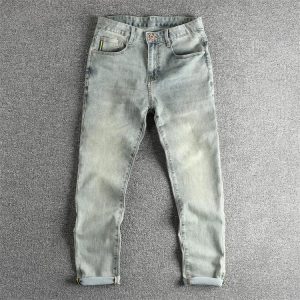
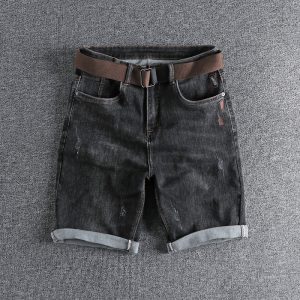
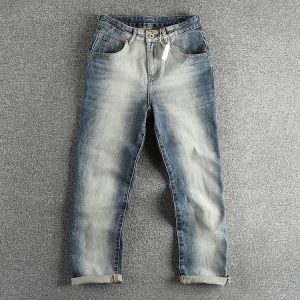
Whiskers are the fan-shaped fade lines that spread from the crotch and hip creases. On real vintage jeans they take years to form, because the fabric folds the same way every time you sit down. In production we cheat the clock: workers stretch the denim over an inflatable dummy and rub those crease zones with sandpaper by hand, following the exact lines a body would make. It is slow work, and it is the reason whiskered pairs cost a little more than plain washed ones. Our whisker-detail denim shorts show what this looks like when it is done by hand rather than printed on.
Why some rips blow out in a month
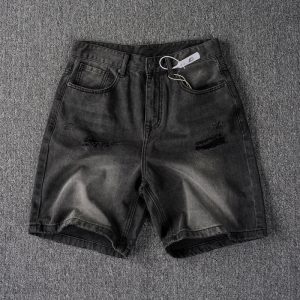
Three things decide whether a rip stays a rip or becomes a hole. Fabric weight comes first: an 11 oz denim with an open rip puts far less strain on the remaining threads than a thin summer denim does. Hole size is second. A slit of 2 to 3 cm holds its shape; anything much wider on the knee catches on things and grows. Repair stitching is third, the small cross-stitch bars sewn behind the open areas that hold the white threads together. If you shop secondhand or buy budget pairs, flip the leg inside out and look for those bars. On our distressed black denim shorts, every open area is backed before the wash, so the fraying stops where the design stops.
Washing distressed jeans at home
Distressed pairs need a gentler routine than raw denim. Turn them inside out and wash cold, because friction against other clothes is what widens rips in the machine. Skip the dryer: heat shrinkage pulls hard on the stitched edges around every rip, and that tension is what makes repaired areas fail. Wash them with similar colors and only when they actually need it, every five or six wears is plenty for a pair that is not stained. If the fit or color is not what you expected, our refund policy covers returns, and orders above $299 ship free.
FAQ
Will the ripped spots keep getting bigger?
A little, and that is part of the look. Sanding removes the indigo but leaves the white weft threads intact, so the fray develops slowly over weeks of wear. Holes with repair bars behind them stay the same size in the wash. What grows fast is a wide, unsupported rip in thin denim, so check the fabric weight and the backing before you buy.
How do I pick a size in distressed jeans?
Size by the finished measurements on the product page, not your usual jeans size, because washed denim has already gone through its main shrinkage in the factory. If you are between sizes in a slim distressed pair, take the larger one: the worn-in areas are less stretchy than plain fabric. Every product page lists the full size chart in centimeters.
Key takeaways
- Rips and whiskers are made with sanders, hand scraping, or lasers before the wash, and the wash is what turns sharp edges into natural-looking fray.
- Whiskers copy the crease lines that would take years of real wear to form, and hand-sanded versions cost more than printed ones because they are done piece by piece.
- Whether a rip survives depends on three things: denim weight, hole width (keep knee rips around 2 to 3 cm), and repair bars stitched behind the open area.
- Wash distressed jeans cold and inside out, and skip the dryer; heat and friction are what widen rips at home.
- At BenClothing, distress positions are marked on the pattern before production, so every pair in a batch wears the same way.
In short
Good distressed jeans are engineered wear, not random damage: placed rips, hand-scraped whiskers, backed holes, and a wash that softens it all. Choose heavier denim, check the backing, wash cold, and the rips will age instead of failing.