How should pants fit? A simple size guide for buying cargo pants and jeans online
Pants fit right when the waist sits where you actually wear them, the hips have room to move, and the leg opening matches the shoes you own. The fastest way to get that online is to measure your waist and hips with a tape, compare those numbers to the size chart in centimeters, and pick the cut that matches how you like a leg to fall. Most size complaints we see come from guessing with the letter size instead of reading the numbers. This guide shows what to measure, how to read our charts, and what to do when you land between two sizes.
Measure your body before you look at any size chart
You need three numbers and a soft tape measure, and it takes about two minutes. Waist: measure around your body where you actually wear your pants, which for most men is just below the belly button, not where dress trousers sit. Hips: measure around the fullest part of your seat, feet together. Length: measure the inside of one leg from the crotch down to where you want the hem to end, usually at the top of your shoe.
Write the numbers down in centimeters. If you only know inches, multiply by 2.54. Keep the tape snug but not tight, because a tape that digs in will make you order a size that feels too small once you wear it all day.
Read the chart in centimeters, not in letters
Letter sizes are not consistent between brands. A 32 waist from one label can fit like a 33 from another, which is why the numbers matter more. At BenClothing, we list the actual garment measurements in centimeters on every product page, including waist, hip, and length, so you can lay your numbers against ours instead of guessing.
Here is the simple rule: the chart measurement should be a few centimeters larger than your body measurement, because the chart describes the garment, not your body. For a relaxed or loose fit, you want roughly 4 to 6 cm of extra room at the hip. For a tapered or regular fit, 2 to 4 cm is enough. If the chart says the waist of the pants is 84 cm and your waist is 82 cm, that pair will sit close to the body, not loose.
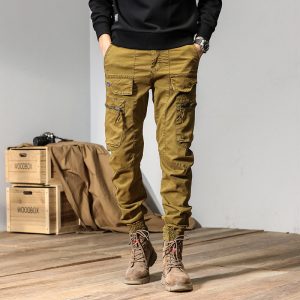
If you want that easy, roomy feel through the seat and thigh, look at cuts labeled relaxed or loose, like our relaxed-fit multi-pocket cargo pants. The pockets add bulk at the thigh, so a relaxed cut also keeps them from pulling when you sit down.
The cut changes which size feels right
The same waist size can feel completely different in three cuts. A straight leg runs the same width from hip to hem, so it is the safest pick if you are between sizes or unsure. A tapered leg is wider at the thigh and narrows toward the ankle, which looks sharp but needs the thigh measurement to be right, because a tight thigh cannot be fixed by a belt. A loose or wide fit gives you the most margin for error, since the whole point is extra room.
If your thighs are muscular, check the hip or thigh line on the chart first and let the waist be the second check. That is the opposite of how most people shop, and it is the reason tapered pants get returned. Our Japanese vintage cargo pants are a tapered cut with a roomy thigh, which is a good middle ground if you like the shape but not the squeeze.
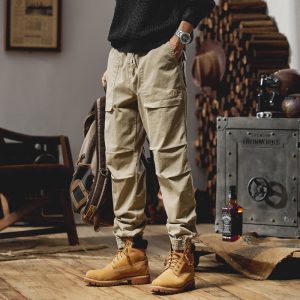
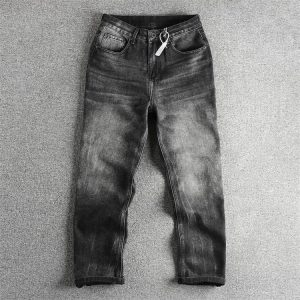
For a classic straight leg in denim, the chart is more forgiving. Something like our heavy washed black-grey straight jeans fits true to the numbers with no extra math, because there is no taper pulling at the calf.
When you are between two sizes
Go up if the pants are unwashed raw cotton, because they can shrink 1 to 2% in the first washes. Go up too if the chart shows the smaller size is within 1 cm of your body measurement, since a waist that just touches your body on day one will feel tight after a big lunch. Go down only when the pants have a wide elastic waistband or a drawstring, where a slightly bigger size turns baggy instead of comfortable.
One more note on shrinkage: our washed styles go through garment washing in the factory, so most of the shrinkage has already happened before they are packed. Wash cold and hang dry after that, and the size you receive is the size you keep.
FAQ
What if the size I ordered does not fit?
You are covered by our refund and return policy. Check the chart again before reordering, and if you tell us your waist and hip measurements when you contact us, we will suggest the size most customers with your numbers keep. Orders over $299 ship free, so it is worth checking a second pair in the same order.
Do I need to size up in cargo pants because of the pockets?
Usually no. The size charts already account for the pocket construction, and relaxed cargo cuts are drafted with extra room at the thigh where the pockets sit. Just keep 4 to 6 cm of ease at the hip when you compare numbers, and the pockets will not pull when you sit.
Key takeaways
- Measure your waist, hips, and inseam in centimeters before ordering; it takes about two minutes and removes most of the guesswork.
- Size charts describe the garment, so leave 2 to 4 cm of room at the hip for a tapered fit and 4 to 6 cm for a relaxed fit.
- If your thighs are muscular, check the hip and thigh lines on the chart before the waist, especially for tapered cuts.
- Between two sizes, go up for raw cotton or a chart within 1 cm of your body, and go down only for elastic or drawstring waists.
- Washed styles have already shrunk in the factory, and orders over $299 ship free, so comparing two sizes in one order costs nothing extra in shipping.
Two minutes with a tape measure, three numbers, and the right cut for your legs will get you a better fit than any letter size ever will. If your numbers are in hand, shop our collection and compare them against the chart on any product page.