

350g vs 400g hoodie: which one should you actually buy?
A 350g hoodie works for spring days and indoor layering; a 400g hoodie holds its structure, blocks wind and keeps its shape longer — for most buyers in autumn, 400g is the safer choice. The problem is that product pages rarely explain what those numbers actually change once the hoodie is on your back. We sew both weights in our own workshop, so this guide walks through where each one fits and how to decide between them.
What the grams actually measure
The number on a hoodie listing is fabric weight in grams per square metre (GSM). A 400g hoodie uses roughly 50g more cotton per square metre than a 350g one. That doesn’t sound like much on paper, but you feel it in three places: how the fabric drapes, how much wind gets through, and how well the body keeps its shape after a month of washing. If GSM is a new term for you, we put together a plain-language explainer in our GSM guide for pants and hoodies.
Where a 350g hoodie works best
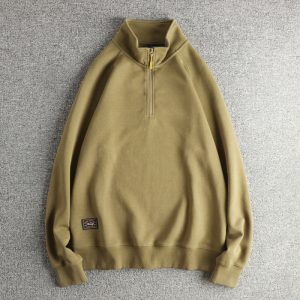
A 350g hoodie is the one you reach for in mild weather and indoors. It layers under a jacket without bulk, it breathes better on a warm afternoon, and it packs flat in a bag. Our 350g piece is an air-layer knit with a half-zip stand collar — air-layer fabric has two knitted faces with a small air gap between them, so it feels smooth outside and soft inside while staying lighter than terry. If your autumn is mild or you spend most of the day indoors, start there: 350g air-layer half-zip hoodie.
Where a 400g hoodie wins
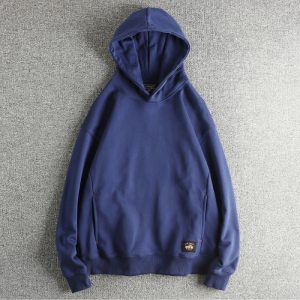
A 400g hoodie is cut from terry cotton, the loopback knit most hoodies use, just in a heavier weight. The extra fabric does three jobs. It gives the body structure, so the hoodie hangs straight instead of clinging. It slows the wind down on a bike or a cold platform. And it recovers better after washing — the heavier the loop knit, the less it twists at the hem and cuffs. Every hoodie we ship goes through a garment wash before packing, which settles most of the shrinkage in the factory rather than on you. For daily autumn wear, this is the weight we recommend most: 400g terry hooded sweatshirt.
If 400g still feels light, go to 550g
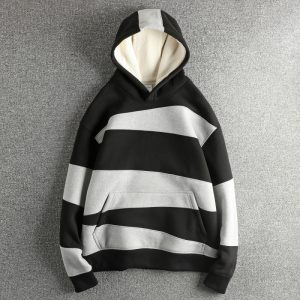
Some buyers will genuinely need more than 400g — northern winters, long commutes, drafty workshops. Rather than stacking two midweight hoodies, we would point you to a fleece-lined 550g piece. The brushed inside traps air, the outer face still looks like a normal hoodie, and one layer is easier to wash than two. A simple way to decide: buy for the season you will actually wear it in, not the coldest day of the year. Our 550g fleece-lined patchwork hoodie is the one we make for that job.
Key takeaways
- GSM is fabric weight per square metre, so a 400g hoodie carries about 50g more cotton per square metre than a 350g one — that is what makes it hang straighter and block wind better.
- A 350g air-layer hoodie suits mild autumn days and indoor layering, and packs flat under a jacket.
- A 400g terry hoodie keeps its structure through daily wear and recovers better after washing, which is why it is the default choice for most buyers in autumn.
- At BenClothing, every hoodie is garment-washed before it ships, so most shrinkage is settled before the hoodie reaches you.
- If your winter is colder than a 400g hoodie can handle, step up to a 550g fleece-lined hoodie instead of layering two midweights.
FAQ
Will a 400g hoodie be too warm indoors?
In a normal heated room you will be comfortable, and a half-zip or open collar gives you somewhere to dump heat. If you usually run hot, pick the 350g and save the 400g for outdoors.
How do I wash either weight so it keeps its shape?
Cold water, turned inside out, and laid flat to dry — heat is what ruins a hoodie, not water. Our full routine is in the hoodie washing guide.
In short: 350g for mild days and layering, 400g for structure and everyday autumn wear, 550g fleece-lined when winter bites. Both weights are cut and washed in our own workshop before they ship. You can compare them side by side in our hoodies category, or shop our collection for the full range.