
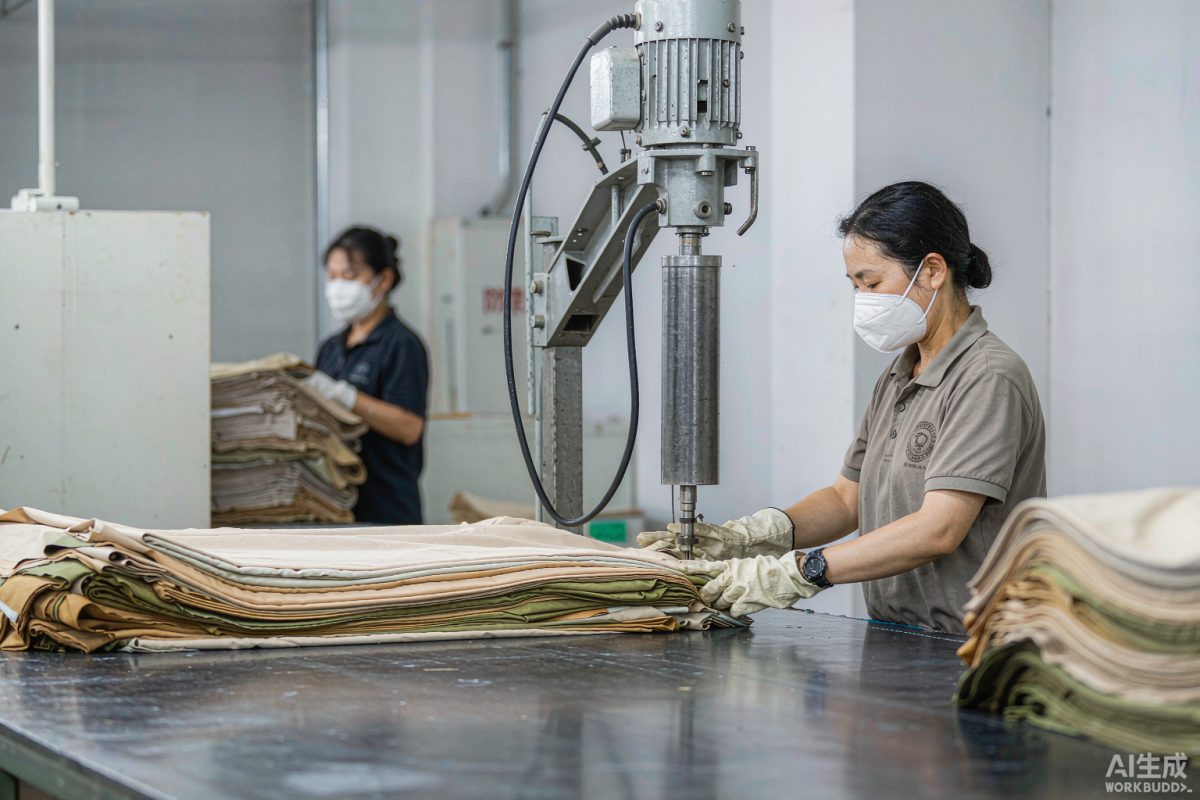
What Is the Best T-Shirt Fabric? GSM, Combed Cotton, and What Actually Lasts
The best T-shirt fabric for everyday wear is combed cotton in the 220–260 GSM range — heavy enough to keep its shape, light enough to breathe. Anything under 180 GSM twists at the hem, turns see-through after a few washes, and fades fast. The annoying part is that most product pages never tell you the fabric weight, so you end up guessing from photos. This guide breaks down the three things that actually decide how a tee ages — combing, GSM, and collar construction — with real examples from our own range.
Combed cotton vs carded cotton: what combing actually does
Both start as the same cotton yarn. The difference is one extra step: combed cotton passes through a fine comb that pulls out the short, loose fibers and leaves the long ones behind. That is why a combed tee feels smoother against the skin and stops pilling in the spots that rub — under the arms, at the seat of a backpack strap, along the cuff.
Carded cotton skips this step. It is cheaper, and you can spot it in the store: a slightly fuzzy surface, little fiber balls after three or four washes, a color that looks tired before the shirt is even old. If a listing just says “100% cotton” without the word combed, assume carded. It is the single most common reason a tee that looked good on day one looks worn out by month three.
GSM: the one number that predicts how a tee ages
GSM stands for grams per square meter — the weight of the fabric. It is the most honest spec on any product page because it cannot be faked by good photography. As a rule of thumb:
- Under 180 GSM: thin, twists at the hem, clings in the wrong places, fades quickly.
- 180–220 GSM: fine for hot summers, but expect it to lose structure within a season.
- 220–260 GSM: the everyday sweet spot — holds its shape, still breathes.
- Above 300 GSM: heavyweight territory. Structured, opaque, drapes like it means it.
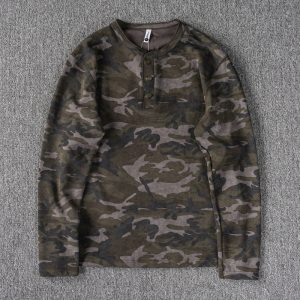
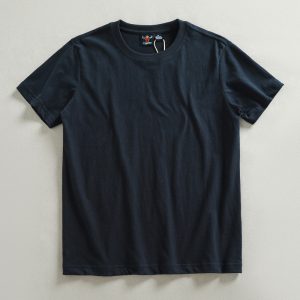
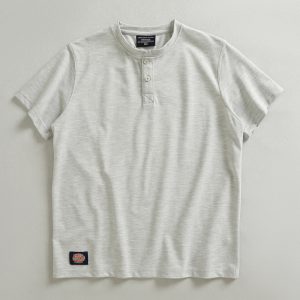
On our own site you can compare both ends of the scale. Our 300 GSM heavyweight cotton camo henley is listed at exactly 300 GSM in the spec table — it feels more like a light sweatshirt than a tee, and it stays flat under a jacket. The 230 GSM lyocell double-face knit tee sits in the sweet spot and is the one we reach for in warmer weather, because lyocell runs cooler than pure cotton at the same weight.
The collar is where cheap tees give up first
Fabric weight gets the attention, but the collar is usually the first thing to fail. A single-stitched rib collar with no stretch fiber relaxes after a handful of washes, and once it goes wavy there is no fixing it. When you are judging a tee, stretch the collar rib between your thumbs: it should snap back immediately. Then look inside — two parallel rows of stitching at the collar and shoulder seams mean the maker spent the extra minutes.
A small amount of elastane in the collar rib (not the whole body) helps the neckband recover after every wash. This is the one blend we consider a feature rather than a compromise.
What we make, in plain numbers
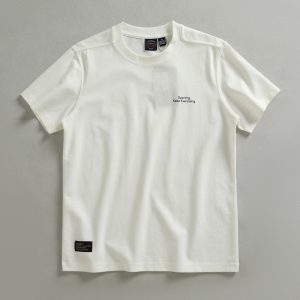
At BenClothing we print the fabric weight on every tee page because we would rather you compare numbers than guess from photos. Our combed cotton crew neck tee shows what combing does for a printed design — the surface stays smooth, so the embroidery sits clean. The 12-colour washed brushed cotton tee goes through a garment wash before it ships, which is why it feels broken-in from the first wear instead of stiff and chemical-smelling. And every tee is logo-free: no brand prints, no woven labels, just the size and care tag.
Key takeaways
- Combed cotton beats carded cotton for everyday tees: the combing step removes short fibers, so the surface stays smooth and resists pilling.
- 220–260 GSM is the everyday sweet spot; under 180 GSM the fabric twists, turns see-through and fades fast.
- Our 300 GSM cotton camo henley and 230 GSM lyocell knit tee show both ends of the comfortable range — both weights are printed in the product spec, not hidden.
- Stretch the collar rib before you buy: it should snap back. Double-needle stitching at the collar and a little elastane in the rib are what keep a neckband from going wavy.
- A garment-washed tee feels broken-in from day one because the shrinkage already happened at the factory, not in your washing machine.
FAQ
Is 100% cotton better than a blend?
For the body of the shirt, yes — 100% combed cotton breathes best and ages most predictably. The one place a blend helps is the collar rib: a small percentage of elastane there keeps the neckband tight after repeated washing.
Is a 300 GSM tee too hot for summer?
For peak summer heat, a 230 GSM knit like our lyocell tee breathes better. 300 GSM cotton earns its keep in spring, autumn, and as the layer under a jacket — it is opaque and holds structure in a way thin tees never do.
In short
Check two things before you buy any tee: the word “combed” and the GSM number. Combed cotton in the 220–260 GSM range will outlast three cheap tees, and a properly built collar decides whether it still looks new after the tenth wash.
Ready to feel the difference? Shop our T-shirts.