One Weight for All Seasons Is a Myth: What Fabric Weight to Wear When
There is no single fabric weight that covers a whole year. Three weights do: 130 to 180 gsm for real summer heat, 250 to 350 gsm for spring and fall, and 400 to 550 gsm once mornings drop below 10°C. The all-season jacket you were sold is cut for an average temperature that never actually happens, which is why it spends most of the year on the rail. If you have ever owned a piece that was clammy in July and thin in January, the problem was never your wardrobe. It was the promise. This is what each weight actually does, and how to build three pieces that carry you through eleven months.
The all-season idea is a merchandising compromise. Your body does not care.
“All seasons” is honest arithmetic. Take the coldest week of the year and the hottest, split the difference, build one garment that sits in the middle, and hope nobody notices. A piece tuned to feel acceptable at 5°C and at 25°C is by definition bad at both ends. Retailers like it because one SKU sells all year. Your skin, unfortunately, does not average. Twenty-two degrees in dry air and twenty-two degrees at high humidity are two different garments.
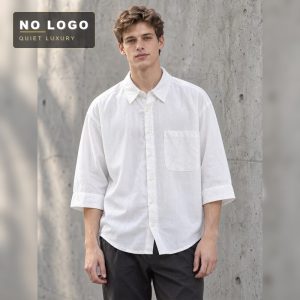
The fix is not to find a better compromise. It is to stop shopping for one. A lightweight linen-blend shirt earns its place in June and disappears in November, and that is exactly the point. Each piece does one job properly instead of two jobs badly.
Grams per square metre: the number that decides whether you sweat
GSM means grams per square metre. One square metre of the fabric is weighed, and that number is the whole story. More fibre in the same area means more still air trapped between the yarns, and still air is the actual insulator. So a 400 gsm fleece traps roughly twice the air of a 180 gsm tee over the same patch of skin. That is the warmth. It is also the problem, because the same dense structure slows the moisture leaving your body. Warmth and breathability always move in opposite directions. No mill has ever separated them.
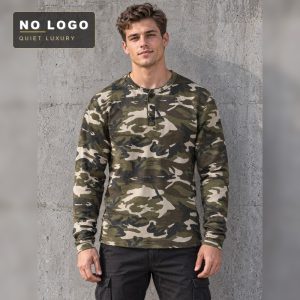
This autumn’s menswear coverage keeps circling back to one idea, with heavyweight knits and dense twills framed as the season’s real story rather than the shape of a collar. Weight is a design decision again, which is why the spec sheet matters more than the styling. At BenClothing, we put the weight in the product name on purpose, so a 300 gram henley tells you what it is before you open the page. If a listing hides the weight, treat it as a lightweight piece until proven otherwise.
A 300 gsm layer has a six-week window, not a four-season one.

Here is the uncomfortable part. A 300 gsm long-sleeve over a tee feels right from about 15°C to 20°C. Above 22°C you will feel damp by mid-afternoon. Below 8°C you will want another layer, or a heavier one. That is a real window of roughly six to eight weeks in most temperate climates, and it does not arrive as one block. It comes in two slices, one in spring and one in autumn, with a wet grey fortnight in between.
Push the weight up and the window moves rather than widens. A 550 gsm fleece-lined piece is comfortable from about 0°C to 10°C and becomes a liability past 12°C. Buy it for January and it will be your best friend for eight weeks. Buy it as your only jacket and you will resent it by March.
What to buy instead: three weights, three jobs

Three pieces, chosen on weight instead of on looks, cover eleven months in most temperate places:
- 130 to 180 gsm for genuine heat. Linen, lightweight cotton, loose weave. This is the piece that makes July bearable.
- 250 to 350 gsm for the shoulder seasons. Long sleeves, mid-weight sweatshirts, brushed cotton. The most worn item in the three.
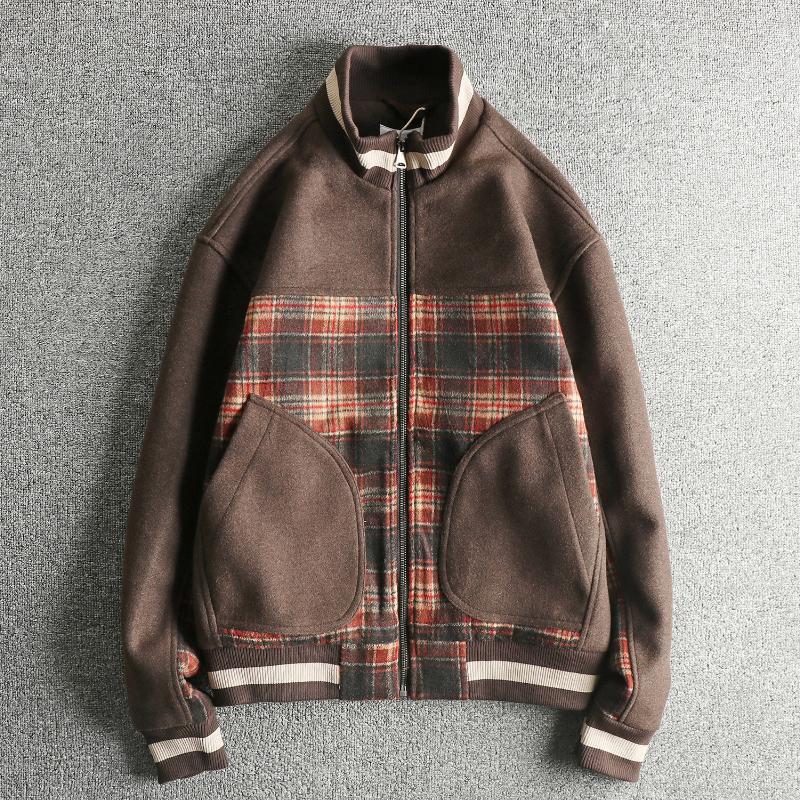
- 400 to 550 gsm for real cold. Fleece-lined, heavyweight denim, dense knits. Worn from December through February and then put away properly.
Bottoms follow the same logic, and this is where people overspend. A pair of mid-weight tactical cargo pants handles nine months of the year on its own, because legs tolerate a wider range than a torso does. Add a heavier pair for deep winter and a light pair for the hot weeks, and the whole three-pair rotation costs less than one mistake jacket plus its replacement two autumns later. Pants, jackets and hoodies also ship free over $149, and returns run seven days if the fit is off, which takes most of the risk out of buying by weight rather than by eye.
Key takeaways
- Three weights cover a year better than one: 130 to 180 gsm, 250 to 350 gsm, and 400 to 550 gsm.
- Insulation and airflow always trade off. A 400 gsm layer traps about twice the still air of a 180 gsm one, and moves moisture roughly half as fast.
- A 300 gsm long-sleeve sits comfortably between 15°C and 20°C, which is six to eight weeks in most temperate climates, split into two seasons.
- A 550 gsm fleece-lined piece works from 0°C to 10°C and starts working against you above 12°C.
- Buy on weight, not on styling. If a listing does not state the gsm, assume it is under 200 and plan accordingly.
FAQ
What gsm is too hot to wear?
Past roughly 350 gsm most people start feeling closed in once the air goes above 22°C, and humidity pushes that threshold lower. Dense knits and fleece-lined pieces trap air that your body then has to cool around. If you are sweating while standing still in the shade, the garment is too heavy for the day, not too warm for the season.
Can I wear a 400 gsm hoodie in summer?
You can wear it on cool evenings, at night, or in air-conditioned rooms. What you cannot do is wear it through a humid afternoon and expect the weight to behave like a thin one. The fibre is still there. If you want a heavyweight feel in warm weather, look for a loose weave at a lower weight instead of a dense weave at a high one.
One jacket cannot be three garments, and the difference between a good season and a bad one is often just 150 grams. Pick by weight, wear each piece in its own window, and the rotation lasts longer than the compromise ever would. Shop our collection.