
How to wash a hoodie so it keeps its shape: cold water, low spin, and patience
Most hoodies lose their shape in the dryer, not on your body. Heat is what flattens the ribbing and stretches the collar, so the fix is simple: wash cold on a gentle cycle, inside out, and let it air dry flat or hung by the waistband. If a favorite hoodie has already gone boxy at the shoulders or loose at the cuffs, a damp reshape can pull most of it back. This guide walks through the routine we use on our own hoodies, and what to do when one has already stretched.
Why hoodies stretch out in the first place
A hoodie is a knit, not a woven fabric. Cotton knit holds its shape through tension in the yarn, and every wash cycle works against that tension: water makes the fibers swell, agitation pulls at the loops, and heat relaxes everything at once. The collar, cuffs, and waistband go first because they contain elastane for stretch, and elastane is the part that heat damages fastest.
Weight matters more than most people expect. At BenClothing, we cut most of our hoodies between 350g and 550g, and the heavier ones hold their structure longest because there is more yarn holding each loop in place. A 550g fleece-lined hoodie keeps its shape through far more wash cycles than a thin 250g one.
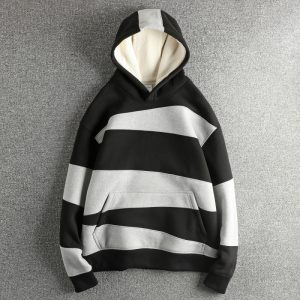
If you are replacing an old hoodie, checking the fabric weight on the product page is worth two minutes. Our 550g fleece-lined patchwork hoodie is a good example of a weight that survives frequent washing without going limp.
The wash routine: cold, inside out, gentle
Turn the hoodie inside out before it goes in the machine. This protects any print or embroidery on the front, and it keeps the brushed outer face of the fabric from pilling against other clothes. Wash cold, 30°C at most, on the gentle cycle, with a mild detergent.
Two small habits make a real difference. Wash hoodies in a small load or a mesh laundry bag so they do not get dragged around by jeans and jackets. And skip the fabric softener: it coats the terry loops, which makes the fabric feel slippery at first but kills the soft, dry hand feel that makes a good hoodie nice to wear.
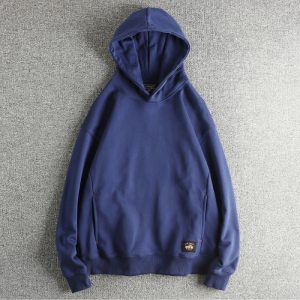
A mid-weight terry like our 400g terry cotton hoodie responds well to this routine. Terry has open loops on the inside, and cold gentle washing keeps those loops standing instead of pressed flat.
Drying is where hoodies actually get ruined
The dryer is the single biggest reason a hoodie shrinks a size and the collar turns into a stiff ring. Tumble heat does in 40 minutes what five years of washing could not do. Air drying is slower, but it is the whole game.
Dry the hoodie flat on a rack, or hang it by the waistband with two clips so the shoulders carry no weight. While it is still damp, pull the cuffs and collar gently back into shape with your hands. Keep it away from radiators and direct midday sun, which dry one spot too fast and can leave the fabric stiff or unevenly faded. If you really must use a dryer, use the lowest heat, pull the hoodie out while it is still slightly damp, and finish it on a hanger.
Can you fix a hoodie that already stretched?
Often, yes. Soak the hoodie in warm, not hot, water for about ten minutes, press the water out with a towel, then lay it flat and reshape the body, cuffs, and collar with your hands before it dries. Cotton has some memory, and a damp reshape recovers a surprising amount of the original fit.
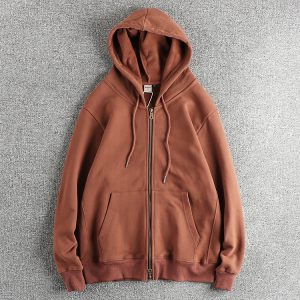
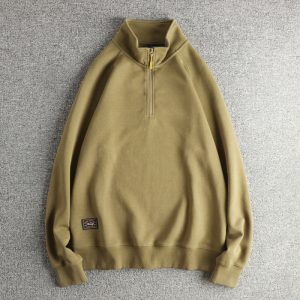
Be realistic about one thing: if the ribbing has gone fully loose, the elastane inside it is likely broken, and no wash trick will restore the snap. That is the point where prevention matters more than rescue, and it is also why a slightly heavier fabric pays off. Our 350g air-layer half-zip sweatshirt uses a double-layer knit that resists this kind of collar stretch better than single-layer terry.
FAQ
Will a cotton hoodie shrink if I wash it cold?
Barely. Shrinkage comes from heat, so a cold wash followed by air drying keeps movement to a couple of percent at most. The one exception is deep washed or garment-dyed styles: give the first wash its own cycle so any surface dye does not touch lighter clothes.
What if the fit is still wrong when it arrives?
Send it back. Orders over $299 ship free, and our refund policy covers returns when the fit does not work out. Check the size chart on each product page against a hoodie you already own before ordering, since loose-fit styles run bigger than regular cuts.
Key takeaways
- Wash cold at 30°C max on a gentle cycle: heat, not detergent, is what relaxes cotton knit and flattens ribbing.
- Turn hoodies inside out and use a mesh bag or small load to protect prints, embroidery, and the outer face of the fabric.
- Skip the dryer: air dry flat or hang by the waistband, and reshape cuffs and collar while the hoodie is still damp.
- Leave out fabric softener, which coats terry loops and wears down the dry, soft hand feel of good cotton.
- Heavier fabric holds shape longer: a 550g fleece-lined hoodie outlasts a thin 250g one through far more wash cycles.
Cold wash, gentle cycle, no tumble heat. That is the whole routine, and it adds maybe two minutes per wash. Do it consistently and a well-made hoodie keeps its collar, cuffs, and fit for years instead of one winter.
Looking for hoodies built to survive the wash? Shop our collection.