
What Jacket Weight Do You Need for Autumn? 400g to 550g Explained
For autumn, a 400–550g garment-washed cotton jacket covers most days between 10 and 20°C. Below 400g you are wearing a shirt; above 550g, or with padding, you have crossed into winter territory. The trick is not buying the heaviest jacket — it is picking the weight that layers. Most of us have done this the wrong way round: order a jacket in September, and by late October you are wearing a hoodie underneath with the zipper fighting to close. Here is what the weight number means and how to pick once, correctly.
What the weight number actually measures
The grams-per-square-meter figure describes the shell fabric, not the whole jacket. A 460g fabric jacket does not weigh 460g on the scale — add the lining, the hardware, the pockets. What the number really tells you is density: how much cotton stands between you and the wind. Higher GSM means less air passes through the weave, and that is where most of the warmth comes from at this weight range. Insulation from thickness alone only starts with padding, which is a different category of jacket.
400–550g: the autumn sweet spot
This range blocks wind without trapping you in it. Our 460g heavyweight washed denim jacket sits right in the middle: enough cotton to hold its shape against an October breeze, light enough that you never think about taking it off indoors. The garment wash matters as much as the weight — a washed jacket bends at the elbows from the first day, while stiff raw canvas takes weeks to break in.

When to go heavier: fleece, wool blends, and layering
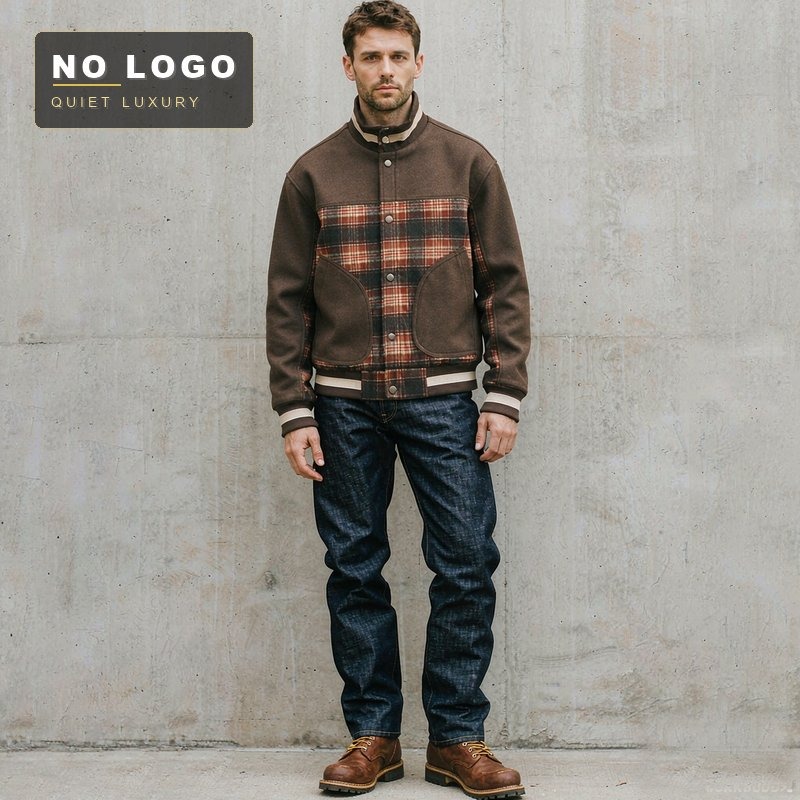
Two steps up from there. Fleece-lined and wool-blend pieces — like our wool-blend plaid stand-collar jacket — take over when mornings drop toward single digits, and they look intentional rather than bulky. The other route is layering: a midweight 400g hoodie under a 460g jacket covers a cold snap better than buying a padded jacket too early in the season. That is also why we say the autumn jacket should be picked for what fits underneath it.
Check the fit with a hoodie in mind
If you plan to wear a hoodie under the jacket, order for the hoodie. Compare the flat chest measurement with a jacket you already own — worn over a sweatshirt, not over nothing. A corduroy-panel piece like our washed corduroy-panel denim jacket layers well because the wash softened the shell; a stiff jacket two sizes too big just hangs empty on the shoulders. At BenClothing we publish the fabric weight on every jacket page, so the number you are comparing is the number you get.

Key takeaways
- As a general guide, 400–550g garment-washed cotton covers most 10–20°C autumn days.
- The weight figure describes the shell fabric — a 460g fabric jacket is the single-jacket answer for most of the season.
- Fleece-lined and wool-blend jackets take over when mornings head toward single digits.
- Layer a midweight hoodie under the jacket instead of buying padded too early.
- Garment-washed shells bend at the elbows from day one; stiff raw canvas needs weeks of breaking in.
FAQ
Is a washed jacket warm enough for winter?
With a hoodie layered under it, a 500g-class washed jacket handles most winter days in a temperate climate. For real cold, fleece lining or padding earns its place.
Does heavier fabric mean a stiffer jacket?
Not after a garment wash. Washing relaxes the weave, so a 460g washed denim jacket moves from the first wear while an unwashed one of the same weight stays board-stiff for weeks.
Pick the weight for the season, plan one layer underneath, and one jacket carries you from September into the cold snaps. Check the fabric weight on the page before you order — that number is the whole decision.