

SBS zippers, snaps, and rivets: how we choose hardware for workwear that survives real wear
A zipper is usually the first part of a pair of workwear pants or a jacket to fail, and it fails long before the fabric does. At our workshop in Shishi, we put SBS brand zippers on every garment with a center-front zip, because a slider that costs a few cents more can add months of daily use. This article explains where we refuse to cut hardware costs, where a cheaper part is genuinely fine, and what to ask any supplier before you confirm a wholesale order.
\n\n
What SBS means, and why the brand on the slider matters
\n
SBS is a zipper manufacturer based in Fujian, in the same province as our factory. We use it as the default because the tape, teeth, and slider arrive as one matched system, and the sizing stays the same from one production batch to the next. No-name zippers are the opposite: a supplier may switch zipper vendors halfway through a 2,000-piece run to save money, and the buyer never finds out until sliders start popping off in month three.
\n
That consistency is the real product. When you reorder six months later, the zipper on the new batch sits and runs the same as the one on the old batch. Our M65 field denim jacket runs a heavy SBS zip through a washed cotton shell, and the slider still moves cleanly after the garment wash.
\n \n
\n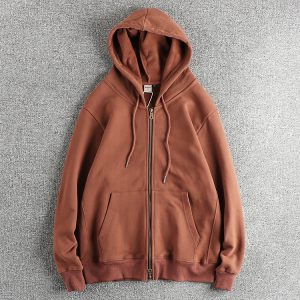 \n\n
\n\n
Where we never cut corners
\n
Center-front zips on jackets and hoodies, and the main pocket zips on cargo styles, take the most daily force. A customer opens a jacket fifty times a week, usually with one hand while carrying something. We pull-test samples before bulk production, then run finished garments through wash cycles and re-check the sliders afterwards. A zipper that scores well dry can jam after washing if the tape shrinks at a different rate than the garment.
\n
Our fleece-lined zip hoodie is a good example of where this matters most: heavy fabric plus a full-length zip means the zipper carries real weight every time the hoodie is worn open.
\n\n
Where a basic zipper is actually enough
\n
Small chest pockets, internal security pockets, and ankle gussets rarely fail, because they are opened a few times a month at most. Spending on brand hardware there adds cost without adding life. On an OEM order we flag this during quoting: moving one pocket type down a grade can save 20 to 40 cents per garment on a 500-piece run, money that is better spent on stronger bar tacks or heavier fabric. Some buyers take that trade, some want brand hardware everywhere, and both are fine. We quote both versions so the decision is yours.
\n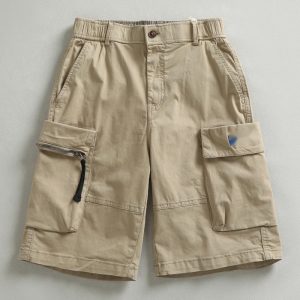 \n\n
\n\n
Snaps and rivets: the parts most buyers forget to specify
\n
Ring snaps on denim jackets and cargo flap pockets fail in two ways. First, pull strength, which depends on the setting pressure in the workshop rather than the snap itself. Second, rust, which only shows up after repeated washing. A snap that looks perfect on a dry sample can pit and stain the fabric after five wash cycles. We wash-test snap garments the same way we test zippers.
\n
Hardware also gets checked under our AQL 2.5 final inspection, which covers function, not just stitching. If snaps fall off during the inspection pull checks, the batch does not ship. We at BenClothing have been producing menswear in Shishi for more than 20 years, and hardware returns are the complaints we hear about most from buyers who switched suppliers to save 30 cents a piece.
\n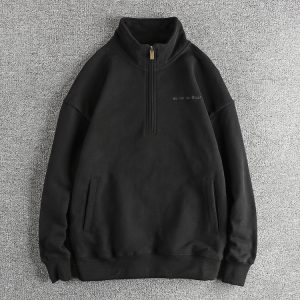 \n\n
\n\n
FAQ
\n
Do all BenClothing garments come with SBS zippers?
\n
All garments with a center-front zip use SBS by default, including our half-zip mock neck sweatshirt range. Small decorative and internal pockets may use a standard zipper, and every quotation lists the hardware grade per position, so you know exactly what you are paying for before confirming the order.
\n
Can we get custom zipper pullers with our own logo?
\n
Yes, as part of our OEM/ODM service. A custom metal puller needs a mold, which usually adds 7 to 10 days before bulk production and has a minimum order quantity. For smaller runs, a printed or woven puller cord is the faster option. Our MOQ stays low enough to test a style before you commit to a mold.
\n\n
Key takeaways
\n
- \n
- Hardware fails before fabric: a few cents per slider is the least expensive insurance on a wholesale order.
- SBS zippers are our default on every center-front zip, because matched tape and slider keep reorders consistent.
- Snaps fail from setting pressure and rust after washing, so we wash-test and re-check them under AQL 2.5 final inspection.
- Dropping one decorative pocket a hardware grade saves 20 to 40 cents per garment on a 500-piece run, which is better spent on bar tacks or fabric.
- Custom logo pullers need a mold (about 7 to 10 days) and a minimum quantity; a puller cord works for small runs.
\n
\n
\n
\n
\n
\n\n
Hardware is small money and big consequences. Decide which positions carry daily force, put brand zippers there, and wash-test everything before bulk ships.
\n\n
Contact us for wholesale pricing and we will reply within 24 hours with a hardware breakdown for your style.
\n