
Why premium wash is not cheap: where the money actually goes
Premium wash is not cheap because it is a separate production stage with its own chemicals, water, labor, and reject rate, not a quick rinse after sewing. A rinse wash is a few steps. An enzyme wash, stone wash, or garment dye adds machines, timed batches, hand work, and inspections, and every one of those costs money. If a quote includes wash for almost nothing, the wash is the first place the supplier is cutting. This article breaks down what you are actually paying for, so you can judge a wash quote before you wire the deposit.
A garment wash is a production step, not a rinse
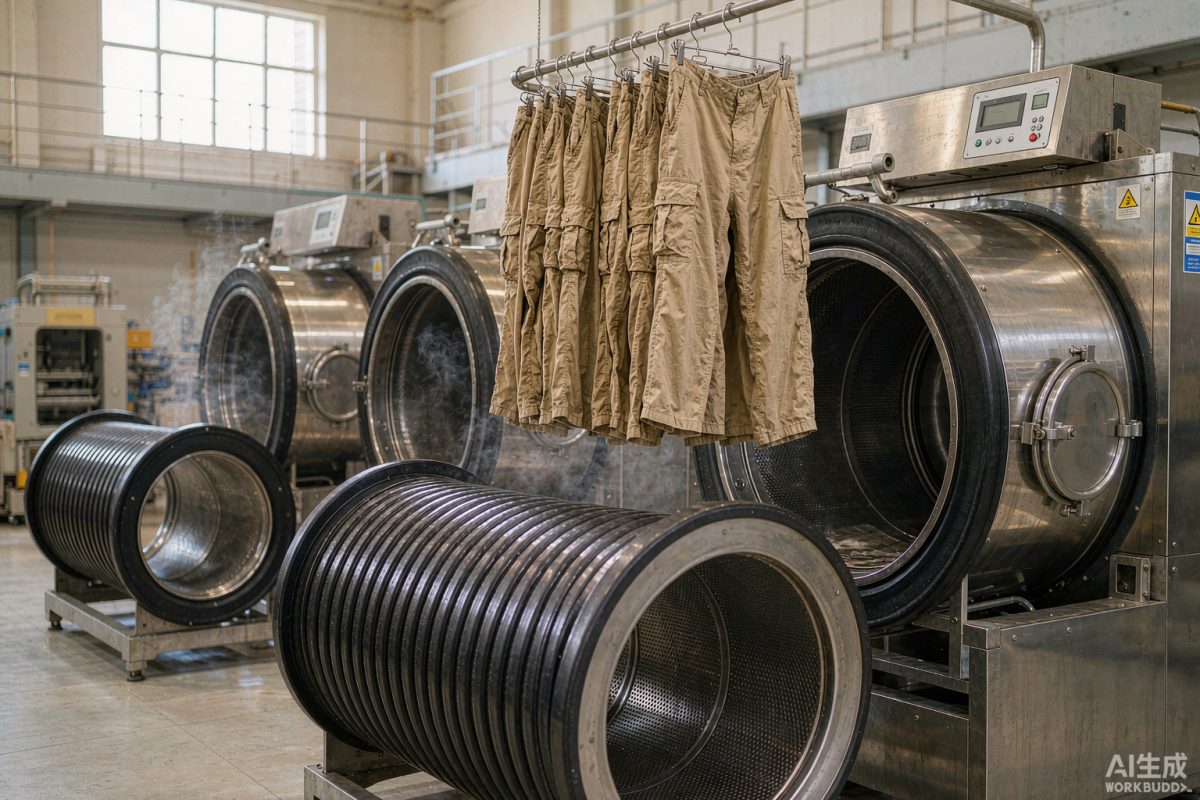
A real wash runs in batches of 50 to 100 pieces inside industrial drums, with a written recipe for each style: chemical type, water temperature, load size, and run time. Enzyme wash needs biological enzymes that eat the surface fibers. Stone wash needs pumice, and the stones wear out and get replaced. Garment dye runs even longer. After the drum, pieces go through softening, hydro extraction, and tumble drying, and the factory tests shrinkage on the first batch before cutting bulk. None of this happens in a sink in the back of a sewing floor.
Where the cost actually goes
Four things drive wash cost. First, chemicals and water: a heavy enzyme or stone wash can add a real per-piece chemical cost, and waste water has to be treated before discharge. Second, labor: vintage looks need hand sanding, whiskering, and edge scraping, done piece by piece. Third, time: each batch ties up a drum for hours, and drum capacity is finite. Fourth, rejects: when a batch comes out too light or too blotchy, the pieces get re-washed or scrapped, and someone pays for that. A supplier who quotes wash at a token price is skipping the tests and the re-wash, and you find out when your customers return the pants.
What the extra cost buys you
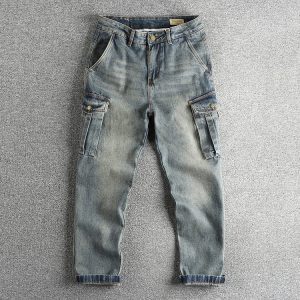
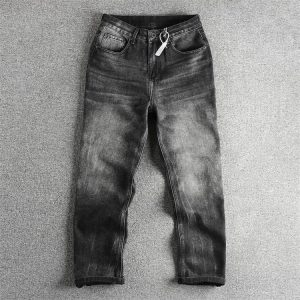
A controlled wash gives you three things a cheap wash cannot. Batch-to-batch color consistency, so the jeans you reorder in December match the ones you sold in September. A soft, broken-in hand feel straight out of the box, which is what shoppers judge in the first ten seconds. And stable shrinkage, so the size chart you printed holds after the first home wash. See the vintage blue washed tooling jeans and the heavy washed black grey retro jeans for what an even, controlled fade looks like on bulk production.
How we keep the cost under control
We at BenClothing run our own wash recipes per style in our Shishi workshop, and every new style starts with a small test batch before bulk cutting. Final inspection follows AQL 2.5 after the wash, not before it, because shrinkage and color are wash outcomes. That is also why we can take small trial orders at low MOQ: you can test one style in one wash before you commit to a full container. If you need a specific fade or hand feel, our OEM/ODM service adjusts the recipe to your sample, and we reply to every inquiry within 24 hours.
FAQ
Can I skip the wash to lower the price?
For raw denim styles, yes, and some buyers do. But washed denim and cargo sell two to three times better in retail because the color and hand feel are already there. Skipping wash also leaves shrinkage and color bleeding in the hands of your customers, which is where one-star reviews come from.
How do I compare two wash quotes?
Ask what is included: the wash type (rinse, enzyme, stone, garment dye), whether shrinkage and colorfastness tests run on the first batch, whether final inspection is AQL 2.5, and who pays for re-washing a rejected batch. A quote that answers all four is usually the cheaper one in the end.
Key takeaways
- A premium wash is a separate production stage with drums, written recipes, and timed batches, not a rinse after sewing.
- Wash cost comes from four places: chemicals and water treatment, hand labor such as sanding and whiskering, drum time, and rejects that get re-washed or scrapped.
- A controlled wash buys batch-to-batch color consistency, a soft hand feel out of the box, and stable shrinkage after the first home wash.
- Every new style at BenClothing runs a small test batch before bulk, and final inspection follows AQL 2.5 after the wash.
- When comparing quotes, ask for wash type, test plan, inspection standard, and the re-wash policy; what is missing from the answer is where the supplier saves money.
In short
Premium wash costs more because it is real production: chemicals, hand work, drum time, and a reject rate someone has to absorb. Judge the quote by what it includes, and you will not pay for the cheap wash twice.