
How to Spot a Good Zipper: The Stamp, the Pull, the Teeth
Quick answer: a good zipper carries its maker’s mark stamped on both the slider back and the chain teeth, moves smoothly without catching, and survives thousands of open-close cycles. Cheap copies usually stamp only one side, or nothing at all. It is the least glamorous part of a hoodie or jacket, and the first one to send a garment to the donation pile when it fails. You cannot test a zipper through a product photo, but you can learn what to look for in the photos, and what to ask. Here are the three checks we run on our own hardware before a single garment ships.
Check the stamp: slider back and teeth
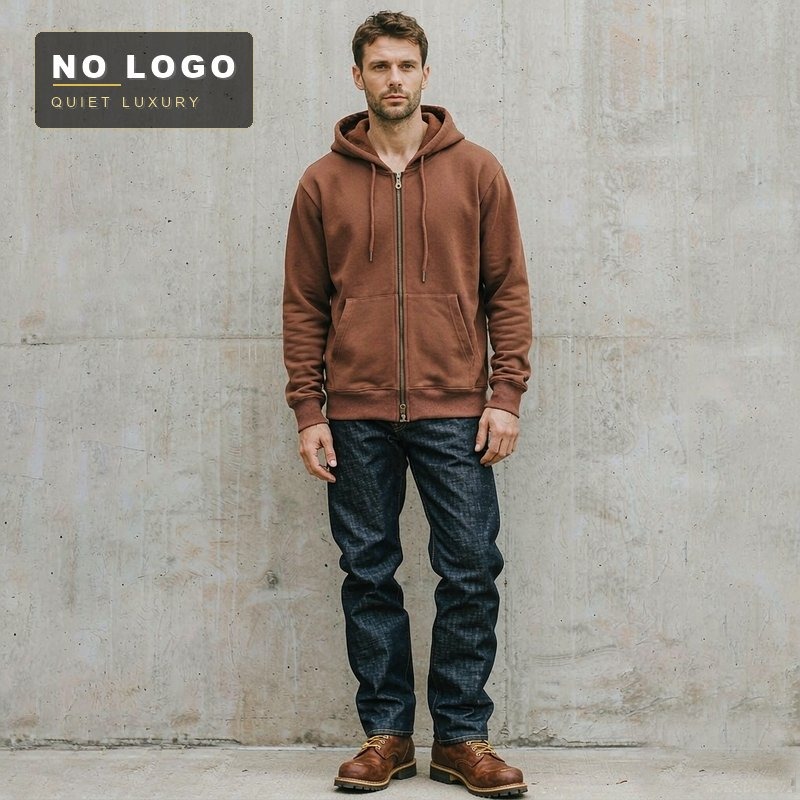
Established zipper makers stamp their mark in two places: the back of the slider and on the chain teeth themselves. The stamp is small and crisp, not deep and blobby. A mark on one surface only, or a mushy stamp, usually means an unbranded copy. This is also the quickest way to check a garment you already own. On our fleece-lined zip hoodie, run a fingernail across the slider back and you will feel the engraving. We spec SBS hardware on our zip garments for exactly this reason: the stamp is a promise the maker puts its name on.
The pull test: smooth, straight, no wobble
Zip it up and down slowly twice. A good zipper glides with even resistance the whole length, no gritty spots, no sudden looseness near the top. Watch the slider too: it should sit square on the teeth, not tilted. A slider that rocks side to side will chew the tape within a season. On a jacket like our zip-up stand collar sweatshirt, the two-way motion should feel the same at the hem as at the collar. Catching once can be a fluke; catching in the same spot twice is a defect.
Why we pay for hardware you never photograph
Nobody buys a hoodie for the zipper, which is exactly why it is where low-cost production hides savings. The failure is expensive anyway: a split zipper turns a garment into waste, and no stitch quality saves it. That is why we at BenClothing treat hardware as a spec, not an afterthought. Our outdoor zip-pocket jacket and plaid overshirt both run SBS zippers sized to the fabric weight, because a light zipper on a heavy jacket is a countdown to failure. When you compare garments online, zoom into the product photos: stamped sliders, aligned teeth and a straight pull are visible even on a screen.
Key takeaways
- Two stamps, one promise: a quality zipper marks both the slider back and the chain teeth.
- The pull test takes 10 seconds: even resistance, no gritty spots, slider sitting square.
- A slider that wobbles sideways wears out the tape within a season.
- Hardware is where budget production saves money; it is also the first thing that fails.
- Zipper failure sends a garment to the bin, so the zipper is a longevity spec, not a detail.
FAQ
Why do factories pay more for branded zippers?
Because warranty returns from zipper failures cost more than the zipper. A branded pull costs cents more per garment and saves the whole garment when it counts.
Can a broken zipper be repaired?
Sometimes, a tailor can swap a slider or rebuild the top stop. But on a cheap garment the repair costs more than the garment, which is why picking good hardware upfront is the cheaper move.
Final word
Three checks, ten seconds, and you will never look at a product photo the same way. See how it looks in practice across our collection.