
Buying Pants Online Without Trying Them On: The 2 cm Tape Trick
Quick answer: you do not need a fitting room to buy pants that fit. Take a pair you already own that fits well, lay it flat, and measure four things: waist across, front rise, inseam and leg opening. Compare those numbers with the seller’s flat measurements. If every number lands within 2 cm, the fit will be close enough to wear. Label sizes slide around between brands. A tape measure does not. This is the check we recommend to anyone buying pants online for the first time, and it takes about four minutes.
Start with a pair you already own
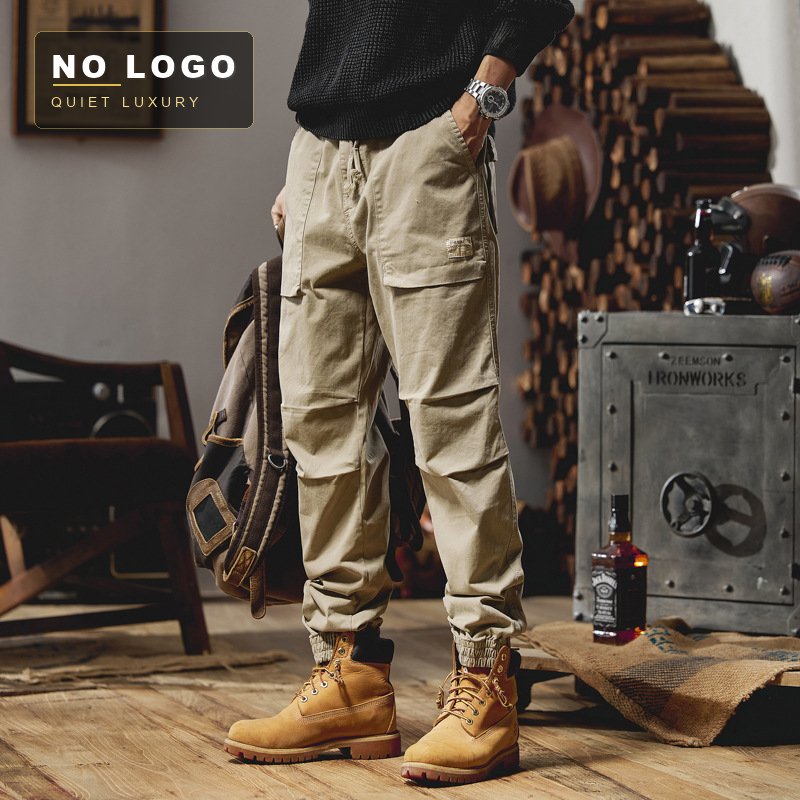
Most people shop by letter: I am a 32, I am a large, I am always a medium. Then the parcel arrives and the waist sits an inch too low, or the leg is cut so wide it swallows a boot. The problem is not your body. It is that “32” is a marketing decision, not a measurement. Every brand grades its own blocks, and washed finishes move the numbers a second time. So stop shopping by letter. Take the pants you reach for most, the ones that fit the way you want, and treat them as your pattern. Lay them flat on a bed, smooth out the wrinkles, and get a tape measure. If you own a relaxed multi-pocket cargo pair you like, that one pair is worth more than any size chart on the internet.
The four numbers that decide whether pants fit
Waist across. Button the pants and lay them flat. Measure straight across the top edge of the waistband and double it. Do not pull the fabric tight; you want the resting number.
Front rise. Measure from the crotch seam straight up to the top of the waistband. This tells you where the pants will sit on your hips, which matters more than most people expect.
Inseam. From the crotch seam down the inside of the leg to the hem. This decides whether the hem breaks once or stacks up.
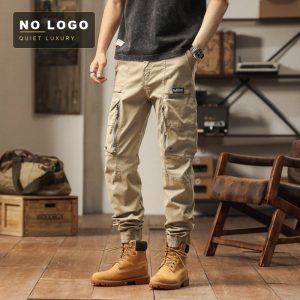
Leg opening. Measure across the hem and double it. This is the number that separates a straight cut from a tapered one, and the one nobody checks before ordering. Compare it against the boots or shoes you actually wear. Our loose tapered cargo pants sit narrow at the hem on purpose, which is why they behave differently under a boot than a wide straight pair.
Why 2 cm is the number to trust
Flat measurements are never exact. A washed pair is hand-measured by a person, and fabric relaxes and stretches with wear. That is why we give a tolerance instead of a single number. If your own pair measures 43 cm across the waist and the chart says 44, you are fine. If your pair says 43 and the chart says 48, no opinion about brand sizing will save that order. Keep the difference inside 2 cm on the waist and rise, and inside 3 cm on the leg opening if you want to keep the silhouette you already like. Anything wider and you are buying a different shape, not a different size. A washed cargo jogger with an elastic cuff, for example, reads tight at the hem on purpose, so compare it with another jogger rather than with a straight-leg pair.
Check one more page before you pay
Measurements get you close; policy covers the rest. Read the returns page before checkout, not after the parcel arrives. You want to know the window, who pays return shipping, and whether washed or altered items are excluded. If the seller publishes flat measurements and a clear return window, the risk of ordering online drops to almost nothing. That is the standard we hold ourselves to, and you can read the details on our refund policy page. If a pair still arrives wrong, a rugged tapered cargo is the kind of garment worth exchanging rather than returning, because you now know exactly which number to adjust.
Key takeaways
- Measure a pair you already own, not your body: waist across, front rise, inseam, leg opening.
- Waist across and front rise should land within 2 cm of the chart; leg opening within 3 cm.
- Label sizes are graded per brand, so “32” means something different in every catalog.
- Double every flat measurement you take; single-sided numbers are the most common mistake.
- Read the return window before checkout, and keep the tape measure for the next order.
FAQ
What if I fall between two sizes?
Buy the size that matches your waist-across number and accept a small difference in the leg. Waist and rise are the hard limits, since a tailor can taper a leg but cannot add fabric to a waistband. If your two candidate sizes differ mainly in the leg opening, take the narrower one and let the fabric relax with wear.
Do washed pants shrink after the first wash?
Garment-washed pants have already been through the shrinking stage at the factory, so the change at home is small. The bigger risk is heat. Wash cold, avoid the dryer, and line dry flat. If you want to be careful, measure your pair again after the first wash and note the number; you will have your own reference for every order after that.
The short version
Four minutes with a tape measure beats a fitting room you cannot visit. Measure the pair you already like, compare it with the seller’s flat numbers, and keep the difference inside 2 cm. Then order with confidence and wear the collection you actually want.