
Six Lines Your Workwear Tech Pack Should Never Leave Blank
Quick answer: fabric weight with a tolerance, shrinkage allowance, measurement points with tolerances, seam and stitch specification, trim and hardware schedule, and packing and carton spec. Leave any of the six blank and the factory fills it in for you — usually with whatever is easiest to make, not what you intended.
A tech pack is a factory instruction, not a pitch deck
Most tech packs fail for the same reason: they are written to impress a buyer rather than to instruct a sewing line. A pitch deck sells an idea. A tech pack tells someone which seam allowance, which tolerance and which trim to use when nobody from your office is in the building.
The test is simple. Hand your tech pack to a pattern maker who has never spoken to you. Every question they have to ask is a line you left blank.
1. Fabric weight, with a tolerance
A gram weight without a range is an instruction to guess. State the target, the acceptable band around it, the test method, and the unit. Without a band, a mill that lands two grams light has technically met the number and you have technically accepted it.
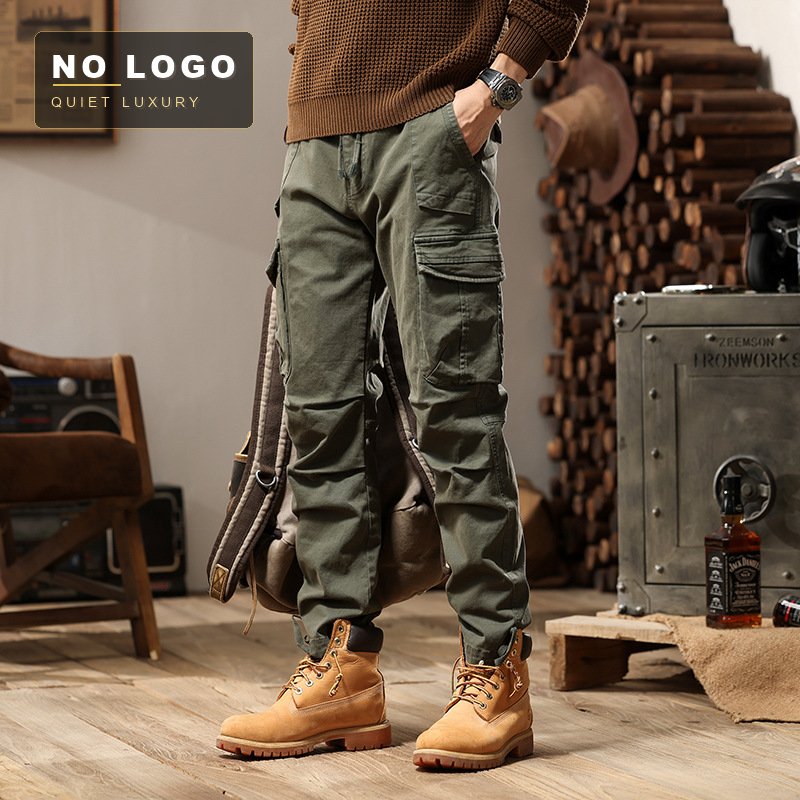
Weight is also what decides how a garment falls. A heavy utility cargo trouser and a light shirt described only as mid-weight cotton will not read as the same programme, because the numbers that make one drape well are not the numbers that suit the other.
2. Shrinkage allowance
Woven cotton moves when it is washed, and every buyer learns this in the wrong order. The tech pack should say whether the pattern was cut to allow for shrinkage, how much allowance was applied, and after which wash cycle it was measured.
If shrinkage is not written down, the first bulk wash becomes the test. That test then happens on customer orders rather than on a sample table, which is the expensive place to learn a number.
3. Measurement points and tolerances
A list of measurements without tolerances is a conversation, not a specification. State the point, the target, the permitted deviation in both directions, and the unit — centimetres or inches, stated once and respected throughout.
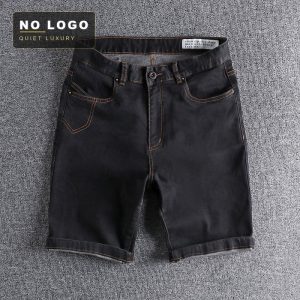
Tolerances matter most on short garments, because there is less length to absorb an error. A short five-inch inseam has almost nowhere to hide a two-centimetre deviation, and the same deviation on a long trouser would pass unnoticed.
4. Seam, stitch and thread specification
Seam type, seam allowance, stitches per unit length, thread size and thread colour. These lines are usually copied from a previous style and never checked, which is how a light shirting weight ends up sewn with a heavy bottom-weight construction.
Write the reinforcement too: bar tacks at pocket mouths and fly ends, or a stated alternative. If the pack does not say it, the default is whatever the line already has threaded.
5. Trim and hardware schedule
Every zip, button, cord, eyelet, label, tag and thread cone, with size, finish, colour and placement. A blank trim line gets filled from whatever the factory has in stock this month, and stock rotates faster than most buyers assume.
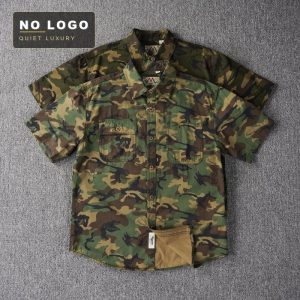
Print and pattern placement belongs here as well. A camouflage shirt depends entirely on print scale, repeat size and where the print is cut relative to the placket and shoulder seam. Camo is not a specification; a scale, a repeat and a placement are.
6. Packing and carton specification
Folding method, bag type, size sticker position, carton dimensions, maximum carton weight, and how the size ratio is laid out inside each carton.
This is the line that delays a shipment without ever appearing on the schedule. Cartons that were never specified get packed into whatever the carton supplier had available, and the loadability maths that looked comfortable on paper no longer matches the container that actually arrived.
How a blank line becomes a late delivery
A missing line rarely stops production. It slows it in a way nobody records: a question by email, a photo of two options, a day of waiting, an answer that arrives after the cutting has already started. None of that shows up as a delay until the shipment date moves.
Multiply one unanswerable line by a programme of several styles and the calendar moves by weeks. That is why the cheapest place to fix a tech pack is before the first cut, not after the first container.
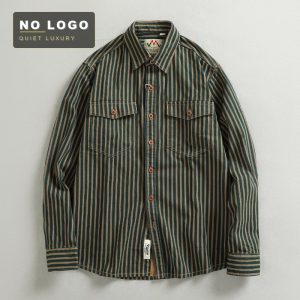
Finish levels belong in the same discipline. If the style is garment washed or distressed, washed is not a level. A washed workwear overshirt needs a wash recipe, a target hand feel and a sealed reference, or every lot will come back slightly different and each difference will be argued rather than measured.
Key takeaways
- Six lines: weight with tolerance, shrinkage, measurements with tolerance, stitch spec, trim schedule, carton spec.
- A number without a tolerance is an instruction to guess.
- Shrinkage that is not written down gets tested on customer orders.
- Blank trim lines are filled from whatever stock is on the floor.
- Packing and carton lines delay shipments without ever appearing on a schedule.
Frequent questions
Our tech pack is complete. Can we just send it as a PDF?
Send the PDF, but send the editable file as well, and confirm which version is authoritative. Most disputes over bulk quality are version disputes: the factory built from the sheet you sent in March, you are measuring against the sheet you revised in May, and neither side is lying.
Who owns the tech pack if the factory develops it?
Settle this before the first sample, not before the first reorder. If a factory builds the pack, the measurements most likely to be specified tightly are the ones that are convenient for them. That is not dishonesty; it is just whose interest the document was written in. If you want a pack you can take to a second supplier, send us the style and target window and we will write the specification so it travels.
Summary
A tech pack is judged by the questions it prevents. Fill those six lines, state a tolerance on every number, and the first cut stops being a negotiation.