The Quiet End of Logomania: Why Details Beat Logos Now
Not long ago, the loudest thing at a menswear fair was a chest print. This January, buyers walking the European fairs kept slowing down at the opposite: plain fabric, heavy weight, no logo in sight. The season’s commentary was blunt about it. The logomania era is ending, and quiet luxury menswear, clothing that carries no visible branding and earns its price through fabric, stitching, and hardware, has moved from a niche taste to the main direction for 2026 and 2027. If you have ever paid good money and felt you were buying the print instead of the shirt, this shift works in your favor.
Logomania Had a Good Run. Buyers Ended It.
Big prints made sense when a sweatshirt was a billboard. The problem showed up after a few washes: the print cracked, the trend moved on, and the shirt became last season’s ad. Industry commentary from January’s European menswear fairs kept landing on the same observation. Style signals have shifted from what is shouted on the chest to what is sewn into the garment. Buyers now stop at plain, heavy pieces and ask what the fabric weighs. A logo hoodie dates itself in a season. A 550g unbranded hoodie still looks like itself in year three. That is the anti-fast-fashion math: buy fewer, buy heavier, wear longer, and let the garment instead of the graphic carry the look.
Quiet Luxury Is a Weight Label, Not a Price Tag
Most people picture a cashmere crewneck from a luxury house when they hear quiet luxury. In workwear menswear, the term is something you can actually measure: fabric weight. Anything under 250g thins out after a few seasons. A 350g air-layer pullover holds up to daily rotation. A 400g terry hoodie takes winter layering. A 550g fleece-lined piece works as a jacket in deep winter. The numbers are printed on the product page where anyone can check them. Your money goes into yarn, density, and stitching rather than into embroidery placement.
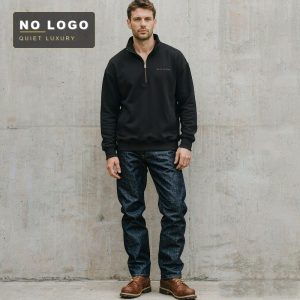
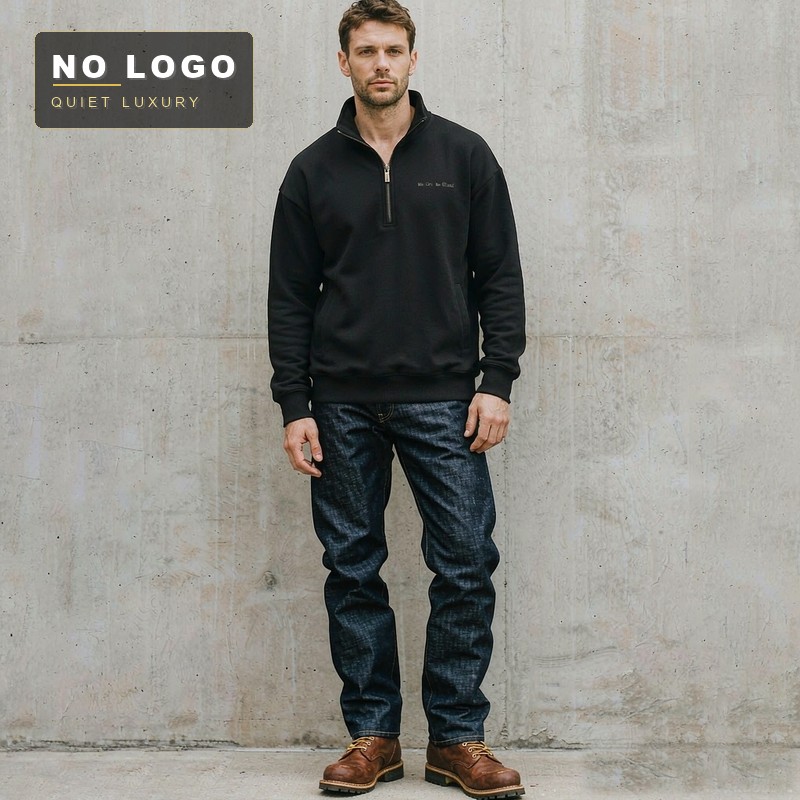
Our half-zip mock neck is a clean example. Solid color, no print, heavyweight fleece. It does not explain itself on a hanger. It talks when you pick it up.
Run This Four-Point Check on Any Garment
Once details replace the logo, reading a garment takes four steps, and none of them need a tag inside the collar.
- Weight label: a product page that states 350g, 400g, or 550g is inviting you to verify. Pages that stay silent on weight are asking you to trust the photo.
- Stress points: look for bar tack reinforcement at pocket corners and double-needle side seams. These cost cents to add and years to regret skipping.
- Hardware: a zipper pull with a stamp on the back and a smooth pull through the teeth. Good hardware is the cheapest insurance on the garment.
- Garment wash: a piece washed before packing has already done its shrinking at the factory. The size you buy is the size you keep.
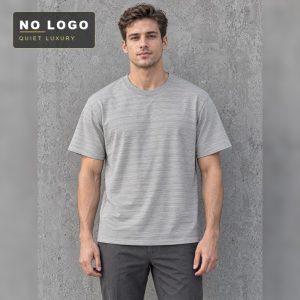
Texture is the quietest tell. A knit like this shows its construction up close, from yarn twist to stitch density, and never needs a name across the chest.
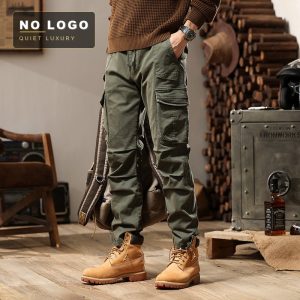
The same logic runs from the waist down. These premium loose-fit cargos carry their claim in the pocket layout and the fabric hand, not in a patch.
How to Wear No-Logo Without Looking Plain
Take the logo off and three things take over the talking.
First, silhouette. A relaxed straight-leg cargo with a solid heavyweight top says more than any chest lettering. Second, texture. Knit grain, corduroy ridges, and wash fade are signals you only catch up close, which is exactly where quiet luxury lives. Third, weight. One heavy outer layer anchors the whole outfit and lets everything under it stay simple. A washed corduroy shirt over a plain tee does the job without trying.
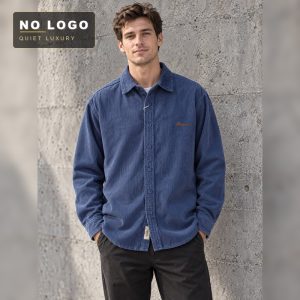
At BenClothing, we keep our labels small on purpose. The budget goes into fleece weight, reinforced stitching, and stamped hardware, the parts you feel in the third year of wear, not the first wash.
Key takeaways
- January 2026 fair commentary across European menswear called time on logomania; details are the new style signal.
- Quiet luxury in workwear is measurable: 350g for daily rotation, 400g for warm layering, 550g to wear alone in deep winter.
- Four-point check before buying: weight label, bar tack reinforcement, zipper stamp, garment wash.
- Garment-washed pieces shrink before packing, so the size you order is the size you keep.
- No logo does not mean boring. Silhouette, texture, and weight replace the graphic as the statement.
FAQ
Is quiet luxury the same as old money style?
They overlap but are not the same thing. Old money borrows an atmosphere through styling. Quiet luxury rests on two verifiable things: no visible branding and craft you can check with your hands. In workwear, that evidence is fabric weight, reinforced stitching, and stamped hardware.
Does clothing without logos cost less?
At the same budget, unbranded pieces usually give you more fabric, because nothing was spent on the marketing spot. It does not cut the other way though. No logo alone proves nothing. If a product page will not state the weight, keep your wallet closed a little longer.
The end of logomania is not a loss for style. It hands attention back to the garment itself. Next time you shop for a hoodie, read the weight before you look for the label.