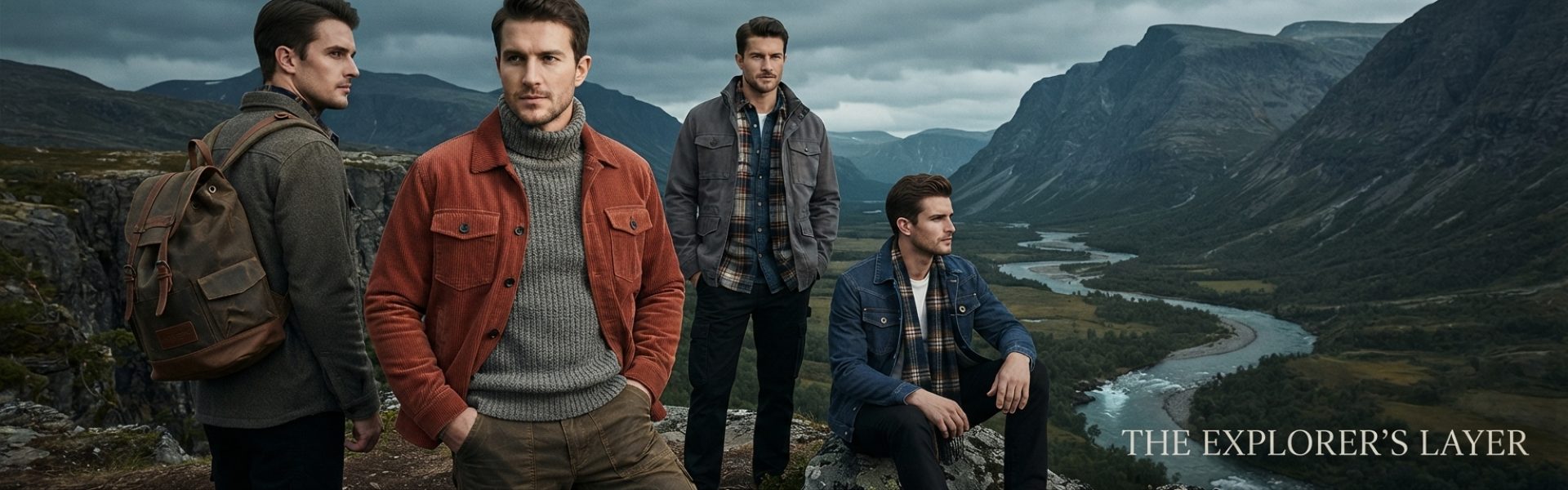
The Five-Piece Autumn Rotation: Buy Once, Wear for Years
Quick answer: five pieces cover an autumn. One heavier jacket, one shirt-jacket or overshirt, one knit or sweatshirt, one long-sleeve tee or polo, and one pair of work pants or denim. Keep them in one palette and five garments give you more than ten combinations. Nothing on that list is a trend piece, so nothing on it expires in six months. Buying fewer pieces and wearing them longer is the whole anti-fast-fashion argument, and it is also how the cost per wear drops below the fast alternative.
Why five beats fifteen
A wardrobe of fifteen cheap pieces feels like choice and behaves like noise: nothing goes together confidently, several items never leave the shelf, and the ones that do lose their shape inside a season. Five pieces that share a palette and a weight class work the other way. Every combination is wearable, every garment earns a place, and each one is bought at a level of quality you can afford because you are buying one instead of four. The number is not the point. The discipline is.
The five, and the job each one does
One heavier jacket. Your outermost layer for most of the season. It should hold its shape when open, because that is how you will wear it most.
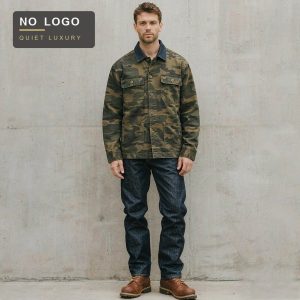
One shirt-jacket or overshirt. The piece that makes the system flexible: outer layer on a mild day, middle layer when it turns cold.
One knit or sweatshirt. Warmth without width. This is the layer that buys you the extra weeks.
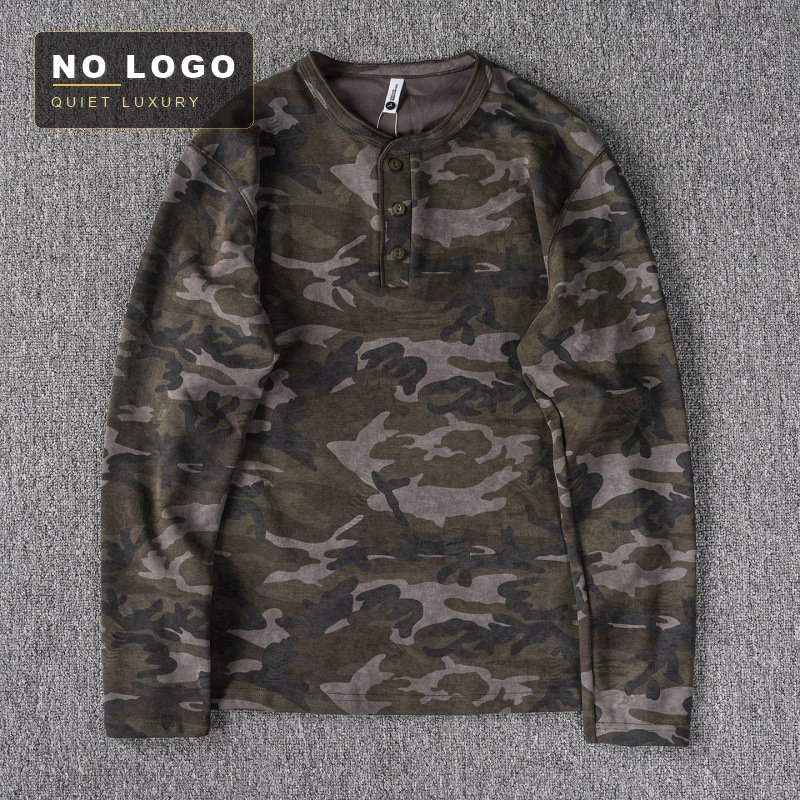
One long-sleeve tee or polo. The base that sits against the skin on the days when a tee is not enough. A 300g heavyweight long-sleeve henley holds a collar and a hem line well enough to be visible, not just hidden under everything else.
One pair of work pants or denim. Something with a straight fall and enough weight to survive weekly wear. heavy washed jeans cover both a workday and a weekend, which is what a rotation piece has to do.
One palette, not five outfits
The rule that makes five pieces work is restraint on colour. Pick two neutrals and one accent, then buy only inside that range. With a single palette, every piece matches every other piece, so combinations multiply without effort: five garments in one palette give you jacket-plus-tee, shirt-jacket-plus-knit, everything-plus-denim, and so on. A long-sleeve polo in slub cotton sits in this system because it bridges the tee and the shirt-jacket in weight, so it never looks out of place in either slot.
Care is what makes a rotation last
Five pieces only pay off if they survive more than one season. Wash cold, skip the dryer, dry flat, and repair before you replace. A missing button, a split seam at a pocket corner and a worn cuff are all repairable, and the repair costs a fraction of a replacement. Keeping the count low also means fewer garments going through the wash each month, which is the quiet part of the environmental argument: the most sustainable item is the one you keep wearing.
When to add a sixth piece
Add only when a gap shows up in practice, not in theory. The usual gap is the outer layer: when the jacket you own is the wrong weight for the coldest week, or when rain makes it the wrong material. That is when a heavier, denser piece earns its place, like a washed cotton four-pocket jacket that takes a layer underneath without losing its line. A piece bought to close a real gap gets worn weekly. A piece bought because it was on sale gets worn twice.
Key takeaways
- Five pieces, one palette, more than ten combinations, no trend pieces.
- The five jobs: heavier jacket, shirt-jacket, knit, long-sleeve base, one bottom.
- Restraint on colour is what makes a small wardrobe feel like a large one.
- Repair before replacing: a button, a seam and a cuff are all fixable.
- Add a sixth piece only when a real gap shows up, never because of a discount.
FAQ
Isn’t five pieces boring?
It looks repetitive only if the palette is loud and the fits are identical. Change the silhouette instead of the count: a wide jacket over tapered pants, then a shorter shirt-jacket over the same pants. Five well-chosen pieces read differently on a Tuesday and a Saturday because the shapes change, not because the pile is bigger.
What if autumn is short where I live?
Then the same five pieces stretch across a longer window by weight rather than by season. Drop the heaviest jacket from the rotation and keep the shirt-jacket as the outer layer. The system is the same; only the pairings change. That flexibility is the reason to choose pieces that work as both middle and outer layers.
The short version
Five pieces, one palette, and a repair habit. Buy the heavier jacket once, keep the base layers thin, and let the denim do the work of five cheap bottoms. Nothing here goes out of style, because nothing here was designed to be in style. Browse the collection and build the rotation rather than the pile.