One Washed Jacket, Three Weeks of Weather: How to Stretch an Autumn Jacket
Quick answer: a washed cotton or denim jacket covers about three weeks of autumn on its own, as long as you change what is underneath it. Around 20C, wear it open over a tee. Around 15C, close it over a midweight long sleeve. Around 10C, add a light knit or a hooded layer underneath. Around 5C, stop treating it as outerwear and move it into the middle of the stack with a shell above it. The jacket never changes. The layers do. That is the whole trick, and it costs nothing.
What a washed jacket is actually good at
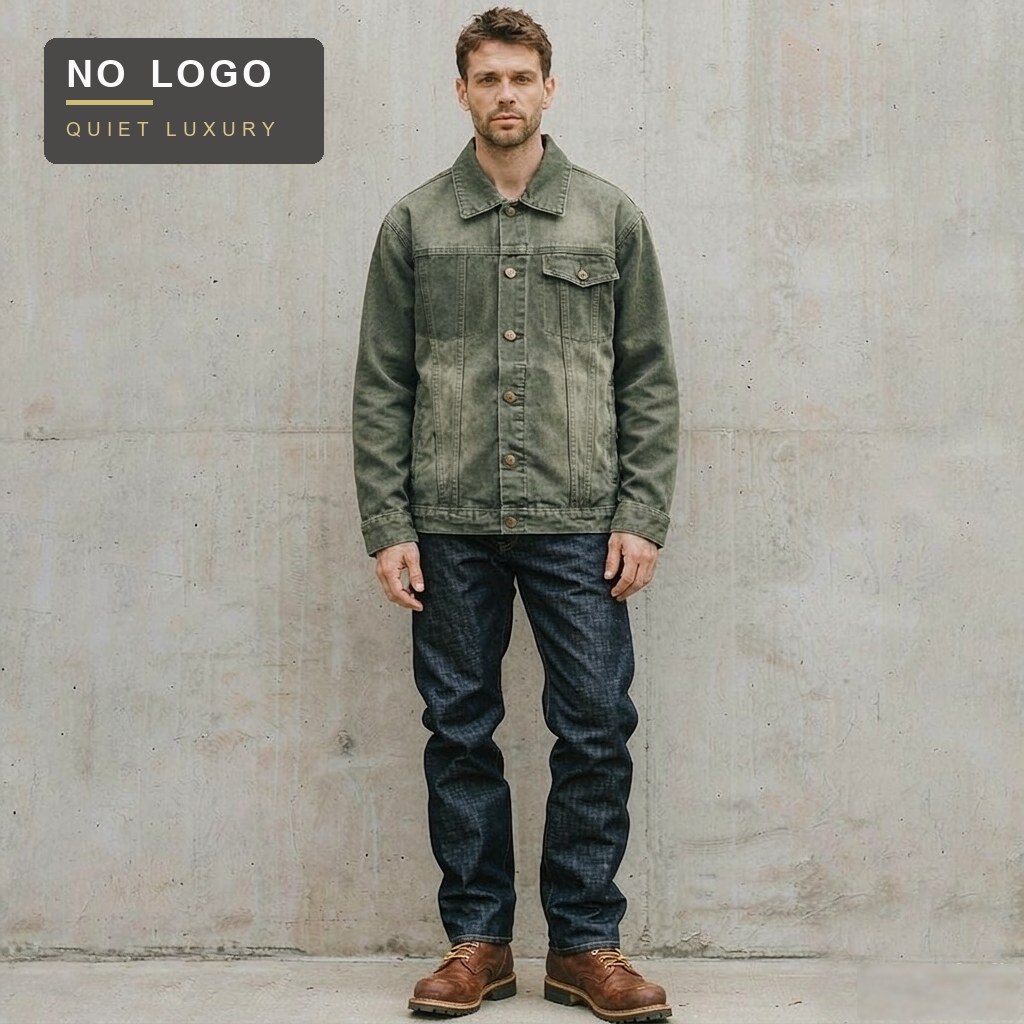
Washing takes the stiffness and the sheen out of cotton, so the surface goes matte and the fabric stops standing away from the body. That makes a washed jacket comfortable across a wide band of temperatures, which is exactly why it stretches so far into autumn. It hangs straight, it does not crackle, and it reads calm rather than technical. What it does not do is stop rain or block wind, so treat it as a dry-weather layer. Our loose retro denim jacket is a good example of the category: soft enough to wear indoors, structured enough to hold its line.
20C: open, over a tee
At this temperature the jacket is a shade, not a coat. Leave it open so air moves through the front, and keep the layer under it thin. A plain tee, or a light long sleeve if the morning is cool. The mistake at 20C is closing the jacket and trapping heat you will regret on the walk home. A heavy-washed denim jacket still works here if you keep it open, because the weight hangs off the shoulders instead of clinging.

15C: closed, over a midweight layer
Once the afternoon stays under about 15C, close the front and give it something with a little body underneath. This is where denim and heavier cotton separate themselves from thin overshirts: they hold a shape over a second layer instead of collapsing into it. A vintage washed denim overshirt works as that middle piece under a jacket, and later in the season it can swap roles and become the outer layer on a milder day.

10C: add a knit or a hooded layer
Two mid layers is the step most people skip, and it is the one that buys you the most extra days. A thin knit under the jacket adds real warmth without adding width, because the air it traps does the work. Keep the knit fine, keep the jacket unlined, and avoid doubling up on bulk at the chest. If the jacket has a stand collar, a thin hooded layer underneath is comfortable here and it keeps the neck sealed without a scarf.
5C: it becomes the middle layer
Below about 5C, a washed jacket stops being outerwear and becomes insulation. Put a shell over it, and the jacket turns into the warm middle of the stack: it holds its shape, the shell handles wind and rain, and the combination is warmer than either piece alone. A clay-dyed denim jacket with a stand collar sits well in that role because the collar seals against the shell and the fabric does not bunch at the sleeve. Wear the layers underneath thin, not thick; the middle layer is already doing the warming.
What a washed jacket cannot do
It is not a raincoat, it is not a windbreak, and it is not a winter coat. In steady rain, cotton soaks and gets heavy. In strong wind it lets air straight through. Below freezing it is insulation or nothing. Being clear about this is what stops you buying a fourth jacket you do not need: one washed piece plus a shell covers a long autumn, and the shell is the piece you already own.
Key takeaways
- One washed jacket covers roughly three weeks of autumn if the layers under it change.
- 20C open over a tee, 15C closed over a midweight layer, 10C with a thin knit, 5C as the middle layer.
- Washing removes stiffness and sheen, which is why the fabric sits close and hangs straight.
- It is a dry-weather layer: no rain protection, no wind blocking, no deep cold.
- Keep the added layers thin. Air trapped in the stack warms you, not extra thickness.
FAQ
Can I wear a washed jacket in the rain?
Briefly, and not comfortably. Cotton takes on water, the fabric gets noticeably heavier, and it dries slowly once it is soaked through. A short walk in light drizzle is fine. For steady rain, wear a shell above the jacket instead, which is also the layer that keeps the wind out.
Will a washed jacket stretch out of shape?
Denim and heavy cotton relax with wear rather than stretch permanently, and they come back after a wash. The places that move first are the elbows and the front of the shoulders. Washing cold and flat drying keeps the shape steadier than hanging a wet jacket by the shoulders, which is where most of the sag actually comes from.
The short version
Buy one washed jacket and change the layers under it: thin at 20C, midweight at 15C, a knit at 10C, and a shell above it at 5C. Recognise what it cannot do, and you will not spend autumn shopping for a second coat. See the rest of the collection if you need the layers, not the jacket.