
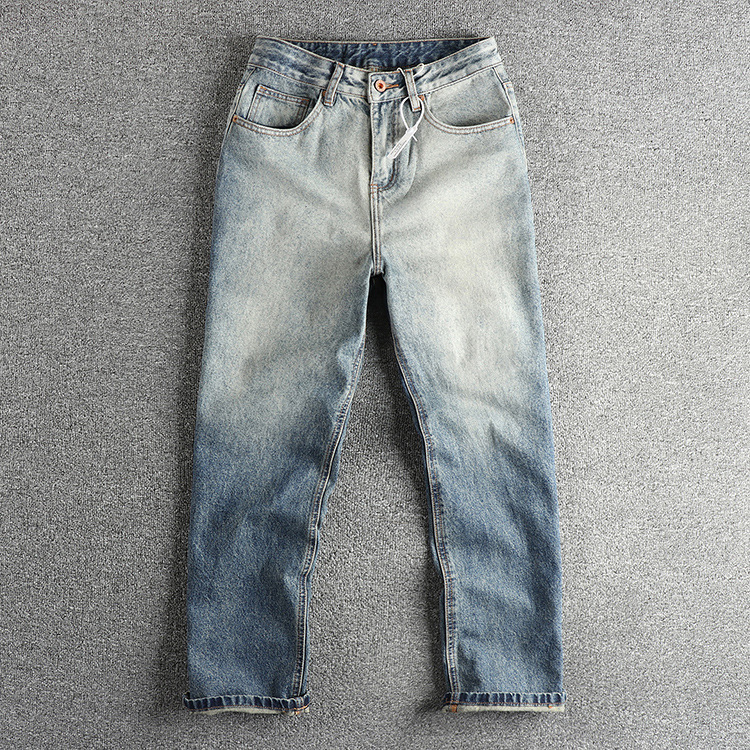
What Boot Goes With Work Pants: Derby, Pull-On, or Chore Boot
What should the hem of your work pants actually touch?
Most people answer that question by thinking about the boot. It works better the other way round. The boot you can wear is decided by three things you already fixed when you bought the trousers: the leg opening, the weight of the fabric, and where the hem breaks. Get those three right and almost any decent boot works. Get them wrong and the most expensive boot in the shop will still look borrowed.
Start With the Hem: Where the Pants Stop Decides the Boot
A hem break is not a style preference, it is a measurement. Three breaks matter here:
- Full break — the fabric folds once onto the boot. Works with a chunky boot, looks messy with anything slim.
- Half break — the fabric just touches the boot without folding. This is the one that works with all three boot types below.
- No break — the hem sits above the boot collar and the sock shows. Needs a straight or wide leg, and it needs the right sock.
The leg opening matters more than the break. A 20 cm opening over a chunky boot gives you a clean vertical line. The same boot under a 16 cm opening swallows the shoe and leaves a visible bulge at the ankle. Before you buy a boot, measure the opening of the trousers you plan to wear with it.
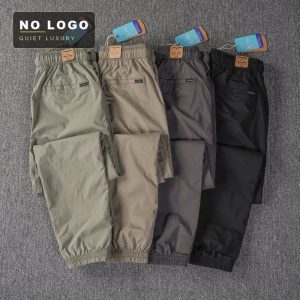
The Three Boots, Side by Side
| Boot | Best with | Weak with | Leg opening |
|---|---|---|---|
| Derby | Straight chino, flat-front trouser, most of the week | Very wide legs, very heavy fabric | 17-20 cm |
| Pull-on | Heavy twill, denim, wide-leg workwear | Slim tapered trousers | 19-22 cm |
| Chore boot | Cargo pants, canvas, anything with a rough texture | Tailored wool, sharp creases | 20-24 cm |
Derby: The One Pair That Handles Almost Everything
If you own one pair, own this. A derby is open-laced, which means the opening adjusts, which means it accommodates a slightly higher instep and a slightly wider foot without looking strained. That adjustability is why it has been the default working shoe for more than a century — it is not a fashion decision, it is an engineering one.
With a “straight-leg washed chino” it is the safest combination in this article. The straight leg falls cleanly over the collar, the half break sits right, and nothing about the silhouette argues with anything else. Do not go too refined: a thin leather sole and a sharp toe need a trouser with a crease, and most workwear does not have one.
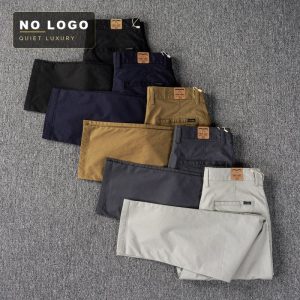
Pull-On: The Boot That Came Back for a Reason
The pull-on boot — no laces, two side tabs, a shaft that reaches just past the ankle — spent a long time filed under costume. It is back on the street for a practical reason: it is the only boot that goes on in two seconds, and it has no hardware to fail.
The shape works with heavy fabric because the shaft gives the trouser something to sit against. Pair it with denim or a heavy twill and let the hem rest on the shaft. The failure mode is the opposite pairing: a slim tapered trouser over a pull-on boot leaves the shaft bare and the whole thing looks like it is waiting for a different trouser.
Chore Boot: Built for the Same Job as the Pants
A chore boot is the footwear equivalent of a work jacket. It has a rounded toe, a flat or wedge sole, and usually a rough-out or oiled upper. Nothing about it is trying to look sharp, which is exactly why it works under a heavy trouser.
This is the pairing for “loose-fit utility cargo pants“. The rough texture of the boot matches the texture of the fabric, and a wide leg falls over the collar without dragging. Avoid it with anything tailored: the moment a trouser has a crease down the front, the boot underneath reads as the wrong half of two different outfits.
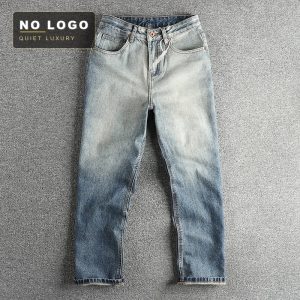
Three Combinations That Never Work. Here Is Why.
A wide leg with a refined dress boot. The trousers move, the boot does not. Everything above the ankle looks casual and everything below looks like it belongs at a wedding.
A no-break hem with a chunky boot. The collar and the hem fight for the same 3 cm. Either drop the hem to a half break or move to a slimmer boot.
A tapered trouser with a tall shaft. The trouser is too narrow to sit over the shaft and too wide to tuck in. This is the combination that looks borrowed even when everything fits.
Key takeaways
- Measure the leg opening before you buy the boot. 17-22 cm covers all three types here.
- The derby is the safest single pair; the pull-on is the fastest; the chore boot is the heaviest.
- The half break is the only break that works with all three.
- A wide leg needs a chunky boot, and a tapered leg needs a low one. Mixing them is what makes footwear look borrowed.
- Texture should match across the ankle: rough with rough, refined with refined.
FAQ
Can I wear the same boot with cargo pants and with a suit trouser?
Rarely with the same result. A derby comes closest because it is plain enough to pass in both directions, but a suit trouser needs a thinner sole and a narrower toe. If you want one pair for everything, expect it to be slightly wrong somewhere.
Does the sock matter if the hem covers the boot?
Only when you sit down, and that is when people notice. If you wear a no-break hem, the sock becomes part of the outfit. Choose it as deliberately as the boot, and keep it in the same temperature range as the trousers.
Measure your hem before you shop for boots. The pieces we cut for that range are in our collection.