
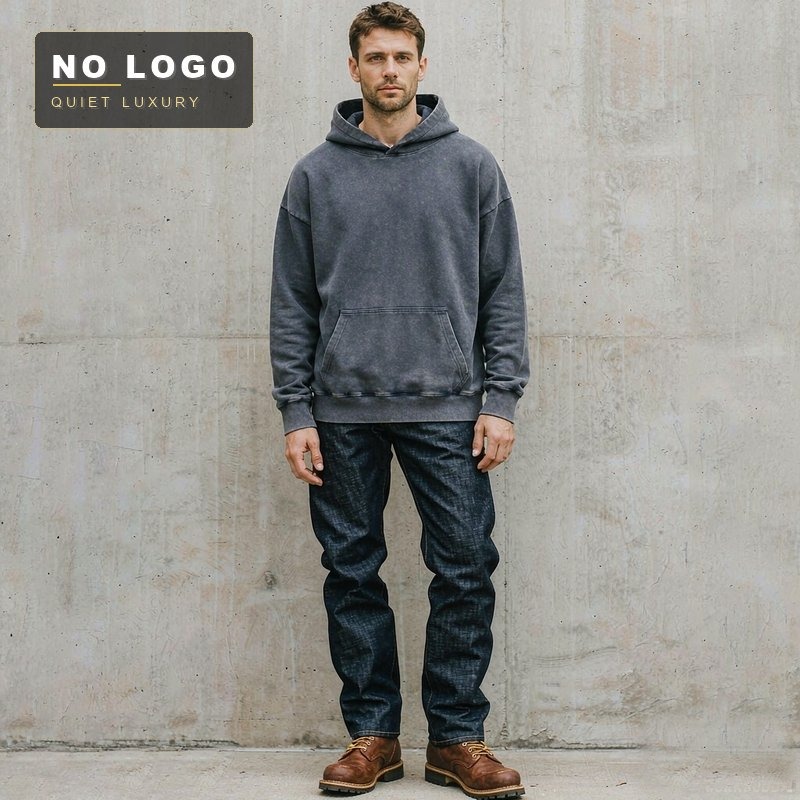
Why Your Hoodie Feels Different After Ten Washes
What changes a hoodie more: ten years folded in a drawer, or ten trips through the wash? The washes win, and the cotton is not what fails. The loops flatten, short fibers work their way loose, and heat presses the pile down. Most hoodies do not wear out. They rearrange.
If a hoodie you bought this spring already looks a season older than it is, with a flat chest, cuffs that have started to open and a hood edge that waves, nothing about your laundry routine is strange. A terry knit leaves the workshop with a raised face, and every wash decides how long that face stays. We make these garments, so here is what actually changes inside the fabric, which parts of a hoodie give up first, and what happens in our workshop before a hoodie ever meets a washing machine.
Cotton loops do not wear out. They lie down.
A loop-back hoodie is knitted from loops, not a flat sheet of cotton. Stand a new one under a lamp and you can see the texture standing up, held by the twist of the yarn. Water softens the yarn, the drum moves it around, and the loops bend over. They do not break. They simply stop standing.
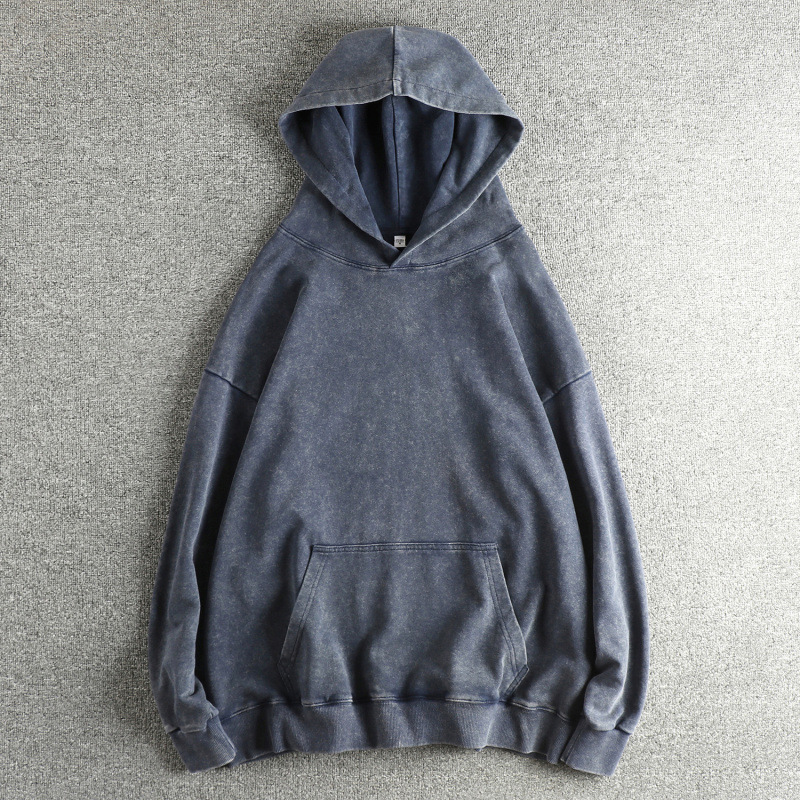
That is why a heavyweight loop-back sweatshirt feels plush in the first week and calmer a month later. Very little material left the garment. What left was air. A 360g loop-back hoodie starts out already garment-washed, which means the loops have moved once before you ever own it, so the change you see at home is the second act rather than the first.
The fuzz you see is short fibers leaving the surface.
Cotton yarn is spun from fibers of different lengths. The shortest ones are only held at one end, and washing works them free. They tangle into small pills where the fabric rubs against itself: under the arm, at the cuff, along the side seam where a jacket or a bag travels. Expect the first pills within the first ten washes, and expect them on the areas you use most.
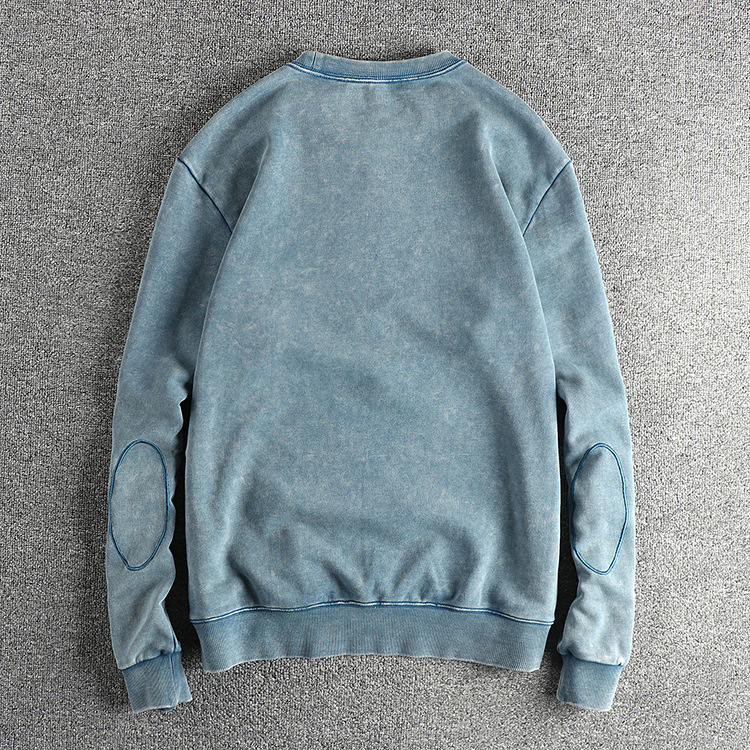
Turning the hoodie inside out before it goes in the drum cuts the rubbing on the outside face by a wide margin, and it costs you nothing. If you want the full kitchen-table version of this routine, we wrote it out in how to wash a hoodie without shrinking it.
Heat is what ages a hoodie fastest.
Cold water moves fabric around. Heat changes it. Above roughly 40°C the yarn relaxes, the surface fibers felt together, and the raised face you paid for turns into a smooth, slightly stiff panel. A dryer adds tumbling on top of that, which is the same as rubbing the fabric against itself for forty minutes at temperature. Between a wash at 30°C and a wash at 60°C followed by a hot cycle, the difference after three months is visible in daylight.
Ribbing and the hood give up before the body does.
The body of a hoodie is forgiving. The ribbing is not. Cuffs, hem and the collar band are knitted with elastic fiber so they can stretch and return, and heat plus repeated pulling wears that recovery down. When the cuffs stop closing, the whole garment reads as old even if the body is in good condition. The hood is the second weak point, because it is a double layer that holds water longer than the rest of the garment and gets pulled on every time you put the hoodie on.
What we do before a hoodie ever reaches its first wash
Three things matter at the factory end. We wash or treat the garment before it ships, so the first shrink happens on our floor and not in your machine. We test the ribbing with the same stretch and return the customer will apply. And we put the weight on the product name, because 350g and 550g behave differently in the wash and a buyer deserves to know which one is in the bag.
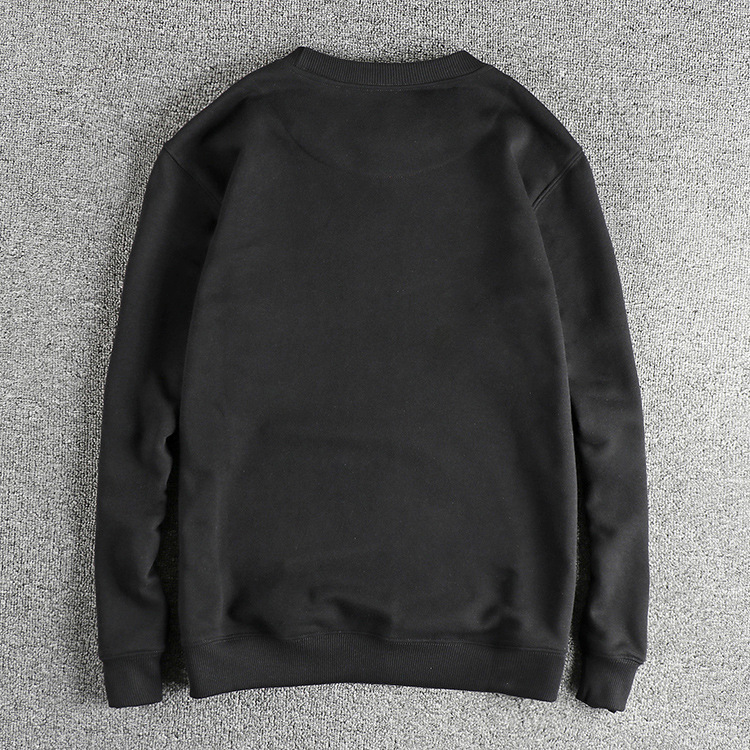
None of this makes a hoodie immortal. It makes the third year look like the first, which is the point. A hoodie worn two hundred times over three winters uses far less cotton than one replaced every autumn, and that is the whole argument for buying a heavier one in the first place.
Key takeaways
- Hot water and a hot dryer are the two biggest causes of a flat, stiff hoodie face. Wash at or below 30°C and skip the hot cycle.
- Turning the garment inside out before washing removes most of the surface rubbing that creates pills on the chest and shoulders.
- Ribbed cuffs and the hood edge fail before the body does, because they carry elastic fiber that heat and pulling wear out.
- Fabric softener leaves a residue that coats the yarn, so the fabric feels slippery rather than soft. Use less, or none.
- Ten washes changed the surface, not the material. A 360g loop-back hoodie that feels calmer at month three still holds its weight and its shape.
FAQ
Can a stiff hoodie be made soft again?
Partly. Soak it in lukewarm water for twenty minutes without detergent, then work the fabric gently by hand while it is wet and dry it flat away from direct heat. That relaxes the yarn and lifts some of the matting. A fleece-lined hoodie will not come all the way back, because the lining has its own pile structure and once that is pressed flat it stays flat.
Does a hoodie lose fabric weight in the wash?
Not enough for you to notice. What you feel is the air being pressed out of the fabric and the surface loops lying down, so the same 400g hoodie feels thinner in the hand while weighing the same. That is also why a hoodie can feel lighter after a month without a single fiber having left it.
Buy for the tenth wash rather than the first one. A hoodie with real weight behind it and a garment wash already done stops changing after a few months and then simply stays. Shop our collection and pick the weight you actually want to live in.