
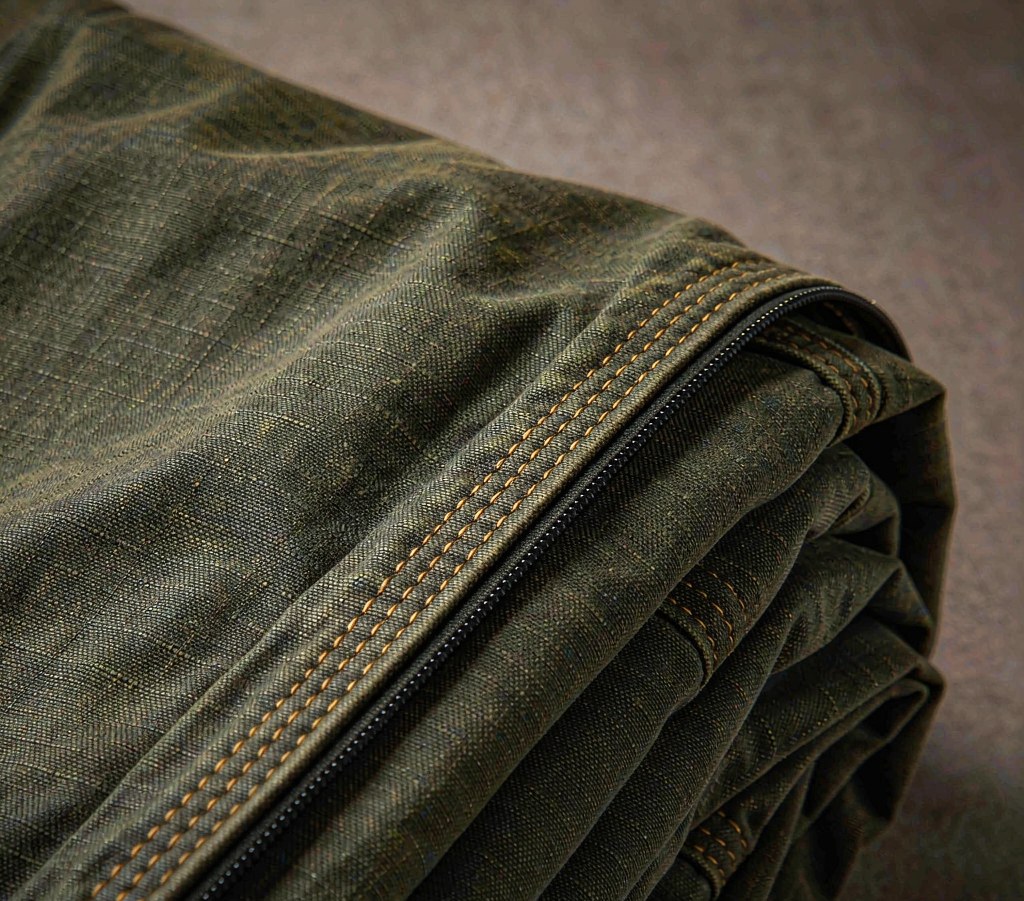
Single, Double, Triple Needle: Why Some Seams Never Split
Why does the outseam of a cheap pair of trousers split open after a season, while the same weight of cloth on a pair of work pants goes on for years? Count the rows of thread and the answer is usually three. On most work pants the side seam is stitched with three needles at once, three parallel rows in a single pass, almost always over a chainstitch underneath. ISO 4915, the international standard that classifies stitch types, separates the lockstitch, type 301, from the multi-thread chainstitch, type 401, and that second stitch is the reason a long side seam can flex with the cloth instead of cracking against it.
A seam that splits leaves you arguing with yourself about who is at fault. The cloth looks fine, the thread looks fine, so it must have been bad luck, or bad washing, or bad luck again. Nobody prints the number of stitch rows on a label, yet that number, plus the stitch hiding on the underside, decides most of it. Here is what each of the three rows does, where it comes from, how the underside stitch chooses the failure mode, and a thirty-second check you can run tonight.
Three rows, three jobs
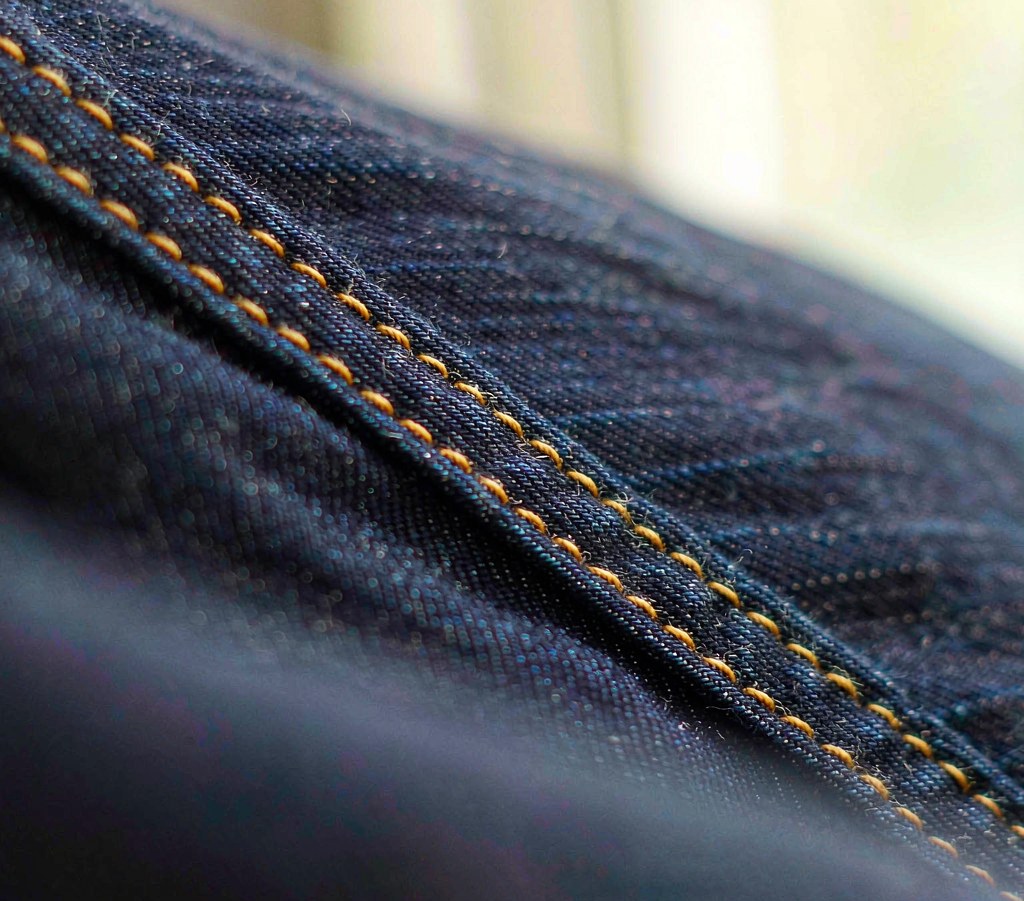
The three rows along a work pant outseam are not decoration stacked on decoration. On a folded side seam, the folded edge of the cloth is trapped and locked by the stitching, so the raw edges never see daylight. Each row takes a share of the force: when you squat, the outer row holds the fold flat, the middle row carries the pull along the seam, and the third row spreads the load into the body of the cloth. Split the same force across three rows and no single row is the weakest link.
This is also why topstitching on real workwear is more than a style choice. A single sparse row has to do the job of three, and the cloth flexes thousands of times a day. The cheap version is not weaker thread; it is fewer rows asked to do the same work.
Where the third row comes from
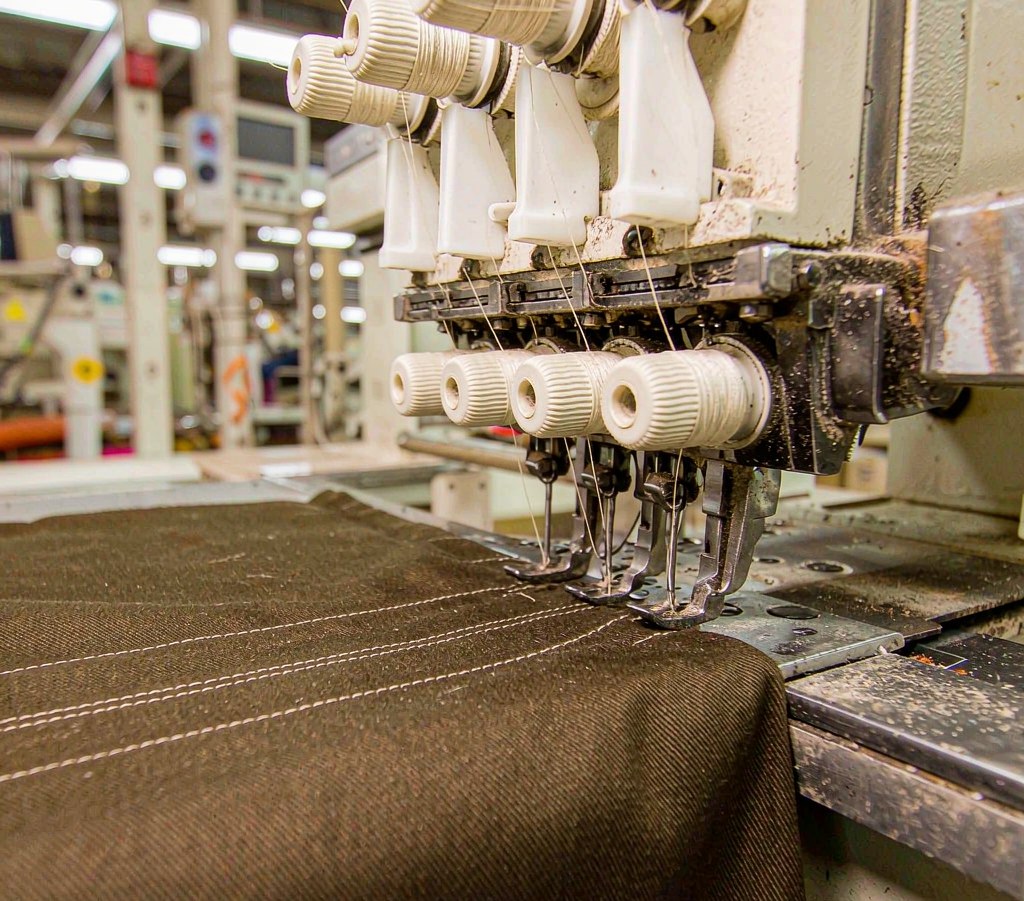
Three parallel rows in one pass come from a triple-needle machine: three needles on one head, threaded separately, timed to one feed. The rows stay a few millimetres apart for the whole length of the seam, which two passes with a single needle can never match. Setting it up takes longer and it uses more thread, and that is most of the price difference between a work pant and a fashion pant with workwear styling.
The same logic shows up on waistbands, belt loops and pocket bags, wherever a long straight run meets real force. One needle draws the line; three needles build a structure.
The stitch underneath decides how the seam fails.
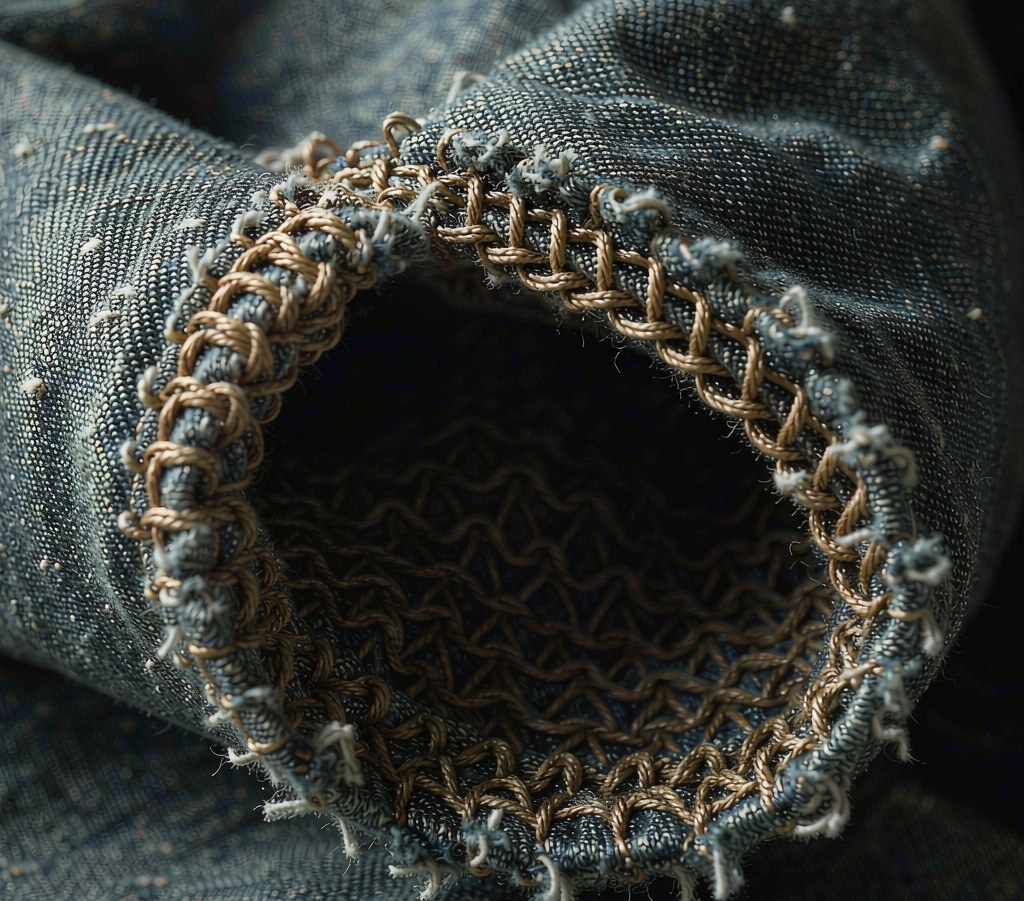
Flip the seam over and you will meet the two stitch families of ISO 4915 in person. A lockstitch, type 301, interlocks the needle thread with a bobbin thread inside the cloth, so both faces look identical and the seam barely stretches. A chainstitch, type 401, loops the needle thread with a looper thread underneath, which is why the back of the seam looks like a ladder of linked loops. The chainstitch stretches with the cloth, which is exactly what a side seam on heavy twill needs.
It has one honest weakness: if a chainstitch stitch is cut and the end of the row is not secured, the whole row can unravel like a pulled knitting thread. That is why careful factories lock the ends with bar tacks or backstitch at every stop point. We wrote a full guide to the small zigzag rectangles at pocket corners; read the one on bar tacks and you will spot them everywhere afterwards.
Count the rows, then flip the seam.
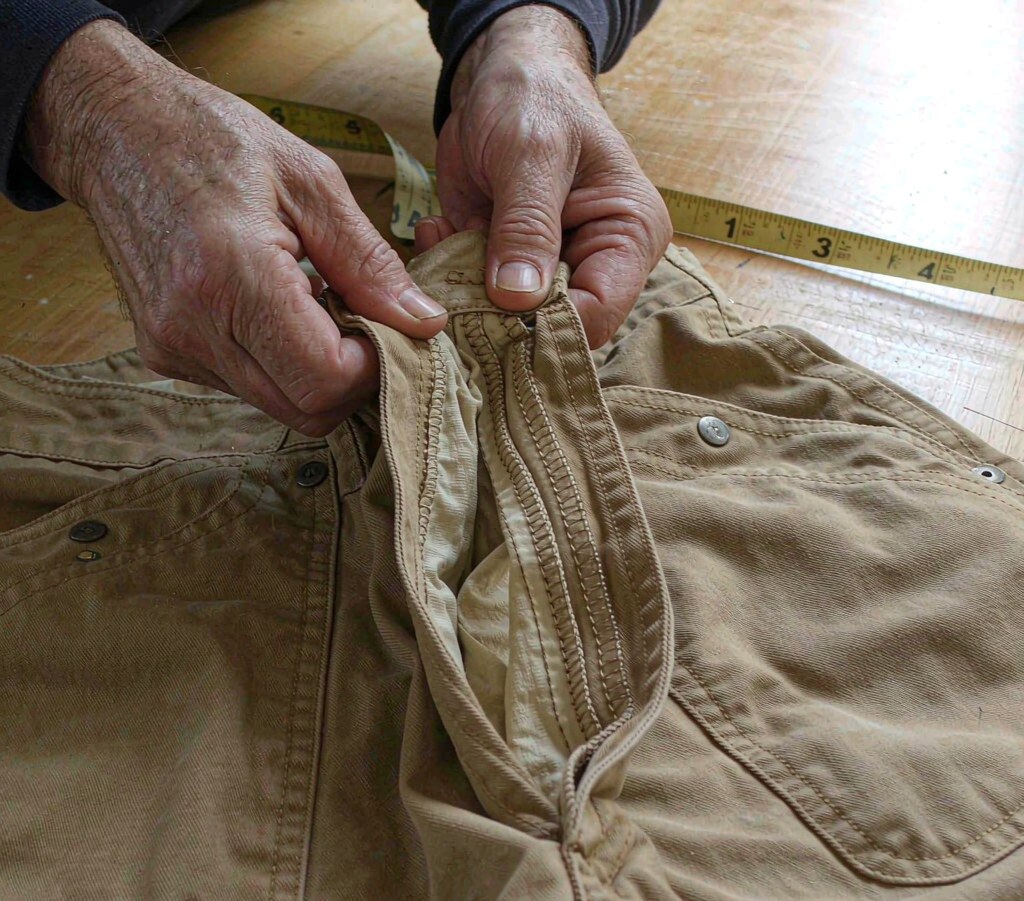
Lay the pants out and look at the outseam: count the rows of stitching. One sparse row on a heavy cloth is the tell of a garment built to a price. Two or three tight rows is the workwear standard. Then turn the leg inside out and look at the underside of that seam: linked loops mean a chainstitch that moves with the cloth; a straight interlocked line means a lockstitch. Finish by pulling the seam gently with two thumbs. If gaps open before the cloth resists, the rows were never going to save it.
Do it once on your best pair and once on the cheapest, and you will never have to guess again which one was built for years and which was built for the photo. At BenClothing, we would rather spend the machine time on three rows than on another printed graphic; the heavy washed black-grey jeans and the M65 field denim jacket in our range are picked with exactly that trade in mind.
Key takeaways
- Work pant side seams usually carry three rows of stitching in one pass, sewn by a triple-needle machine.
- On a folded seam the rows share the force, so no single row is the weak point.
- ISO 4915 type 301 is the lockstitch; type 401 is the chainstitch that stretches with the cloth.
- The underside loops of a chainstitch can unravel if a stitch is cut, so good factories secure the row ends.
- Count the rows and flip the seam: thirty seconds tells you how a pair was built.
FAQ
Is a triple-needle seam always stronger than a single row?
With the same cloth and thread, more rows on a long seam spread the load and are usually a fair bet. But density and thread still decide; three sparse rows on thin cloth buy very little.
Why does the back of my seam look like a ladder of loops?
That is a chainstitch, type 401 in ISO 4915. A looper thread loops with the needle thread underneath, which gives long seams their stretch. Check that the ends of the row are secured, so one cut stitch cannot unravel the whole line.
A side seam is a small machine you wear. Three rows and the right stitch underneath cost a factory minutes per pair and buy you years, and that is a trade we think is worth making every time.