Why Your Black Jeans Turn Grey: A Short Story About Dye
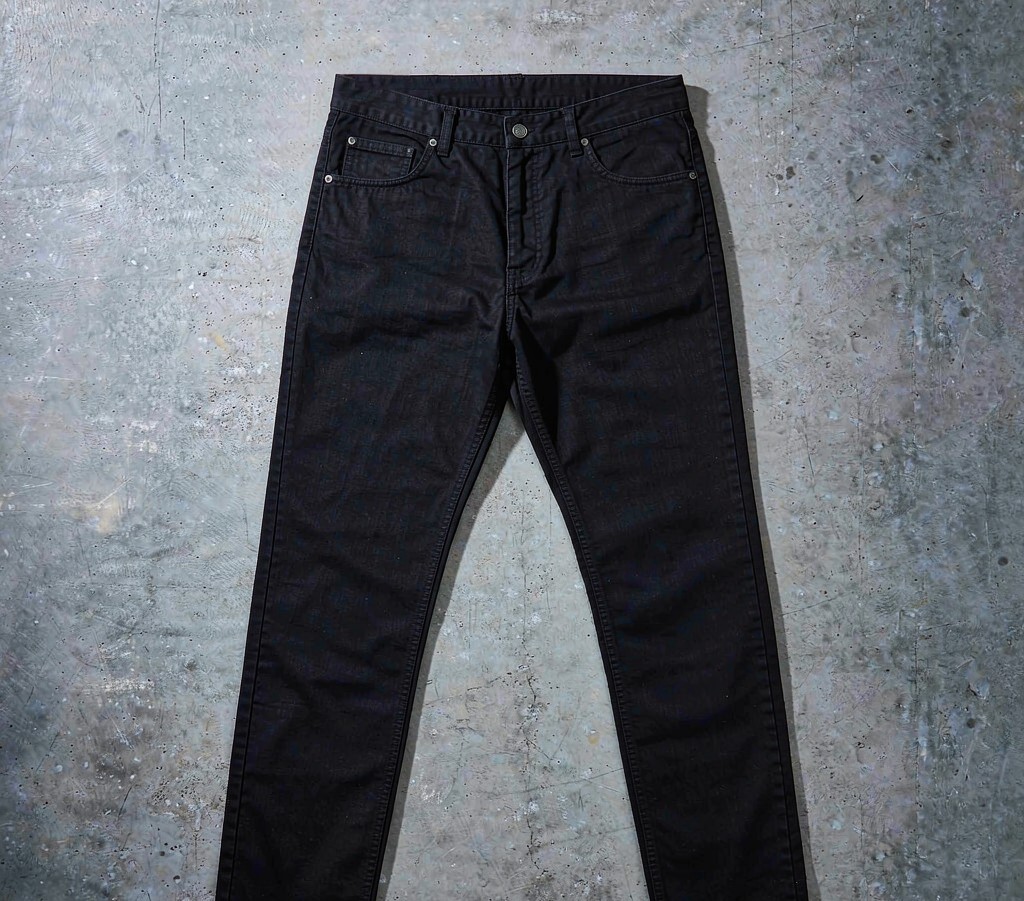
Black jeans fade grey because the colour on a pair of jeans is a thin skin of dye sitting on the outside of the yarn, and friction wears that skin away long before the cotton itself gives out. Nothing is wrong with the fabric and nothing is wrong with your washer. You are looking at bare cotton underneath. Which dye the mill used decides whether a pair greys out evenly or fades in patches, and four washing habits decide how fast it happens. That is the whole story, and it is worth knowing before you buy the next pair.
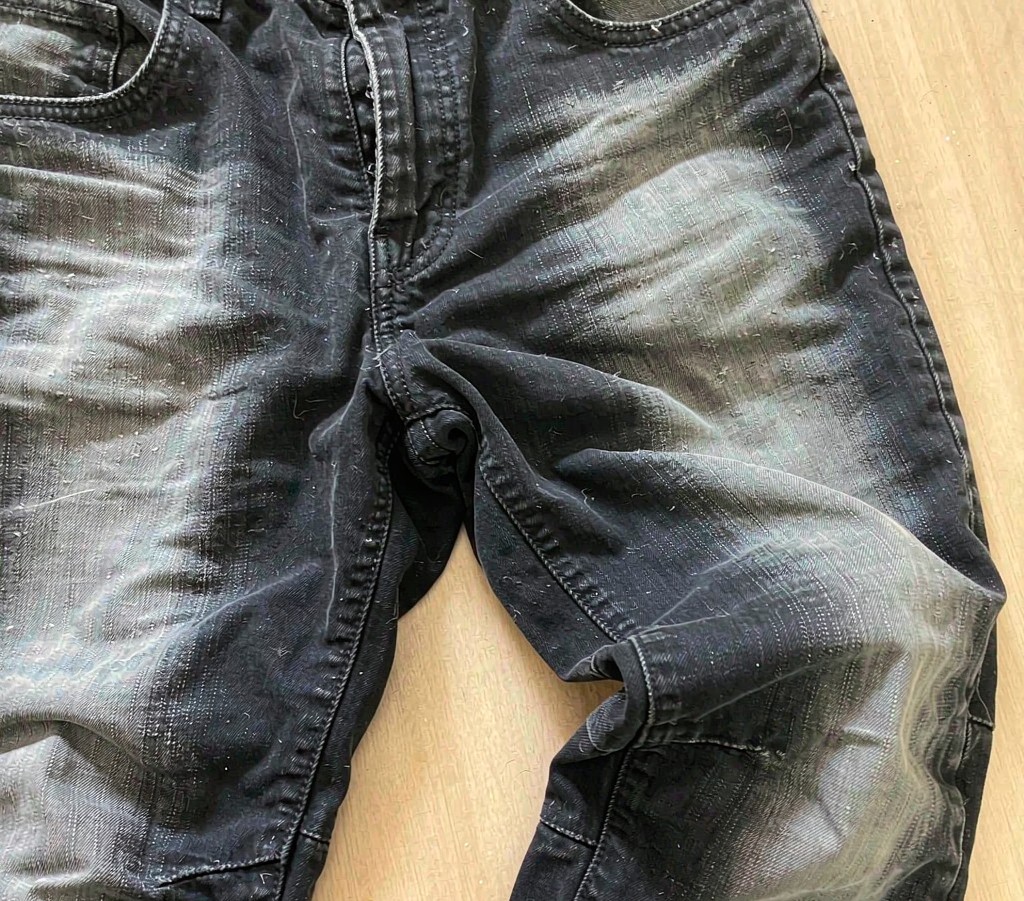
The clearest evidence arrives by photo. A customer sends in a pair of black work jeans, four months old, laid flat on a table. The thighs and knees read pewter. The seams, the waistband and the pocket edges still read black. One garment, one owner, two colours.
The grey is the dye leaving, not the fabric aging
Look closely at a faded thigh and the darker seam beside it. Same cotton, same age, same washes. The difference is exposure. Flat fabric takes the daily rubbing of walking, sitting and crossing your legs straight on, so its dyed outer layer goes first. Seams are doubled and tucked, so they hold their colour long after the panels around them have gone grey. The same thing happens outside the jeans: loose surface dye rubs off on car seats, shoes and sofa arms. The trade calls that crocking and measures it with a white rubbing cloth, dry and wet, under AATCC TM8.
Ring dyeing: the white core rule
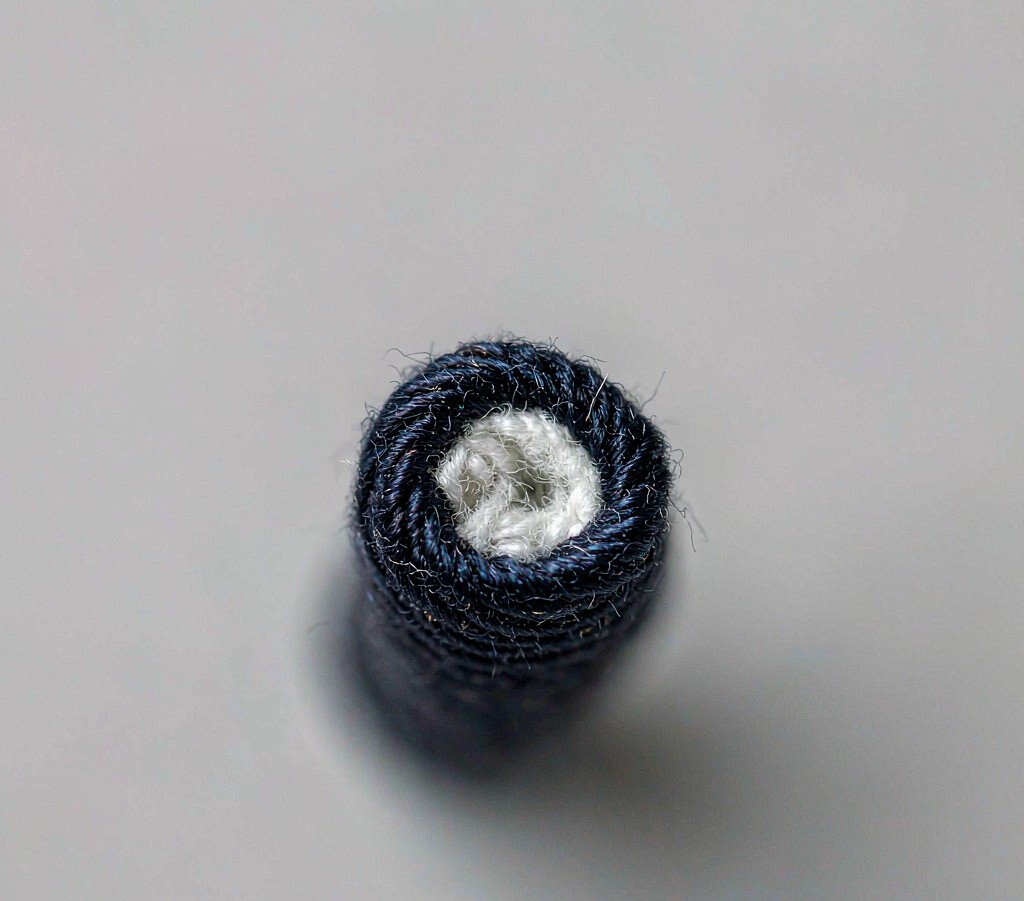
Blue denim fades in patterns because of how indigo is applied. Yarn runs through an indigo bath and out into the air six to eight times, and each dip plus a short oxidation builds one more layer of blue on the outside. The dye never soaks to the middle, so every warp yarn is a shell of colour around a white core. The trade calls this ring dyeing, and it is the reason a fresh pair of jeans can look stiff and uniform before the shell starts to chip. Wear the shell off and white shows through exactly where you use the pants hardest, which is why every owner’s fade map looks different.
Black denim is built with a different class of dye. Mills use sulfur black, which penetrates far deeper into the cotton instead of stacking on the surface. It fades the way a photocopy fades: evenly, everywhere, toward a soft grey. Deep sulfur shades also hold loose dye on the surface at first, so a brand new pair can leave grey marks on light furniture until it has been through two or three washes.
What a grade of 4 to 5 promises
Fastness is not guesswork. Under ISO 105-C06, a lab sews a fabric swatch to a strip of multifibre cloth, washes the two together under fixed conditions, one standard run at 40 °C approximating a domestic wash, then rates the result on grey scales from 1 to 5. Two numbers come back: how much the colour changed, and how much it stained its neighbour. Workwear specifications usually ask for 4 to 5 on both. That test is what stands behind the temperature printed on a care label, and the label should always match a real test. If a pair fades far faster than its label allows, the label over-promised, and that is a factory problem, not a washing problem.
Four habits that keep black black
None of this needs special products. It needs order.
- Wash cold, 30 °C or lower, on a short cycle. Heat opens the door the dye leaves through.
- Turn the pair inside out and close the zip first. The dyed face then meets water, not other cloth.
- Wash darks together and do not stuff the drum. A crowded drum is a rubbing machine, and rubbing is exactly what greys a thigh.
- Use a mild liquid detergent. No bleach, and nothing with optical brighteners, which are built to lift colour.
- Hang dry in open shade and skip the dryer. Sunlight breaks dye molecules down, so a sunny line is a fade accelerator.
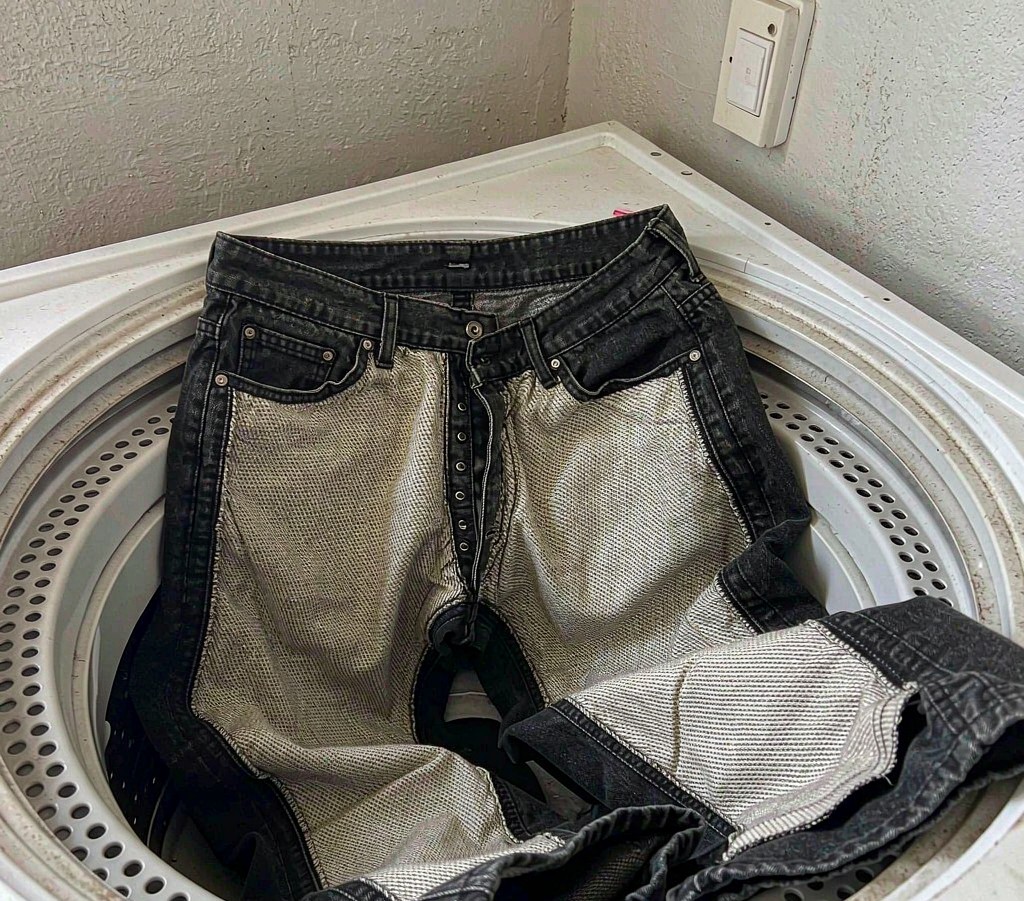
The cheapest habit is the one nobody sells: wash less. Air the pair out overnight, spot clean a mark with a damp cloth, and save the machine for when the pants actually need it. Judging fabric before that, by weight and by hand, is its own skill, and our guide to reading fabric quality in your hands covers the short version.
Key takeaways
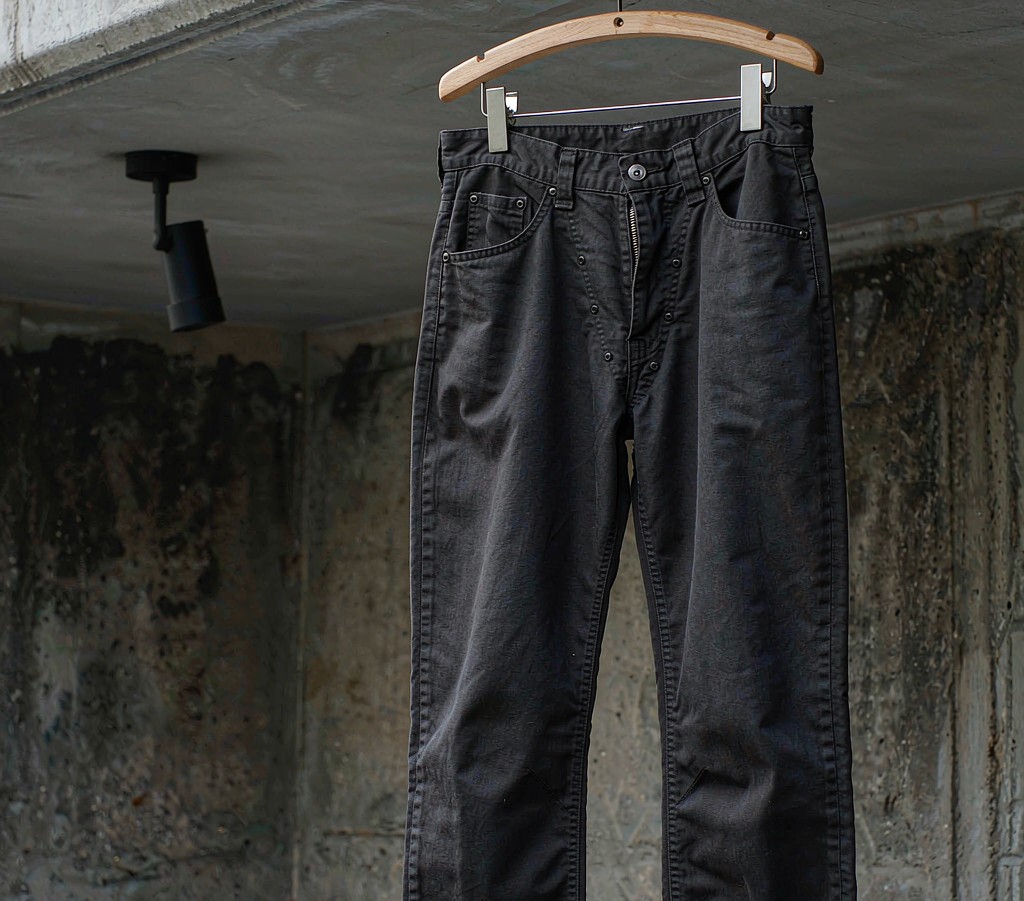
- Grey on black jeans is dyed fibre showing through: friction wears the thin dye layer off the yarn surface, while doubled seams stay dark.
- Indigo is ring dyed, six to eight dips around a white core, so blue denim fades in personal patterns; sulfur black penetrates deeper and greys evenly.
- Deep sulfur shades shed loose dye at first, so wash a new black pair alone, inside out, and the sofa is safe by wash three.
- ISO 105-C06 grades wash fastness from 1 to 5 for colour change and staining; workwear specs usually ask for 4 to 5 on both.
- Cold 30 °C wash, inside out, mild liquid detergent, shade drying: four habits, zero cost, and they work together.
FAQ
Can I dye faded black jeans back to black?
You can. Home fibre reactive dyes made for cotton are the right tool. Pre-wash to strip soil, dye, then wash the pair separately for the first two or three cycles while loose dye settles. Expect an even black again, not the exact factory shade, and expect your old wear marks to disappear under the new colour.
Why does a brand new black pair stain the washing machine or the sofa?
Loose surface dye that was never rinsed out at the mill. Rubbing moves it dry, the first wash moves it wet. Wash a new black pair once, alone and inside out, before wearing it anywhere it can leave a mark.
Grey jeans are not a defect. They are dye physics doing what dye physics does. Slow the process down and a heavy pair keeps its look for years. Washed denim leaves the mill with most loose dye already removed, which is why our washed denim overshirt and stand collar denim jacket settle before they ever reach you. At BenClothing, we consider that settling part of the job. If your black rotation is due, shop the collection and start with a pair that has already done its first wash.