
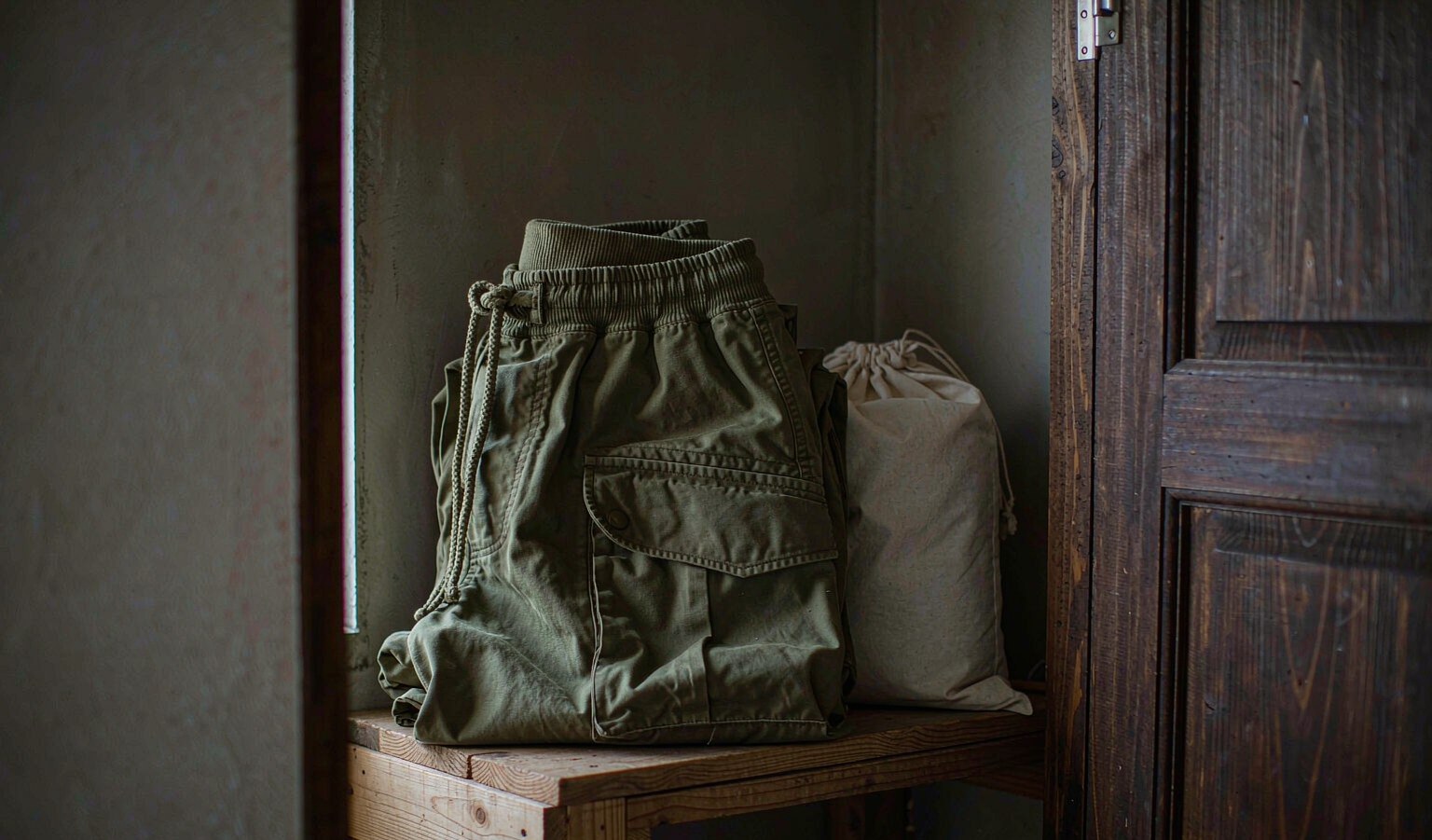
Moths Don’t Eat Your Cotton. Six Months in a Bin Still Ruins It.
Off-season clothing storage for cotton is a water problem and a pressure problem before it is an insect problem. Heavy cotton pants already carry about 8 percent of their own dry weight in water at ordinary indoor humidity, and once a closet sits above 65 percent relative humidity at around 20 °C, that cloth becomes a surface mould can live on. Clothes moth larvae want wool, silk and hair, not cellulose. Most people learn this in April, holding a pair that smells of basement and has a hard grey line across the thigh. What follows are the four numbers behind that, and the twenty minutes of work that keep a stored pair wearable.
Search for how to store cotton clothes and the results sell you things: cedar blocks, lavender sachets, moth balls, vacuum bags. Three of those four are aimed at an insect that cannot digest cotton. The fourth seals the water in with the fabric.
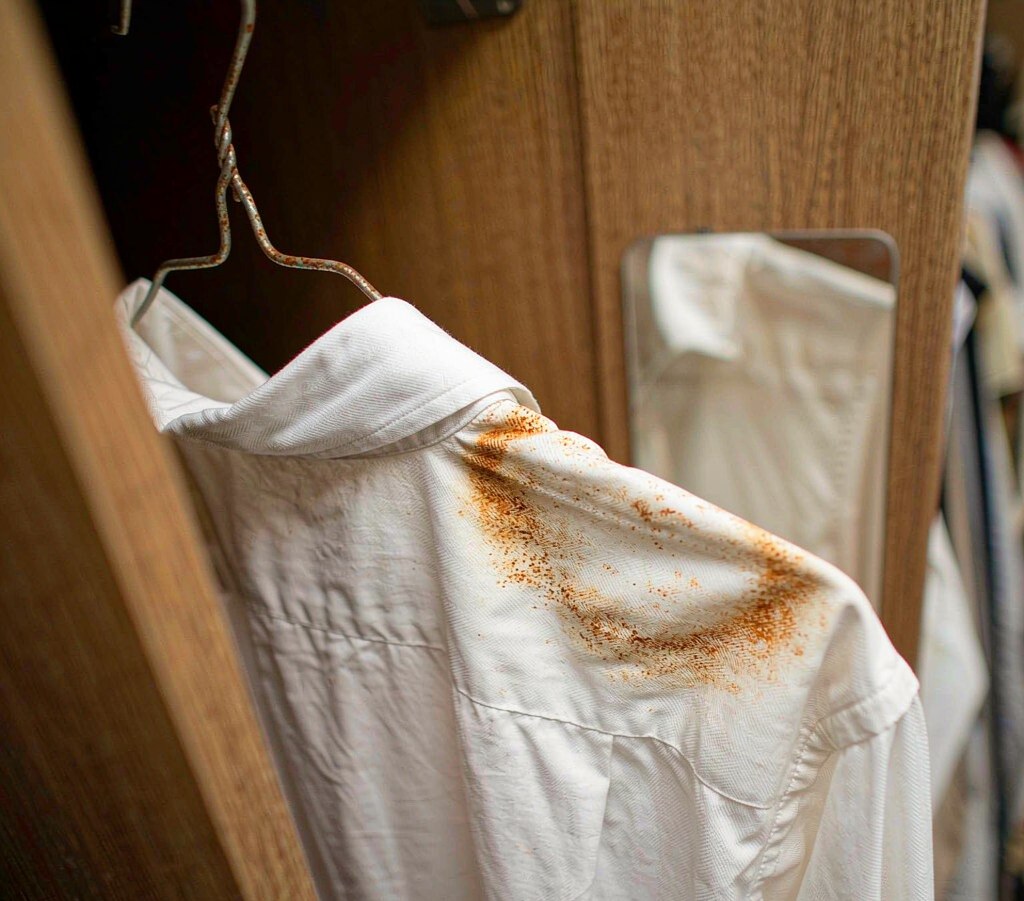
The garments that come back to a workshop for repair rarely have holes in them. They have a crease across the thigh, a smell that washing does not shift, and a pale ring where a hanger touched the shoulder.
Six months, four numbers, one pair of pants
Storage damage is slow, which is why it gets ignored. Broken into the four things that actually cause it, it stops being mysterious.
| Where it fails | The number | What six months make of it |
|---|---|---|
| Damp air in a closed closet | Above 65 percent relative humidity at 20 °C | Mould and insect pests get a foothold |
| Water inside the fibre | About 8 percent of dry weight | The garment feels dry and is not |
| Load on one fold line | 180 days | The fold sets into a crease that survives the next wash |
| Residue in the cloth | Sweat, skin oil, starch | Feeds whatever already lives in the dark |
Sixty-five percent is where a closet stops being safe
Textile conservators place long term storage at 15 to 20 °C and 40 to 60 percent relative humidity, not because cotton is precious but because that range is where both real threats stay dormant. At about 20 °C, once relative humidity passes 65 percent and the air stops moving, mould is likely to grow. Above the same line, insect pests find the conditions comfortable.
A basement, a garage, a north facing wardrobe in a coastal town all cross that line without anyone noticing. A cheap hygrometer on the shelf tells you more than any storage product on the market. If the reading is high, the fix is a dry room and moving air, not a stronger sachet.
Eight percent is the water a dry pair is still holding
Cotton has a standard commercial moisture regain of 8.5 percent, the figure the trade uses to turn oven dry weight into saleable weight. At 65 percent relative humidity and 20 °C the equilibrium sits closer to 7 or 8 percent. Cloth that feels dry to the hand is carrying that water inside the fibre, and cellulose takes water quickly but gives it up slowly, over weeks rather than hours.
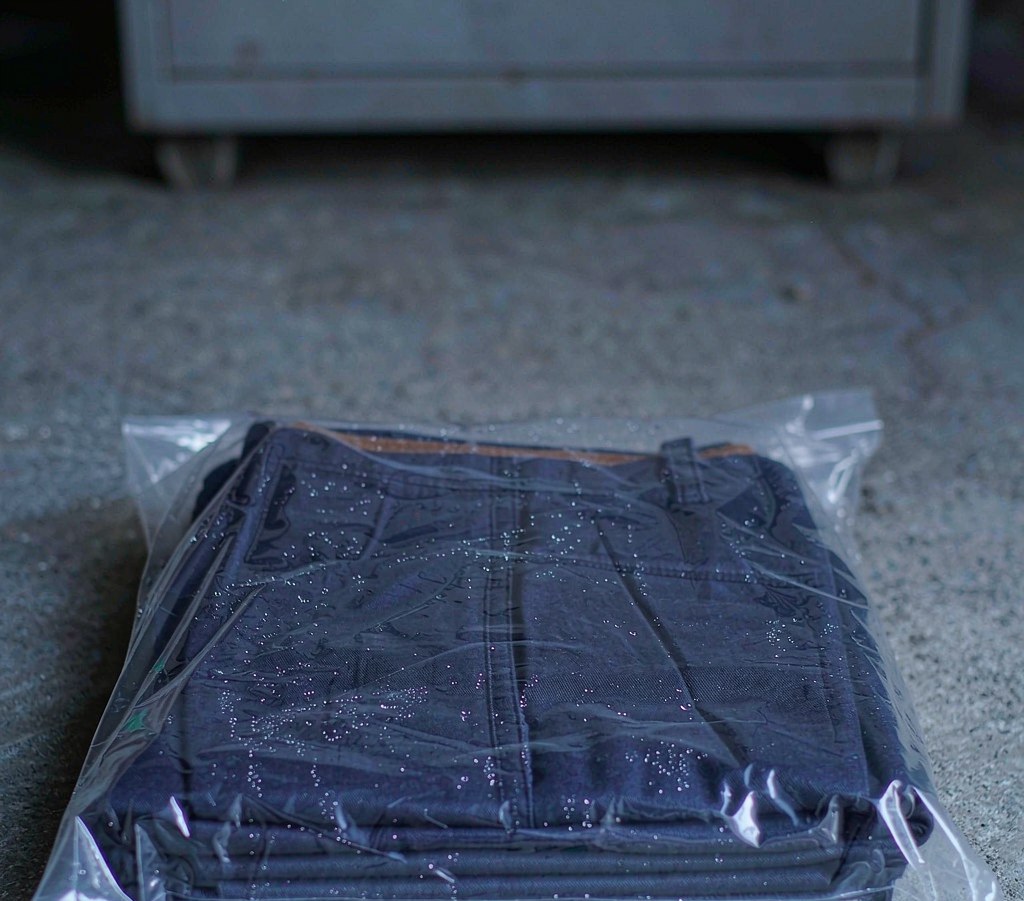
That single fact explains the most common storage mistake. A pair washed last night and hung for twelve hours is not dry in the middle of a doubled waistband, and a vacuum bag turns that leftover water into a closed system for six months. Heavier fabric holds longer, which is the same reason weight in grams per square metre is worth understanding before you buy. Air removes the water. Pressure does not. At BenClothing we garment wash the heavy twills before they ship, so most of the shrink is out of them already, but washed has never meant dry.
One hundred and eighty days on the same fold
Cellulose fibres set a crease when they are held under load while moisture is present, and six months is a long load. Heavy canvas and 14 oz denim are the worst offenders because they are stiff, thick and often stacked five high. The line you get is not dirt. It is the fibre memory of that fold, and it survives the next wash.
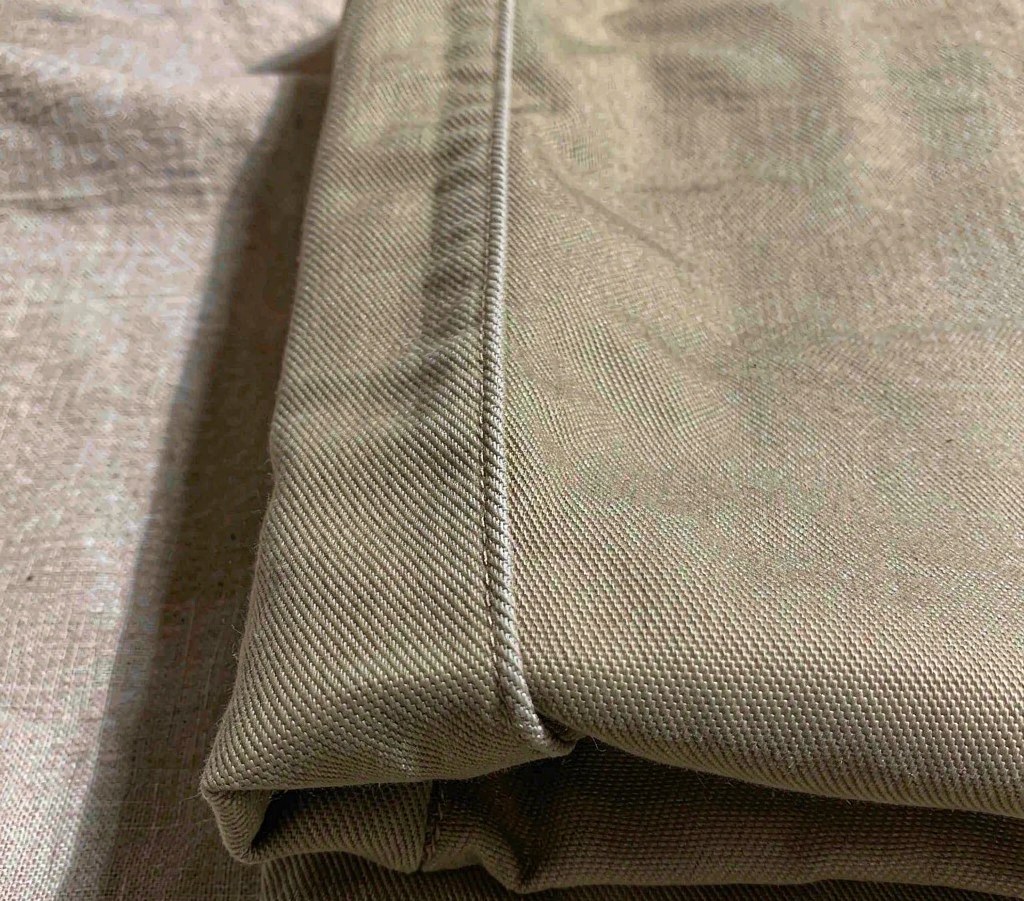
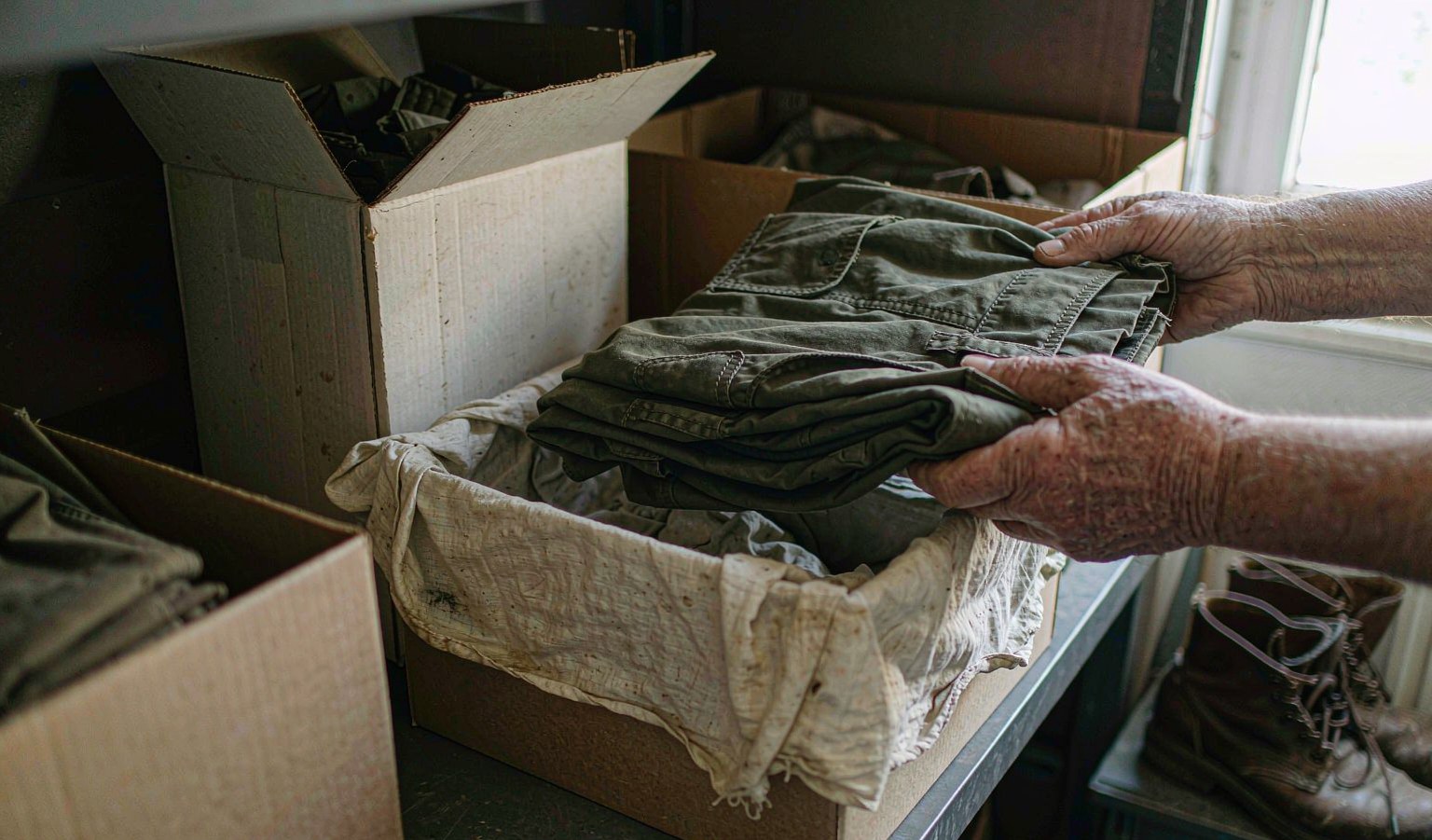
Four habits help. Fold along a seam so the crease lands where a stitch already sits, slide a strip of unbleached cotton between layers, refold on a fresh line each season, and hang the heaviest pair instead of stacking it. If you hang, use a wide wooden hanger at the waistband. Bare steel wire rusts in humid air, and the rust transfers to the cloth it touches. The same logic applies to a heavy fleece top like our half zip pullover, which will hold a fold for a season and a smell for two.
Forty to fifty eggs, and no interest in your pants
A female clothes moth lays around 40 to 50 eggs, and the larvae that hatch feed on keratin, the protein in wool, fur, feathers and hair. They cannot digest cellulose, and the extension guidance is blunt about it: cotton, linen and synthetics are generally left alone, with one exception. Cotton that is heavily soiled with food or body oil can be attacked.
Which gives cedar and lavender their real job. They are not protecting the pants. They are keeping a wool infestation from spreading through a closet, and blends with wool content are the bridge. Store wool on its own shelf, wash cotton before it goes away, and the moth question mostly answers itself.
The twenty minutes that decide the next six months
None of this is expensive. It is a routine, and the order matters.
- Wash first. Sweat, skin oil and starch residue are what a pest or a mould spore feeds on, and a clean garment is a poor host.
- Dry past the point of doubt. A full day on a line, or a machine cycle plus an hour of moving air, before anything gets folded.
- Skip plastic. An unbleached cotton bag or a cotton pillowcase breathes. A poly bag does not.
- Break the fold. A fresh line each season means no single edge takes years of load.
- Store one shelf up, away from concrete floors and exterior walls, where air moves.
- Write the packing month on the box and open it at the three month mark. Ten seconds of checking beats finding out in spring.
The care label that came with the garment tells you which temperature the fabric was tested at, and that number is worth keeping. If it has gone missing, our note on how care instructions are written and tested explains what should have been on it.
Key takeaways
- Conservators put cloth storage at 15 to 20 °C and 40 to 60 percent relative humidity. Above 65 percent at 20 °C, still air and damp give mould its opening.
- Cotton holds about 8 percent of its dry weight in water at normal indoor air, and gives it up over weeks, not hours.
- A vacuum bag seals that water in. A cotton bag or a pillowcase lets it out.
- Six months of load on one fold line sets a crease that outlives the next wash. Refold on a new line every season.
- Clothes moth larvae eat keratin, not cotton. Forty to fifty eggs laid near wool is the risk, so keep wool on its own shelf.
FAQ
Does cedar actually protect cotton?
Not the way the packaging suggests. Cedar and lavender oils discourage wool pests, and cotton is not their food. If the closet reads above 65 percent relative humidity, a cedar block changes nothing about the mould risk. Fix the air first.
Can I vacuum pack work pants to save space?
You can, once the fabric is genuinely dry, and the compression is the trade off. Vacuum packing presses a hard fold for months and holds any remaining moisture against the cloth. If space forces it, refold each season and keep the bag off a concrete floor.
Storage is the cheapest repair a garment will ever get. Twenty minutes in October, one dry shelf and a fold line that moves, and a pair of heavy cotton pants comes out in April exactly as it went in. That is the whole trick, and it is the reasoning we build the rest of the range on.