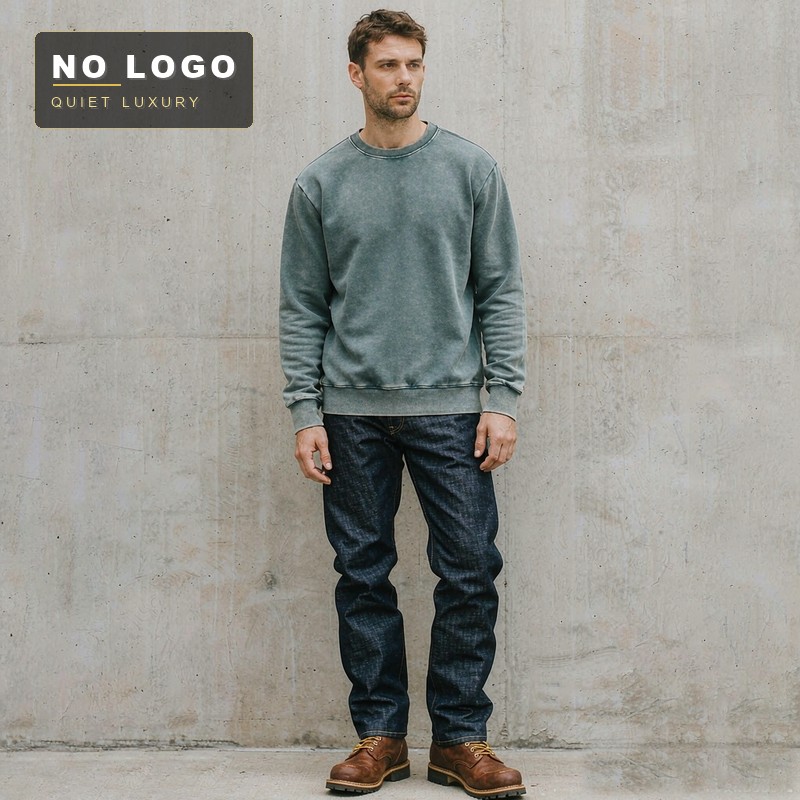
What Men’s Clothing Doesn’t Lose Shape After Washing?October 1st, 2026

Pre-shrunk knits, garment-washed cotton, and woven twill hold their shape wash after wash. Here is what to look for before you buy.
Read moreLoading

Pre-shrunk knits, garment-washed cotton, and woven twill hold their shape wash after wash. Here is what to look for before you buy.
Read moreWeight, weave, and the selvedge edge tell you almost everything about denim quality — here is how to check each one before you buy.
Read moreRipstop cotton and heavy cotton twill are the most durable fabrics for cargo pants. Ripstop’s crosshatch of thicker threads stops a small tear from spreading, while heavy twill shrugs off the abrasion that thins out knees and pocket edges. If a cargo pocket has ever blown out on you after one season, the fabric or the stitching was usually the reason. This guide shows what to check before you order your next pair. Ripstop: the grid that stops a tear Ripstop looks plain at first, but run your thumb across it and you feel a subtle grid. Thicker threads are woven into the base fabric at regular intervals, both across and down. When something sharp snags the cloth, the tear hits one of those heavy threads and stops there instead of running across the whole panel. The weave was developed for military field gear, which is why so many cargo and tactical pants borrow it. If you kneel in your pants, hike in them, or haul gear in and out of pockets all day, ripstop earns its keep. The trade-off is a faint grid texture up close; most people never notice it once…
Read moreNo-logo men’s clothing means garments with zero brand markings: no chest prints, no embroidered logos, no woven brand label inside the collar. A small size-and-care tag stays, because washing instructions have to live somewhere. Everything else you see is fabric, stitching and fit. Below we break down what counts as no-logo, what you are actually paying for when the logo is gone, and which pieces we make this way in our own workshop. What counts as no-logo, and what doesn’t A garment is no-logo when the brand appears nowhere on it. No screen print on the chest, no embroidery of a name, no woven label sewn into the neckline. The tag with size and care instructions stays, and it stays small. Hardware is the edge case. A zipper pull often carries the stamp of the company that made the zipper. Our pieces use SBS zippers, so you may see an SBS mark on the slider. That is a component mark, not a clothing brand. If a mark tells you who made the zipper, it is quality information. If it tells you who paid for the ad campaign, that is exactly what no-logo removes.…
Read moreThe best T-shirt fabric for everyday wear is combed cotton in the 220–260 GSM range — heavy enough to keep its shape, light enough to breathe. Anything under 180 GSM twists at the hem, turns see-through after a few washes, and fades fast. The annoying part is that most product pages never tell you the fabric weight, so you end up guessing from photos. This guide breaks down the three things that actually decide how a tee ages — combing, GSM, and collar construction — with real examples from our own range. Combed cotton vs carded cotton: what combing actually does Both start as the same cotton yarn. The difference is one extra step: combed cotton passes through a fine comb that pulls out the short, loose fibers and leaves the long ones behind. That is why a combed tee feels smoother against the skin and stops pilling in the spots that rub — under the arms, at the seat of a backpack strap, along the cuff. Carded cotton skips this step. It is cheaper, and you can spot it in the store: a slightly fuzzy surface, little fiber balls after three or…
Read moreA 350g hoodie works for spring days and indoor layering; a 400g hoodie holds its structure, blocks wind and keeps its shape longer — for most buyers in autumn, 400g is the safer choice. The problem is that product pages rarely explain what those numbers actually change once the hoodie is on your back. We sew both weights in our own workshop, so this guide walks through where each one fits and how to decide between them. What the grams actually measure The number on a hoodie listing is fabric weight in grams per square metre (GSM). A 400g hoodie uses roughly 50g more cotton per square metre than a 350g one. That doesn’t sound like much on paper, but you feel it in three places: how the fabric drapes, how much wind gets through, and how well the body keeps its shape after a month of washing. If GSM is a new term for you, we put together a plain-language explainer in our GSM guide for pants and hoodies. Where a 350g hoodie works best A 350g hoodie is the one you reach for in mild weather and indoors. It layers under…
Read morePants fit right when the waist sits where you actually wear them, the hips have room to move, and the leg opening matches the shoes you own. The fastest way to get that online is to measure your waist and hips with a tape, compare those numbers to the size chart in centimeters, and pick the cut that matches how you like a leg to fall. Most size complaints we see come from guessing with the letter size instead of reading the numbers. This guide shows what to measure, how to read our charts, and what to do when you land between two sizes. Measure your body before you look at any size chart You need three numbers and a soft tape measure, and it takes about two minutes. Waist: measure around your body where you actually wear your pants, which for most men is just below the belly button, not where dress trousers sit. Hips: measure around the fullest part of your seat, feet together. Length: measure the inside of one leg from the crotch down to where you want the hem to end, usually at the top of your shoe. Write…
Read moreMost hoodies lose their shape in the dryer, not on your body. Heat is what flattens the ribbing and stretches the collar, so the fix is simple: wash cold on a gentle cycle, inside out, and let it air dry flat or hung by the waistband. If a favorite hoodie has already gone boxy at the shoulders or loose at the cuffs, a damp reshape can pull most of it back. This guide walks through the routine we use on our own hoodies, and what to do when one has already stretched. Why hoodies stretch out in the first place A hoodie is a knit, not a woven fabric. Cotton knit holds its shape through tension in the yarn, and every wash cycle works against that tension: water makes the fibers swell, agitation pulls at the loops, and heat relaxes everything at once. The collar, cuffs, and waistband go first because they contain elastane for stretch, and elastane is the part that heat damages fastest. Weight matters more than most people expect. At BenClothing, we cut most of our hoodies between 350g and 550g, and the heavier ones hold their structure longest because…
Read moreThe rips and whiskers on distressed jeans are not accidents. Workers sand, scrape, or laser the denim surface before the wash, and the wash then softens every edge so the marks read as natural wear. A well-made distressed jean is damaged only on the surface, with the yarn behind it still holding, which is why some pairs keep their shape for years while cheap ones tear open in a month. If you have ever wondered why one pair of ripped jeans falls apart and another just gets better with age, this article walks through how the distress is actually done, and how to keep yours alive. How the rips get made Three tools do most of the work. Air sanders and grinding wheels scrape the indigo off the surface in controlled spots, usually where jeans would wear naturally: knees, thighs, pocket edges. Hand scraping handles the fine lines. Laser machines burn the pattern in with heat, which is faster and very repeatable on big runs. At BenClothing, we mark every distress position on the pattern first, so the rips land in the same spot on every pair instead of floating around at random.…
Read moreJeans fade because the dye sits on the surface of the yarn, and every wash rubs a little of it away. Indigo never soaks all the way into the cotton fiber, so even a good pair loses some blue in the first three or four washes. That part is normal. What you should worry about is fast, patchy fading and color that rubs off onto a white shirt, because that means the wash was rushed. Here is why it happens, what we check before a washed pair ships, and how to wash yours so the color lasts for years instead of months. Why indigo never stays put Indigo is a surface dye. Unlike dyes that bond chemically with cotton, indigo particles only lodge in the outer layer of the yarn. Every rub knocks a few of them loose: fabric against fabric in the wash, your knees against the sofa, a bag strap crossing your thigh. That is why the first white marks show up at the pockets, the hem, and the front of the thighs. Black and grey denim uses sulfur dyes, which behave the same way. A pair washed cold and dried…
Read more