Why Layering Makes You Look Bulky (It’s Not How Many Layers You Wear)
Quick answer: layering does not make you look bulky. Stacking your thickest layers at the same place does. A heavy sweatshirt under a heavy jacket doubles the volume at the chest, and no styling saves that. The fix is a thickness gradient: a thin layer against the skin, one mid layer with some structure, and an outer layer you can open. Keep the thickest fabric on the outside, keep two layers thin, and the whole outfit reads sharp instead of swollen. You can add warmth without adding width.
Bulk is a placement problem, not a layer count
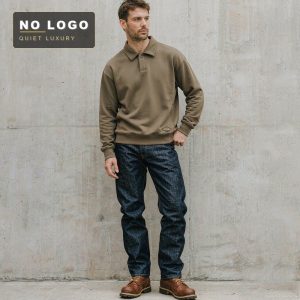
Put three thick layers on and you will look larger, obviously. But two layers can look just as heavy if they are both dense and both end at the same point. The eye reads volume where fabric piles up: chest, shoulders, hem. When a bulky knit sits under a stuffed jacket and both stop at the hip, you get a block. Our 400g terry crewneck is thick enough to wear alone in mild weather, which is exactly why it should not sit under another thick layer. Use it as the outer piece, or as the only heavy layer, and the silhouette stays clean.
Build the stack thin to thick
Layer one, against the skin. A cotton tee or a light long-sleeve shirt. This layer manages moisture and should add almost no width.
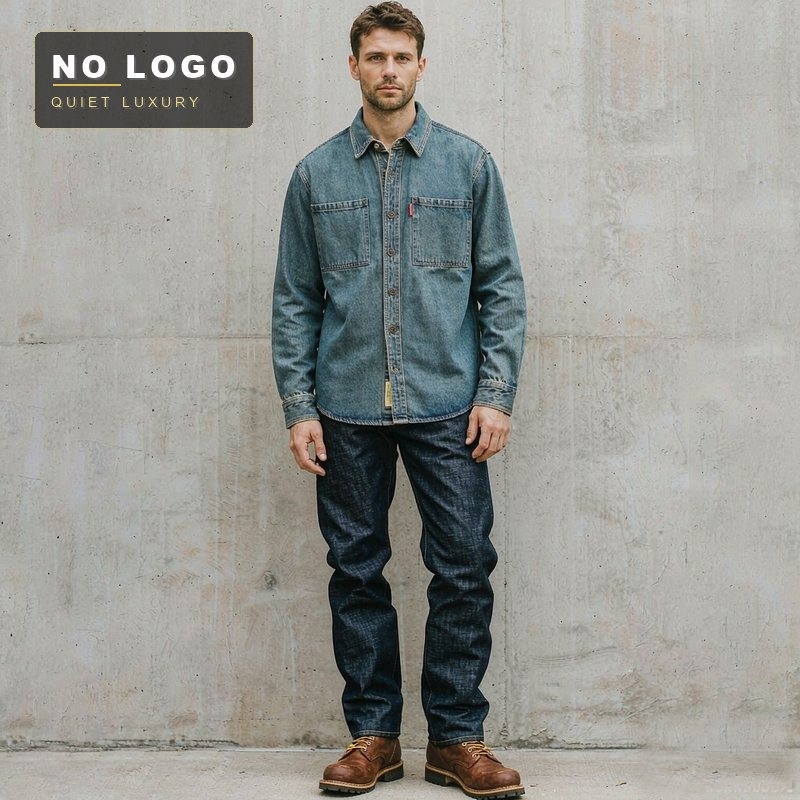
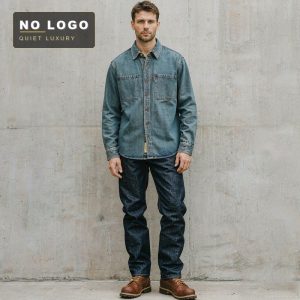
Layer two, the working layer. A shirt-jacket or a knit with some body. This is where the outfit gets its shape. A heavyweight washed denim shirt works because it holds a line instead of collapsing, and it can be worn open over layer one.
Layer three, the shell. A jacket you can open and close. Leave it unzipped indoors and the outfit shows two clear vertical lines instead of a wall of fabric.
A tie-dye plaid work shirt with a thicker weave fits the middle slot too, especially on days when the denim shirt feels like too much. Swap the middle layer rather than adding a fourth.
Where the bulk actually shows up
Shoulders. Two set-in sleeves stacked on the same shoulder line pinch the arm and round the top. Drop the shoulder on the outer layer, or keep one layer sleeve-free.
The hem. Three hems at the same height look like one thick band. Stagger them: the base longest, the mid layer shorter, the shell shorter still, or the other way around.
The neck. A crew neck, a collar and a hood all fighting for the same space reads messy. Pick one statement at the neck and keep the others plain.
Two habits that keep it looking deliberate
One heavy, two light. Count thickness, not garments. Three thin layers usually look slimmer than two thick ones, and they regulate temperature better when you move between a cold street and a warm room. A knit cardigan is the easiest third piece for that reason: light in the hand, warm in still air, and it opens when the room heats up.
Undo one thing. An open jacket, a rolled cuff, an untucked hem. One deliberate break stops the outfit reading as a solid mass. Layering looks expensive when it looks like a decision rather than an accident of weather.
Key takeaways
- Bulk comes from stacked thickness, not from the number of layers.
- Keep the thickest fabric on the outside and two layers thin.
- Stagger your hems: matching hem lines merge into one heavy band.
- One statement at the neck is enough; plain collars elsewhere.
- Leave one thing undone so the outfit reads deliberate, not baggy.
FAQ
Does layering always mean more warmth?
No. Trapped air warms you, and compressed fabric does not hold air. Three thin layers trap more air than two thick ones squashed together. If you want warmth without width, add a thin layer and keep the outer shell loose enough to let the air sit.
Can I layer over a hoodie?
You can, but treat the hoodie as the outer layer and go thin underneath it. A hoodie plus a padded jacket is the classic bulk trap: two highs at the chest, two bulky hems, one thick neck. Wear the hoodie alone when the day is mild and give the jacket a thin base layer when it is not.
The short version
Thin base, one mid layer with structure, a shell you can open. Keep the heavy fabric outside, stagger the hems, and leave one thing undone. Warmth comes from trapped air, not from adding another layer. Shop the collection and build a stack you can actually wear all autumn.