
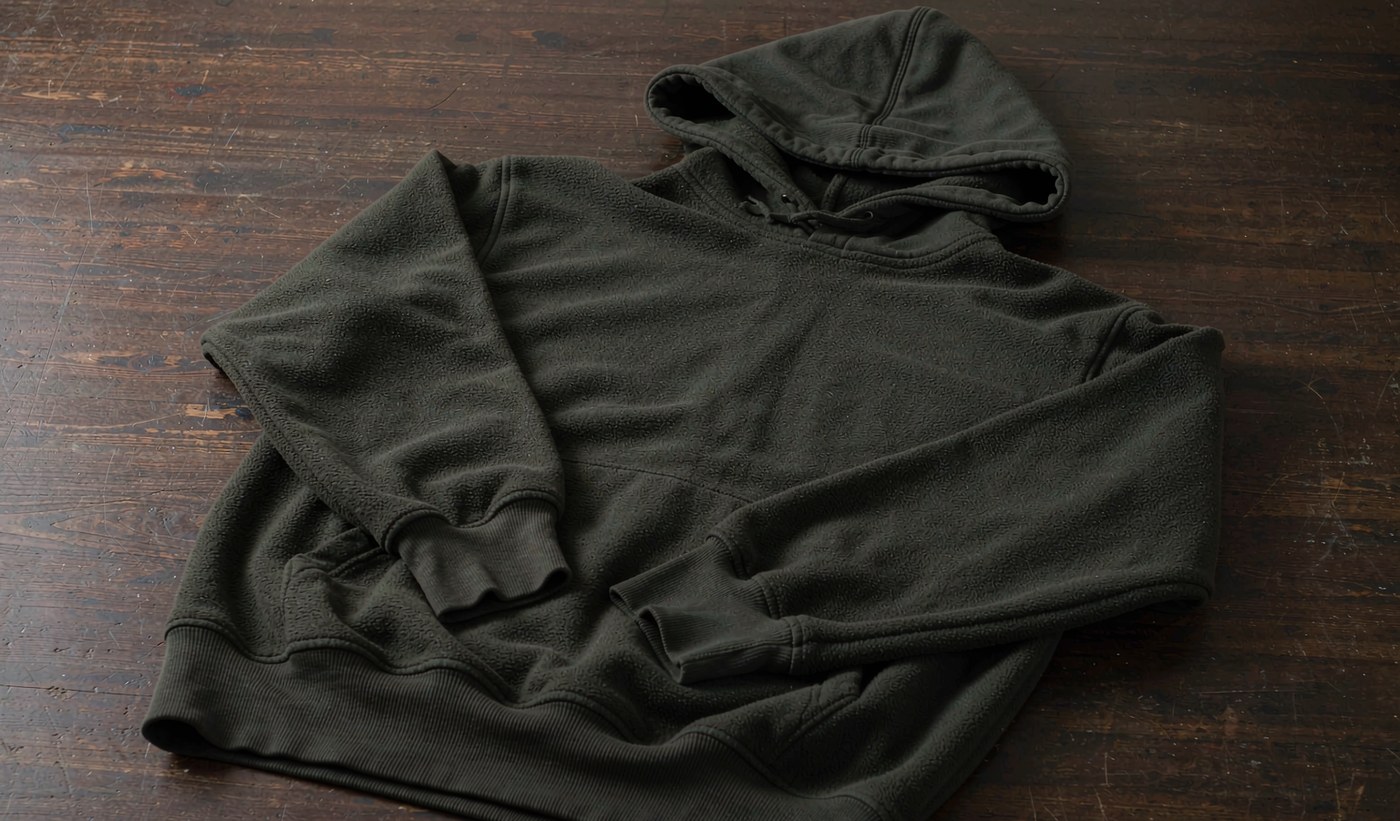
One Hoodie, Five Degrees: A Heavy Sweatshirt from November into January
It is 7 a.m. in late November. You step outside in the hoodie that felt perfect all October, and the wind is through it by the second block. Back inside, a thin jacket on top fixes the cold but leaves your arms stuffed and the hood bunched at your neck. Most winter dressing problems start here.
The short version: one heavyweight hoodie of around 400 gsm carries you from about 15 °C down to 0 °C, and the only thing that changes is what sits under and over it. Here is the breakdown, band by band, with the insulation numbers behind it.
The clo table settles the argument
Comfort researchers measure clothing in clo, the unit defined alongside standards such as ISO 7730. One clo equals 0.155 m²K/W of insulation. The standard garment tables list a cotton t-shirt at 0.09, a flannel shirt at 0.30, a thick sweater at 0.35, a work jacket at 0.35 and a parka at 0.70. A heavyweight sweatshirt is the thick sweater in that table: 0.35 clo alone. These values add up when you stack garments, so the totals tell you roughly how cold you can dress for. Layering stops being guesswork and becomes arithmetic.
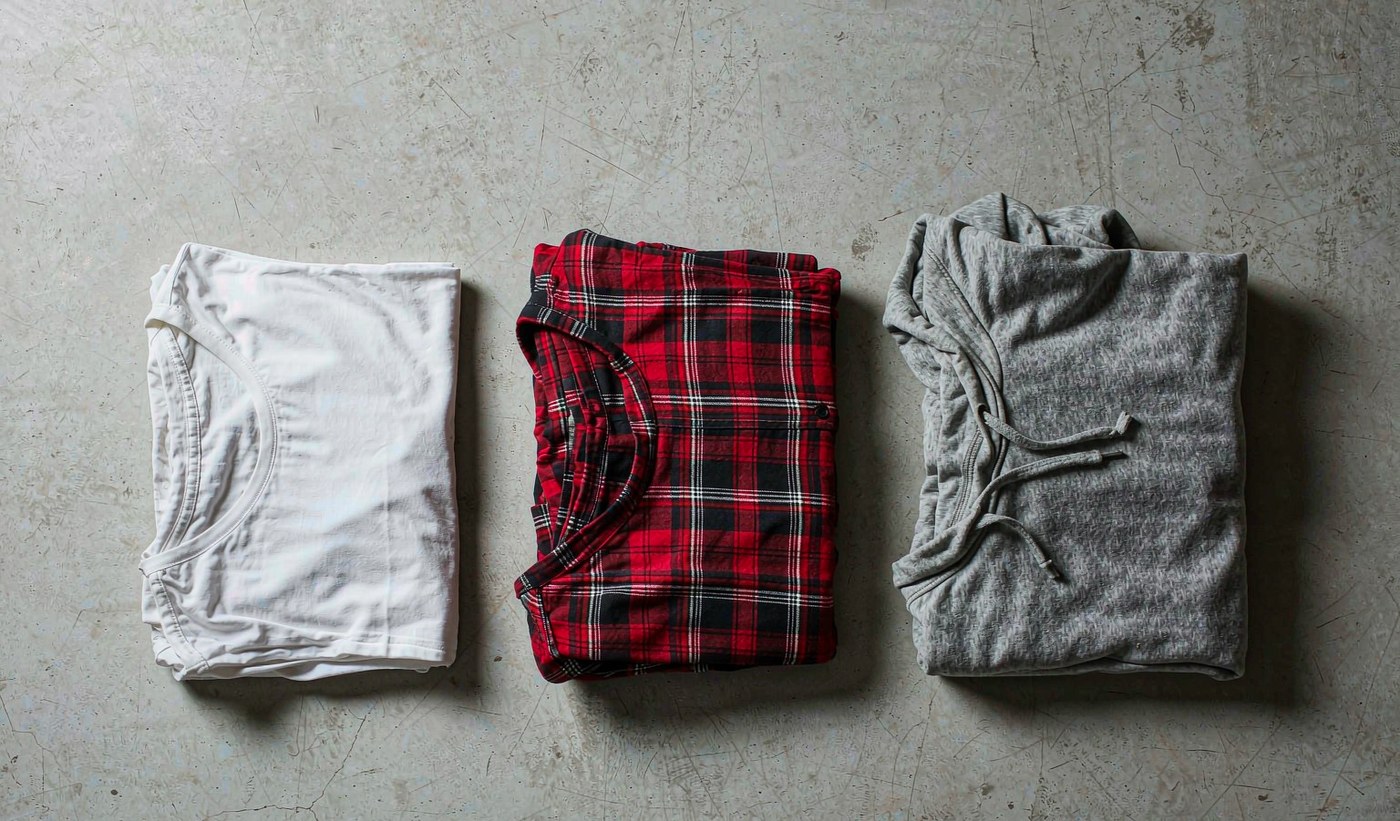
15 to 10 °C: hoodie over a tee
Add 0.09 and 0.35 and you land at about 0.44 clo, enough for walking and commuting. Keep the base thin and cotton-rich; a heavy base under a heavy hoodie is the fastest route to overheating indoors. This is also where the weight pays off: a 300 gsm hoodie starts to feel transparent once the wind picks up.

10 to 5 °C: the flannel moves under
A flannel shirt between the tee and the hoodie lifts the total to roughly 0.74 clo. Under, not over: the shirt fills the weave gaps, keeps the front pocket usable and leaves the hood free for a cap. At BenClothing, we see customers stack three thin layers at this temperature and wonder why they look puffy, while one flannel plus one 400 gsm hoodie does the same job with a cleaner line.
5 to 0 °C: the hoodie goes inside a jacket
Around freezing, wind beats fabric. A hoodie alone loses, but the same hoodie inside a jacket gains a 0.35 clo shell and a wind barrier in one move, for a total near 1.09 clo. A fleece-lined work jacket such as our fleece-lined vintage denim jacket pays for itself here: the fleece does half the job of a sweater and the canvas stops the wind.

One thick layer is not three thin ones
Bulk is not caused by the number of layers. It is caused by stacking pieces of the same thickness. Two thin layers under a thick hoodie stay flat; two thick sweaters under a thin hoodie bunch at the shoulders. Keep it thin and snug inside, thick in the middle, wind-tight outside. The full logic is in our guide to layering without looking bulky.
What 400 grams actually buys you
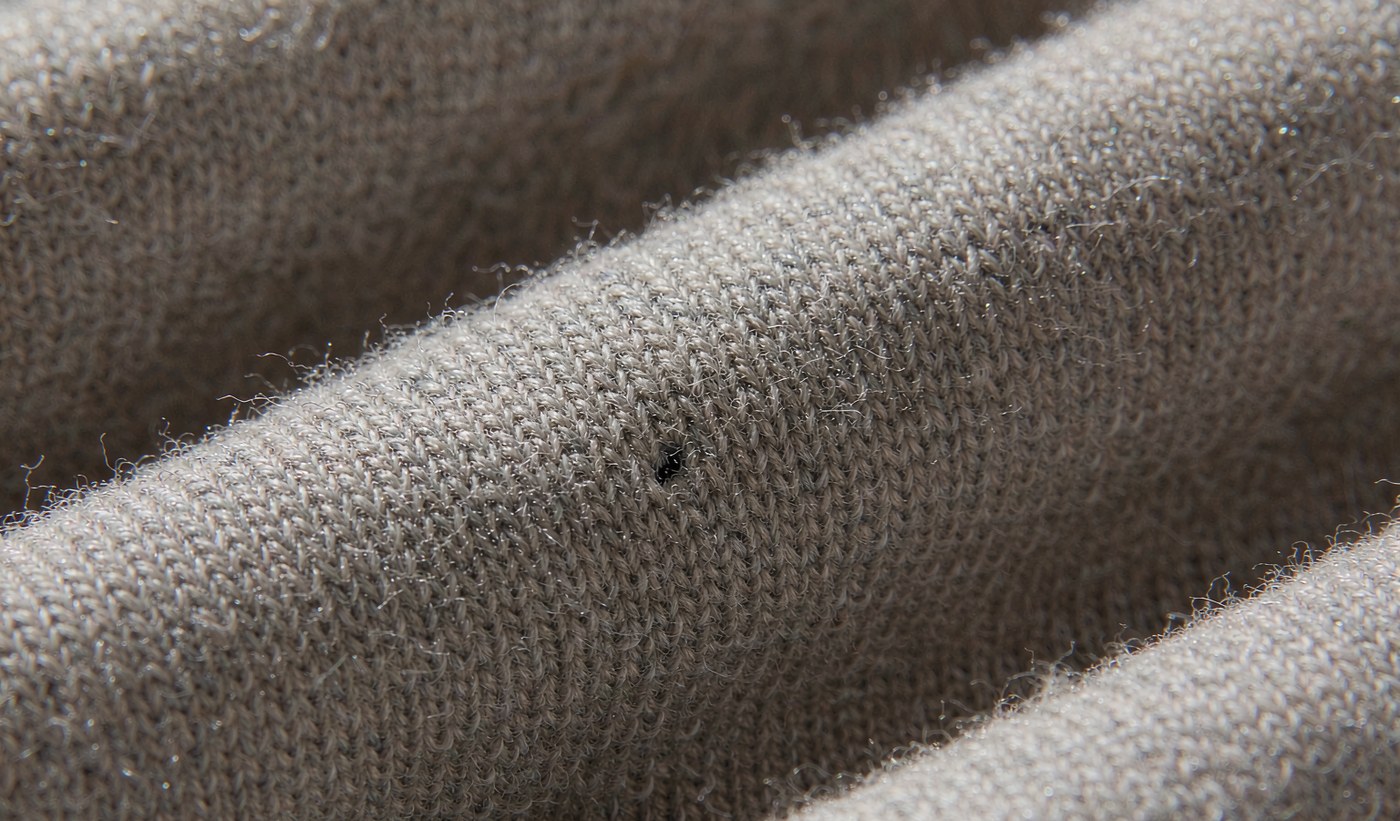
Gsm means grams per square meter of fabric, and 400 gsm brushed cotton fleece sits at the heavy end of what a sweatshirt can be. The brushed inside traps still air, the insulation you are actually wearing. Tight ribbed cuffs and a firm waistband keep that air in, and a dense hood holds shape over a cap. Washed cold and dried flat, a hoodie at this weight keeps its shape for years, which is the quiet point of buying one good piece instead of three that pill by February. You can feel it in our 400 g heavyweight terry hoodie.
Key takeaways
- One clo equals 0.155 m²K/W; standard tables list a t-shirt at 0.09, a flannel shirt at 0.30, a thick sweater at 0.35, a jacket at 0.35 and a parka at 0.70.
- 15 to 10 °C: hoodie over a thin tee, about 0.44 clo in total.
- 10 to 5 °C: add a flannel under the hoodie for roughly 0.74 clo.
- 5 to 0 °C: wear the hoodie inside a jacket for about 1.09 clo, wind barrier included.
- Bulk comes from stacking equal thicknesses; keep the inside thin, the middle thick and the outside wind-tight.
FAQ
Is a heavyweight hoodie enough below zero?
Not on its own. At 0.35 clo it works as the middle layer under a parka, bringing the system to roughly 1.4 clo. Below freezing, the hoodie is insulation and the parka is the wind shell.
What should I wear under a hoodie in winter?
A thin cotton tee for active days, a flannel for standing around. Anything thicker fights the hoodie for shoulder room and stretches the ribbing.
One 400 gsm hoodie, three temperature bands, one rule: change what surrounds the fleece, not the fleece itself. Buy it heavy, wear it for years.
Shop our collection and build a winter system around pieces that last.