
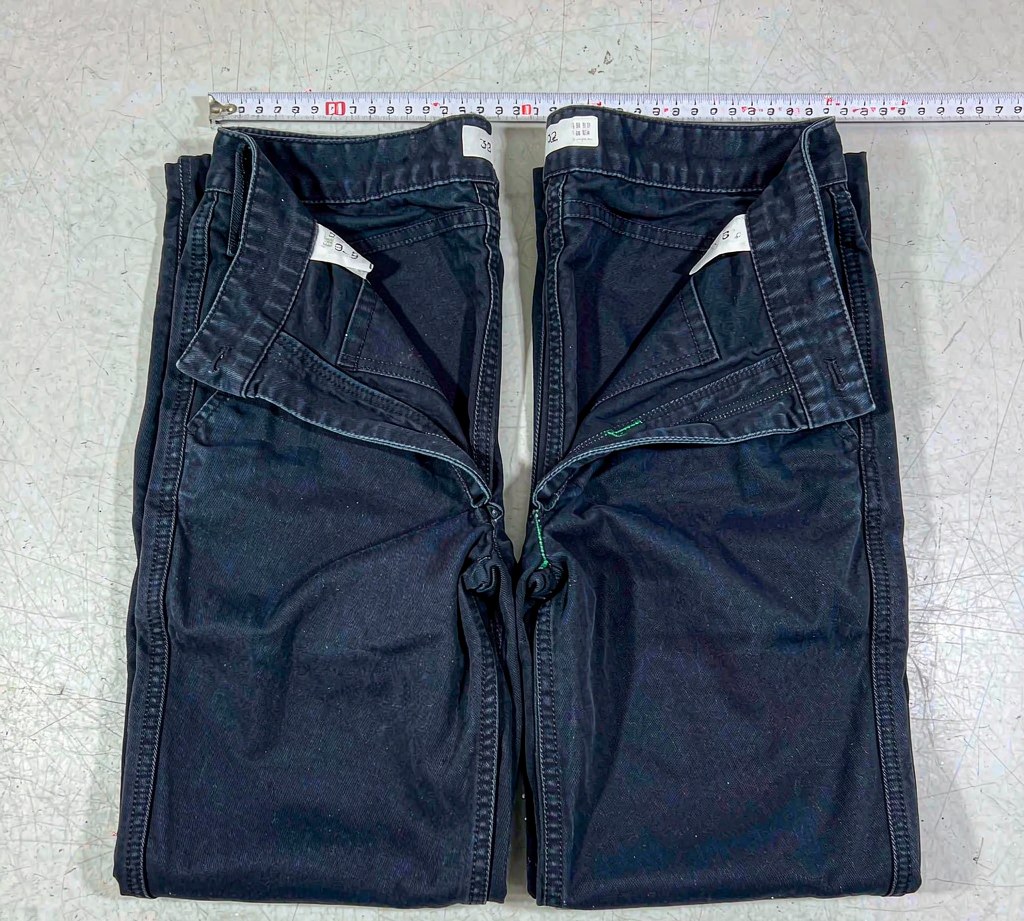
Why the Same Waist Size Fits Differently: Rise, Crotch and the Numbers Nobody Prints
Front rise, back rise and crotch depth decide how a pair of pants sits on your body. The waist size on the tag is only one third of the story. Two pairs both marked size 32 can differ by 3 or 4 cm in front rise, and that gap is why one pair stays up all day while the other slides down the moment you sit. If you have ever bought your usual size and felt like you received someone else’s pants, this is the measurement to blame, and it is the one almost no brand prints on the label. Below: what rise measures, why the crotch decides seated comfort, and a 60-second way to compare two pairs before you pay.
What rise actually measures
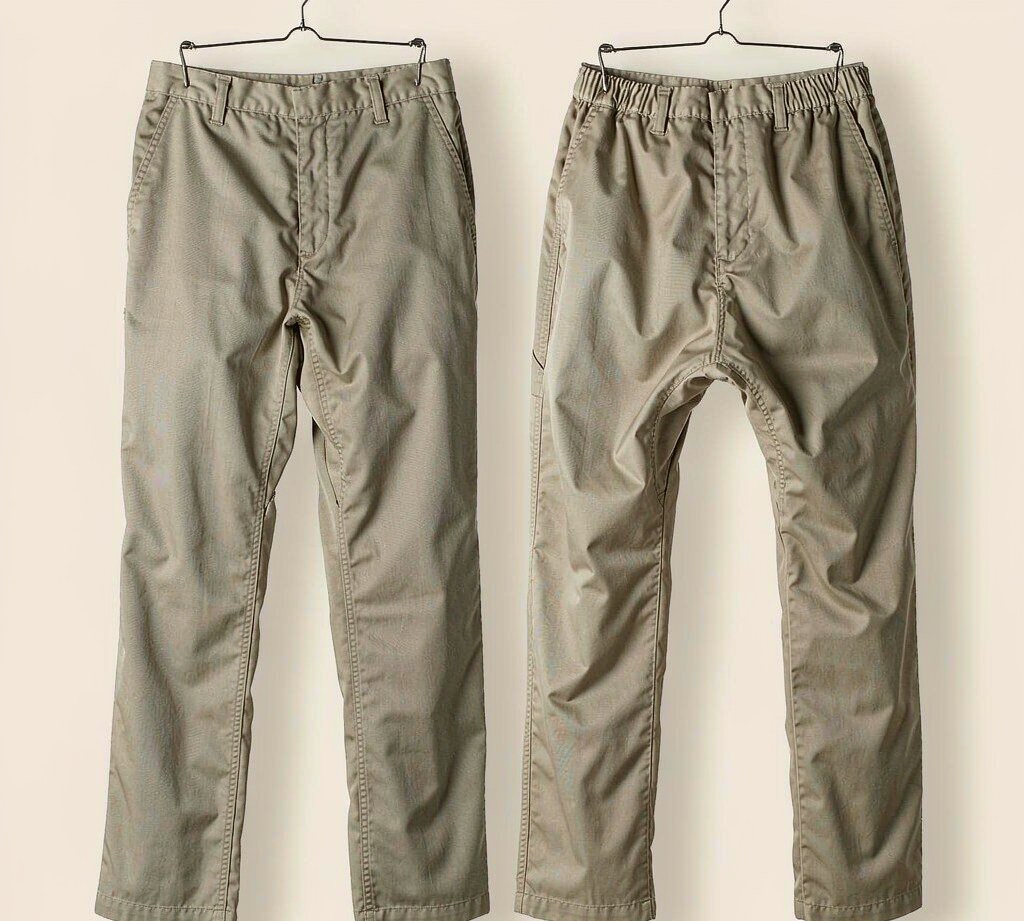
Rise is the distance from the crotch seam, the point where four seams meet, up to the top of the waistband. Measured at the front it is the front rise. Measured at the back it is the back rise. On most well-cut work pants the back rise runs 2 to 3 cm longer than the front, which is what keeps the seat covered when you bend over. Stores loosely sort pants into low, mid and high rise: roughly 25 cm and under counts as low, 27 to 29 cm as mid, and 30 cm and up as high. The exact number matters more than the category, because a 2 cm move changes where the waistband lands on your body.
Why a shallow crotch pulls when you sit
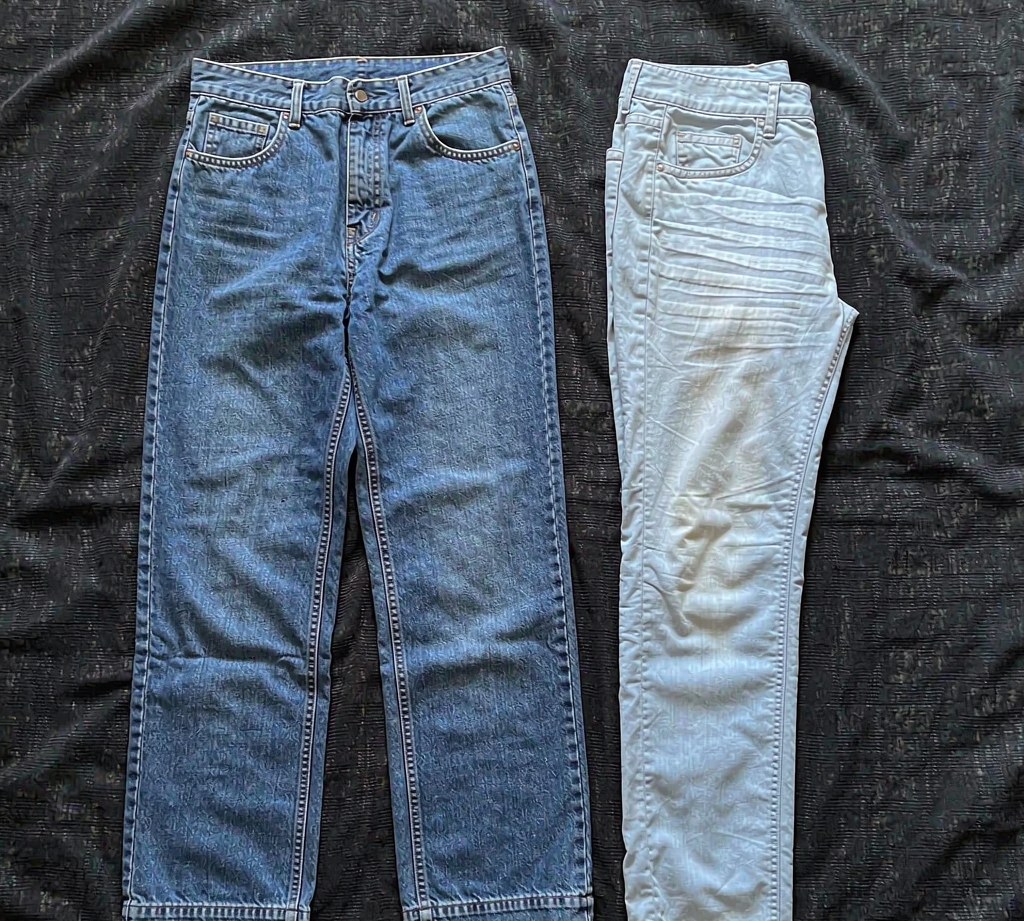
When you stand, the fabric between your waist and your seat hangs in loose folds. When you sit, those folds disappear and the same fabric has to cover a longer path. If the rise is shallow, the fabric runs out. Seams pull against each other, the waistband slides down at the front, and the thighs feel tight even though the waist fits fine while you stand. A bigger waist size does not fix this. It only adds fabric where you do not need it and leaves a gap at the back. The real fix is a deeper rise and a fuller seat, which is a pattern change, not a size change.

The numbers nobody prints, and how to get them
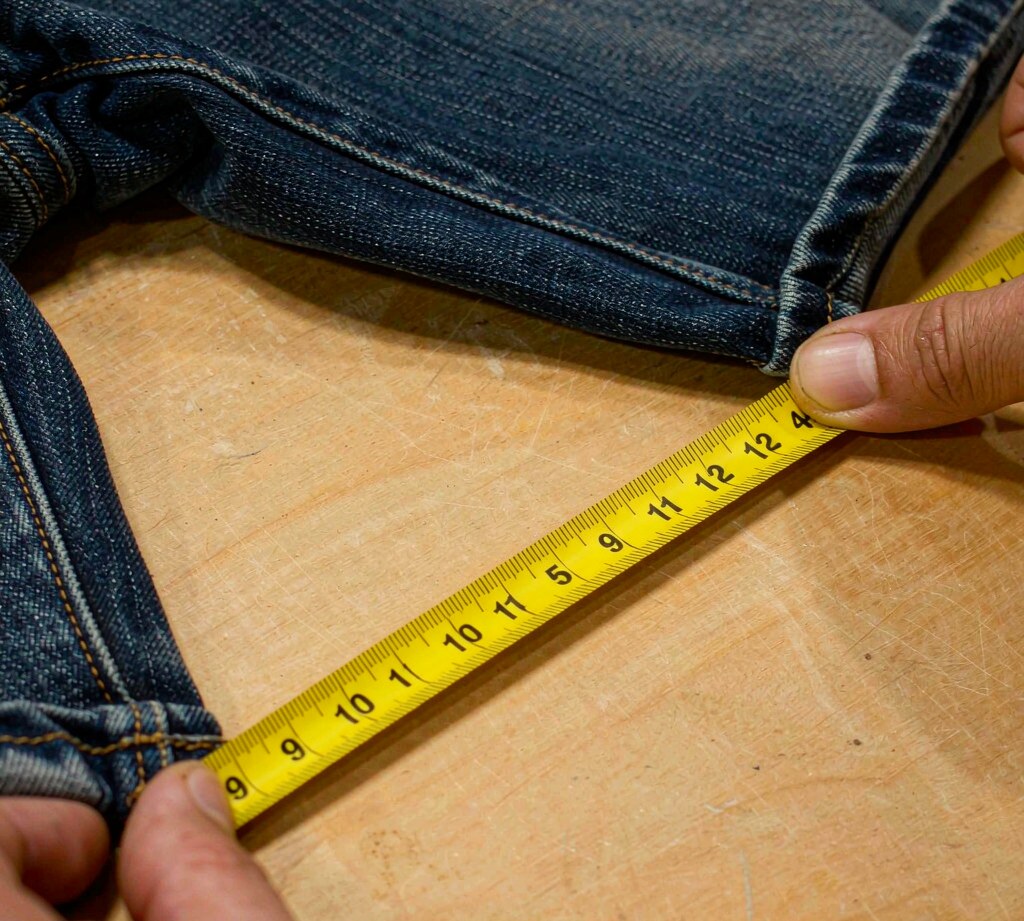
Most tags list waist and inseam and stop there. Rise almost never appears, and that is why your size in one brand has nothing to do with your size in another. Each brand cuts from its own block, and the block decides the rise. Here is the 60-second version. Take the pair of pants you reach for most, button it, lay it flat on a table, and measure from the crotch seam straight up to the top of the waistband. Write the number down. Do the same with any new pair you are considering, or ask the seller for the flat front rise measurement. If the two numbers are within one centimeter, the new pair will sit close to where your old pair sits. If they are 3 cm apart, it will feel like a different size, and now you know it before you pay.
Buy once: use rise to pick a pair that lasts
Fast fashion reshapes its patterns every season, so your size keeps moving under your feet and every purchase becomes a gamble. Classic work pants are the opposite. The block stays the same for years, which means once you know the front rise that works on your body, you can buy again without thinking. At BenClothing, we would rather you spend two minutes with a measuring tape than two weeks shipping a pair back and forth. A pair that fits at the crotch is a pair you keep wearing, and a pair you keep wearing is the most sustainable purchase there is. Compare the flat measurements of our tapered outdoor cargo pants and our vintage tooling jeans against the number you just measured, and pick the one that matches.
Key takeaways
- Waist is one of three fit numbers. Front rise, back rise and crotch depth decide where pants sit and how they feel when you sit down.
- Two pairs with the same size tag can differ by 3 to 4 cm in front rise, enough to feel like two different sizes.
- Back rise usually runs 2 to 3 cm longer than front rise so the seat stays covered when you bend.
- A shallow crotch pulls when you sit. The fix is a deeper rise, not a bigger waist.
- Measure your best-fitting pair flat, from crotch seam to waistband top, and compare that number before you buy anything new.
FAQ
Is front rise the same as inseam?
No. Front rise runs from the crotch seam up to the top of the waistband. Inseam runs from the crotch seam down to the hem. One decides where the pants sit on your body, the other decides where they end at your ankle. A pair only fits right when both numbers match what you already wear.
Does a higher rise always mean more comfort?
No. A higher rise moves the waistband up toward your natural waist, which some people like for coverage and others find tight when they bend. What actually decides comfort is whether the crotch depth matches your body and how many hours a day you sit. Match the rise to your best old pair first, then adjust from there.
Pants fit is decided by rise as much as by waist. Learn your own front rise number once and every future purchase gets simpler: same number, same fit, no returns. That is how you buy less and wear more.