
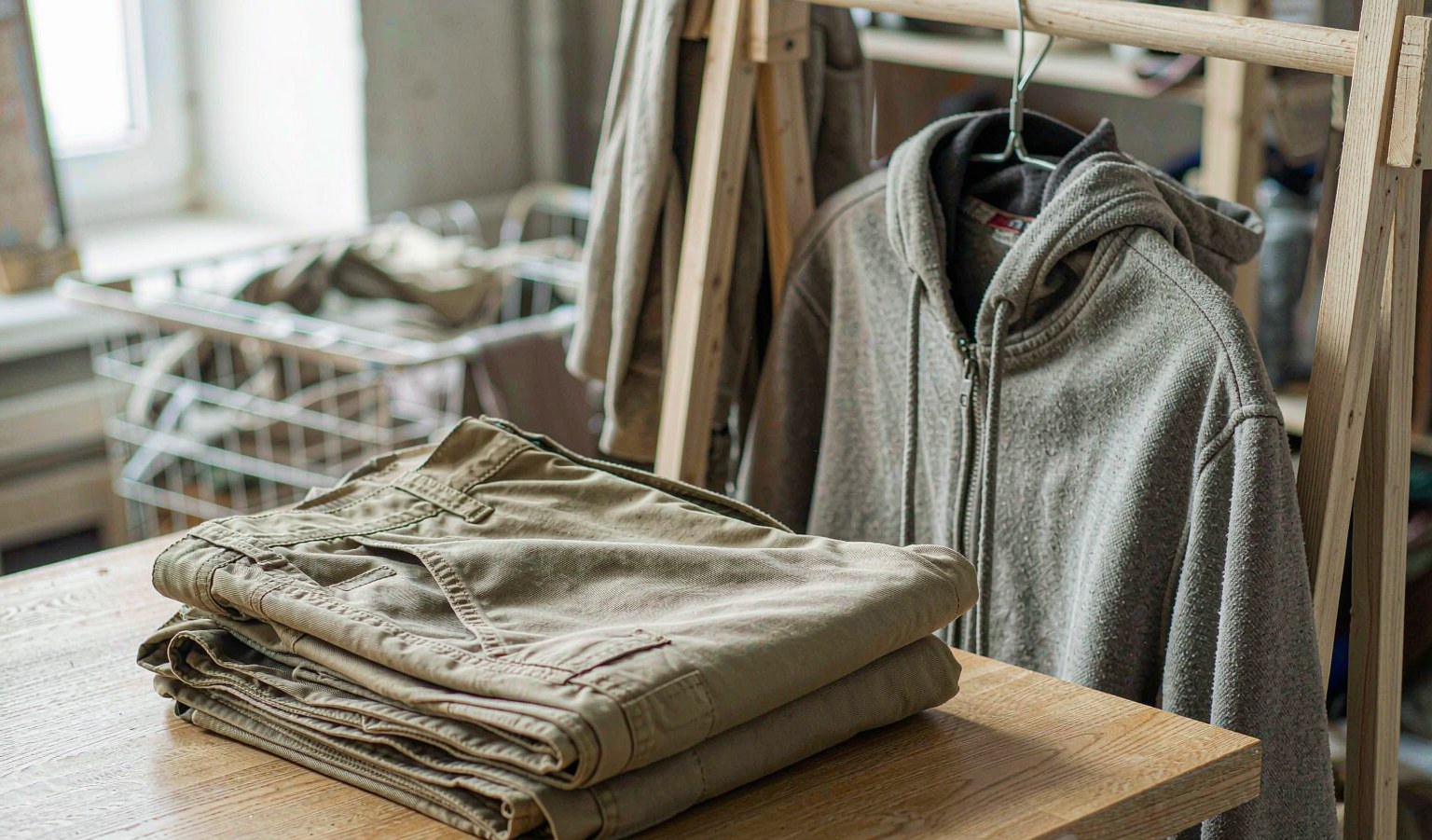
The Dryer Is What Ages Your Workwear. Not the Washing.
Washing does not age your workwear. Drying does. The wash moves fabric through water and flexes it a little; the dryer attacks it with heat, tumbling friction and overdrying, and locks cotton shrinkage into the cloth while it is at it. Run two identical pairs of heavy cotton pants through thirty washes, but put only one of them in the dryer, and the machine-dried pair comes out shorter, stiffer and greyer. This piece explains what the drum actually does to heavy cotton, and gives you a garment-by-garment way to decide what deserves the heat and what should never see it.
What the wash actually does
The washer looks violent but it is the gentler machine. Water is a soft environment: the load floats, detergent lifts soil out of the fibers, and agitation mostly flexes the cloth. The real size change in cotton happens in the first few cycles, when the weave relaxes and settles; after that, washing changes very little from cycle to cycle. Cold water, closed zips and turning garments inside out already cover most of what little risk the wash carries. If washing were what wore your clothes out, a pair kept out of the dryer would come out of thirty washes looking close to new. Usually, it does.
What the drum adds: heat, friction and overdrying
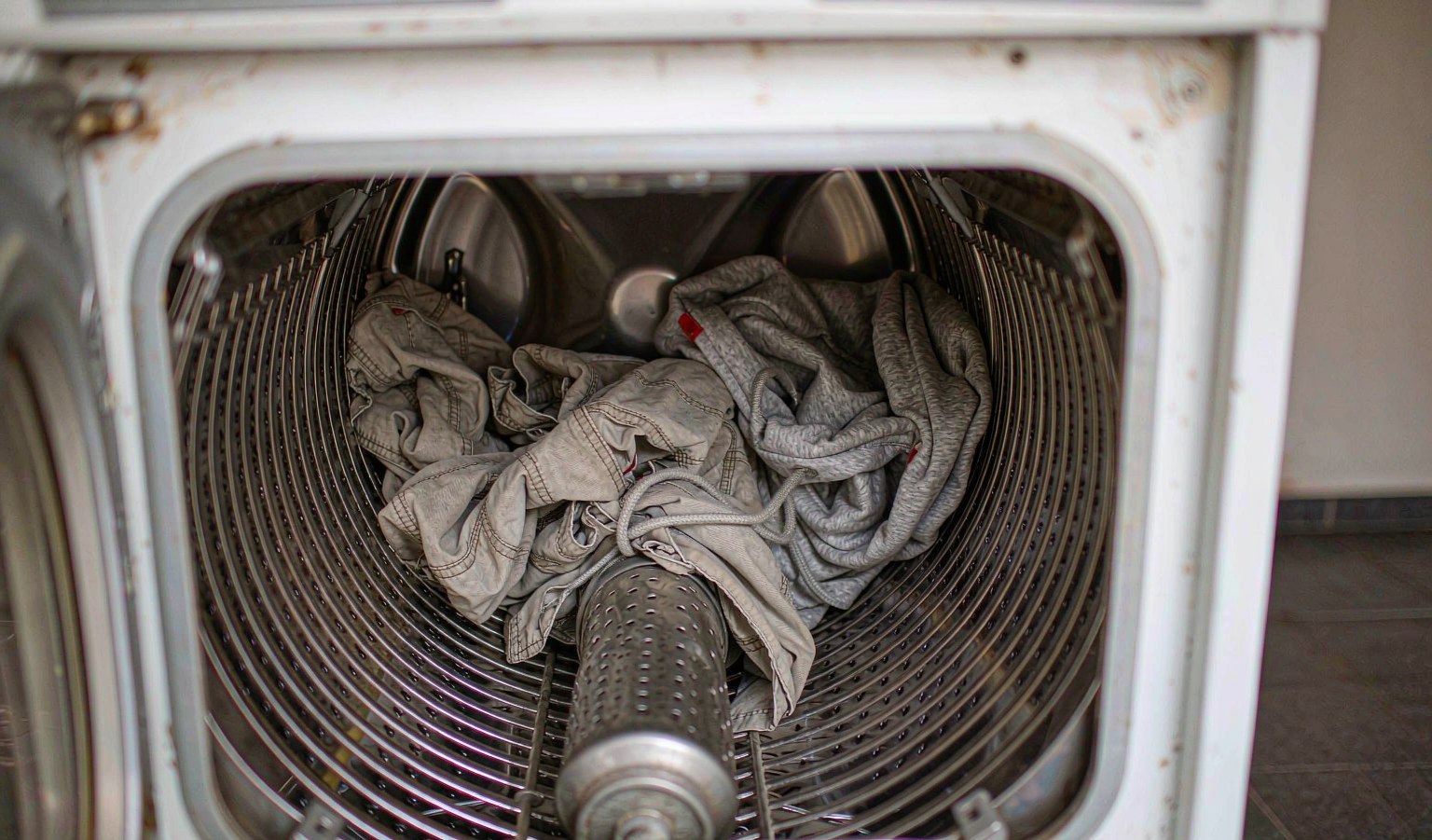
The dryer stacks three stresses the washer never applies at once. Heat makes cotton fibers brittle and drives the remaining shrinkage deep into the cloth. Tumbling rubs fabric against fabric and against the drum wall, which is mechanical wear you can hear. And a cycle that runs past the dry point keeps cooking cloth that has no moisture left to give. Textile testing treats drying as its own variable: AATCC TM135, the standard test for dimensional change in home laundering, defines four separate drying procedures, tumble, line, drip and flat, because the drying method changes the result as much as the wash does. That is also why care labels name a drying method, not just a wash temperature. The same rule holds for the softness of a 280g washed cotton tee: the hot drum flattens its hand long before the wash does.
The lint trap is a receipt
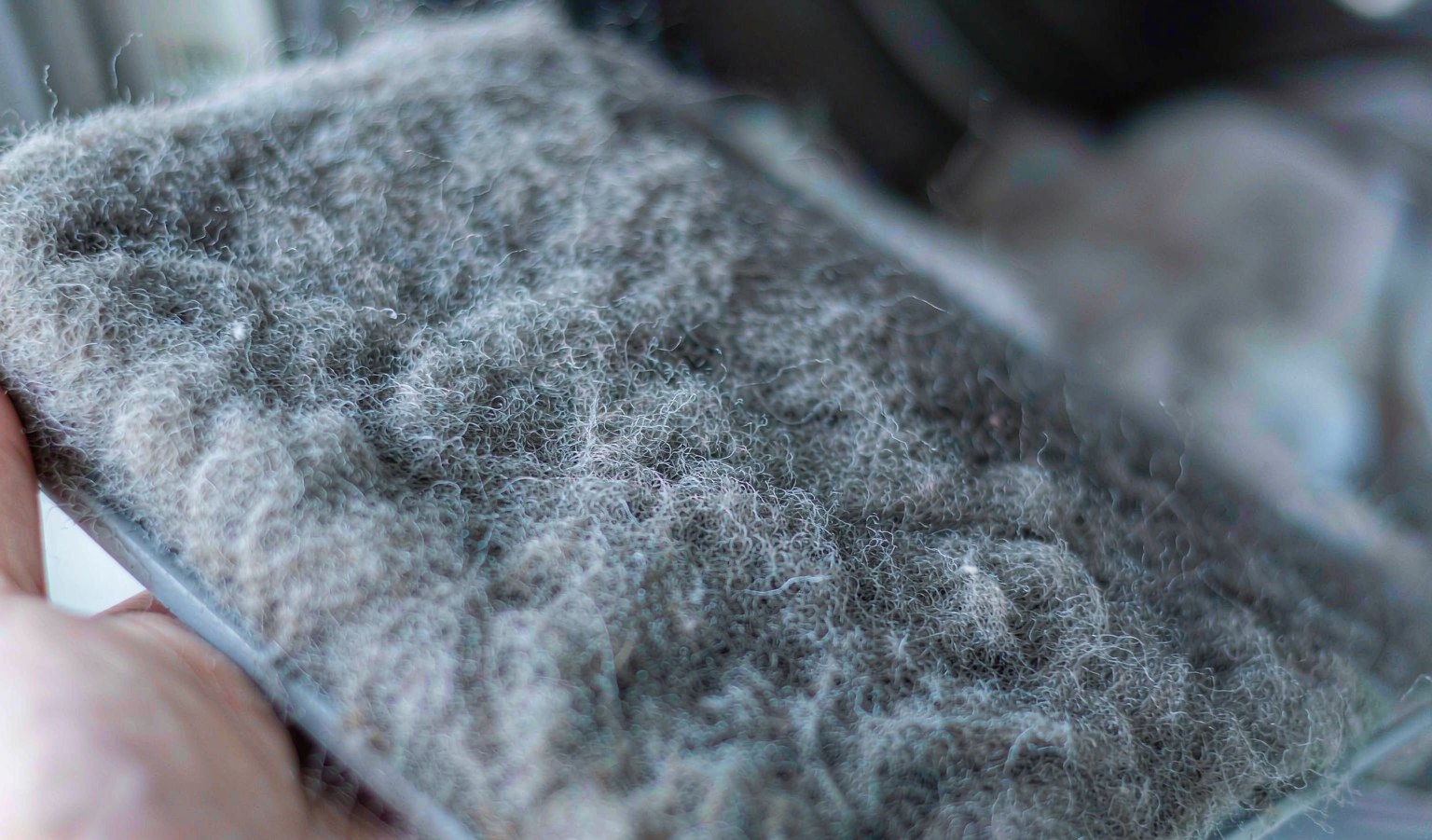
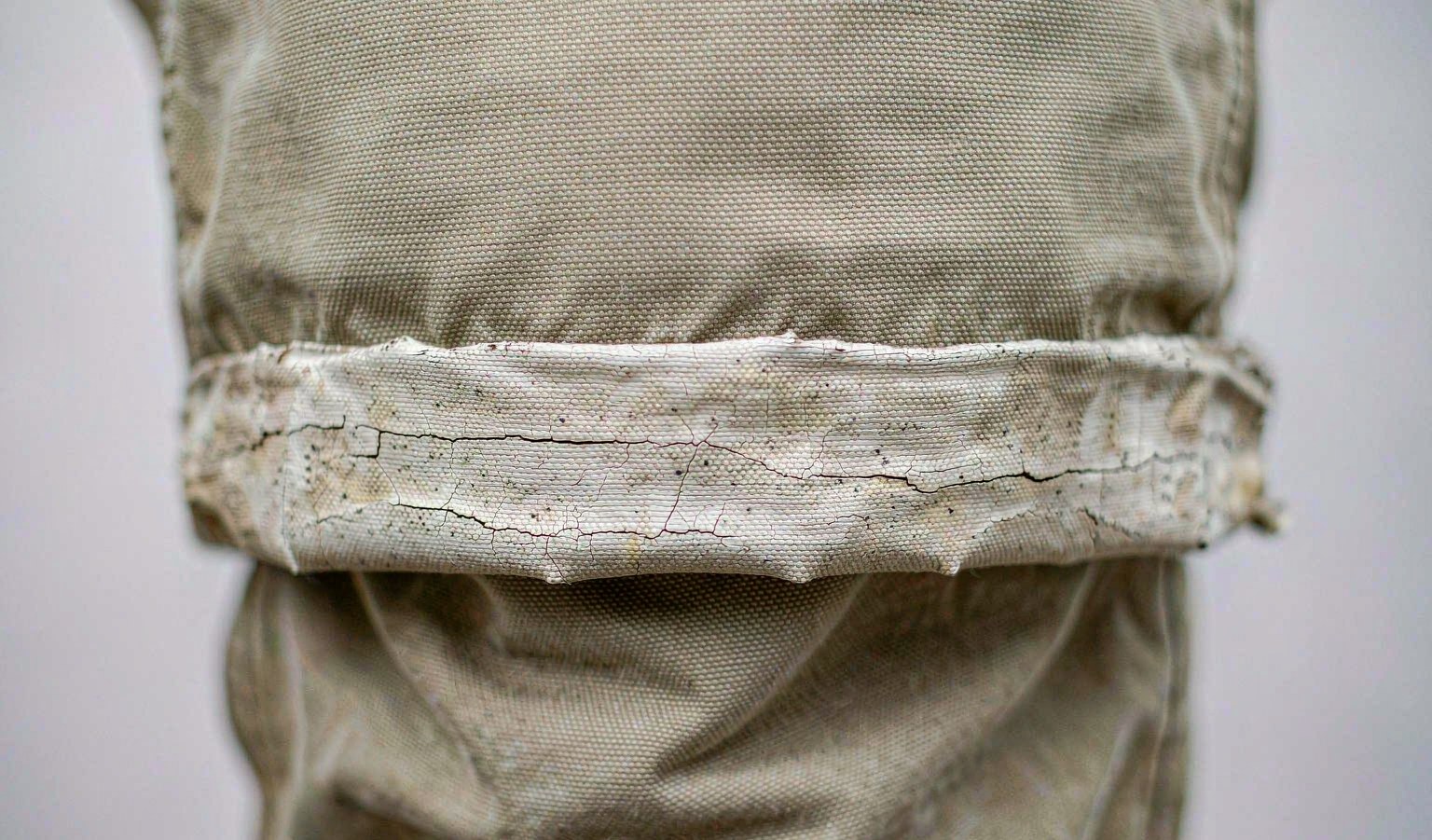
Every wisp in the lint screen is fiber that left your garment. A load of heavy cotton fills the screen after one cycle, and that fluff is literal weight, hand feel and future years leaving the cloth. Friction in a hot drum pulls short fibers to the surface and snaps them off, and the broken ends pack into the surface as the grey, tired look people blame on washing. Heat also takes the spring out of ribbed cuffs and drawstring tips, and it is what stiffens and cracks canvas edges that fold the same way every cycle. The cracked, papery edge on an over-dried hem is heat damage, not wash damage.
Decide by garment, not by habit
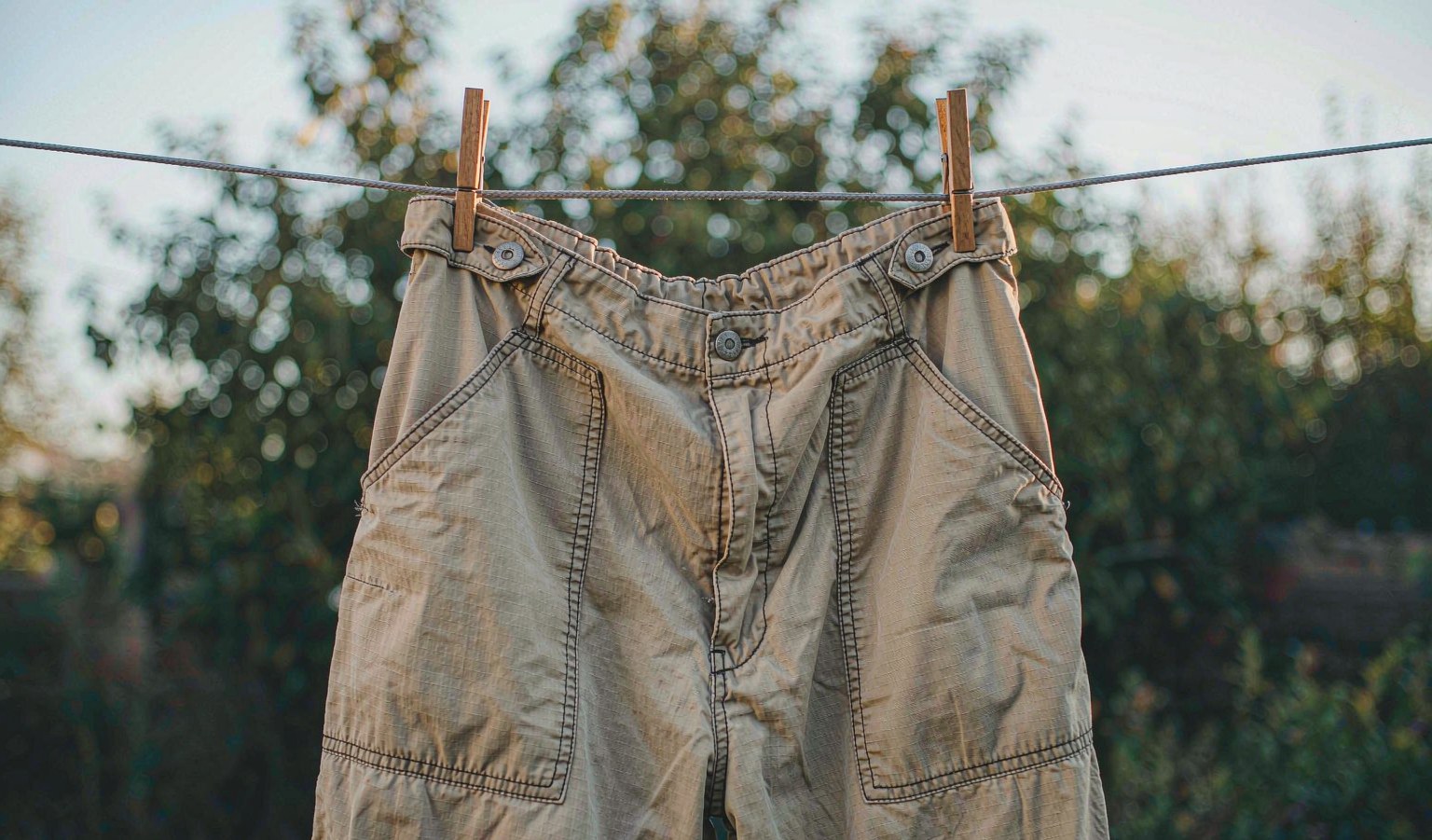
Heat does not threaten every piece equally, so the fix is a short list, not a rule. Heavy work pants and canvas: line dry them by the waistband and shake them out first, and if the weather forces the machine, use low heat and pull them slightly damp. Hoodies and knits: dry them flat, because a soaked heavyweight knit hung on a line stretches at the shoulder and grows longer every wash; if fabric weight is new ground, start with what GSM actually means. Denim: keep it out of hot cycles, because heat hardens the hand and forces the crease patterns at the knees; a washed trucker jacket like a washed denim trucker jacket keeps its fit for years on a hanger alone. Anything with elastic: air only, since heat is the single fastest way to kill it. And the setting that forgives almost everything: low heat, stop the load at about 90 percent dry, and let a hanger finish the last stretch. That final stretch is exactly where overdrying concentrates.
Key takeaways
- The washer flexes and rinses; the dryer adds heat, tumbling friction and overdrying, and heat is what embrittles cotton fibers and fixes shrinkage into the cloth.
- AATCC TM135, the standard test for dimensional change in home laundering, defines four drying procedures, tumble, line, drip and flat, because the drying method changes the measured result as much as the wash.
- Lint is lost fabric: a full lint screen after one cycle is weight, softness and service life leaving the garment.
- Most cotton shrinkage settles in during the first few cycles, and drum heat is what drives it, so keep heavy cotton out of hot cycles from day one.
- The forgiving routine: low heat, stop the load slightly damp at about 90 percent dry, finish on a hanger; dry hoodies and knits flat.
FAQ
Is line drying always better for workwear?
No. Line-dried canvas comes off the line stiff, and in a humid room a thick garment can stay damp long enough to smell. A short tumble on low heat at the very end softens the hand without doing real damage. The habit worth building is skipping the hot cycle, not skipping the dryer forever.
What temperature should heavy cotton be tumble dried at?
Low, and stop early. Pull the load while it is still slightly damp and let air finish; if a care label allows tumble drying at all, it names a low setting for a reason. Repeated high-heat cycles are what crack hem edges, stiffen cuffs and grey the surface of heavy cotton.
At BenClothing, we cut and wash heavy cotton for a long service life, and we would rather see one pair dried low and worn for years than three pairs cooked through in rotation. Treat the drum as the expensive part of laundry day and your workwear pays you back. If you want pants and knits worth that care, Shop our collection.