
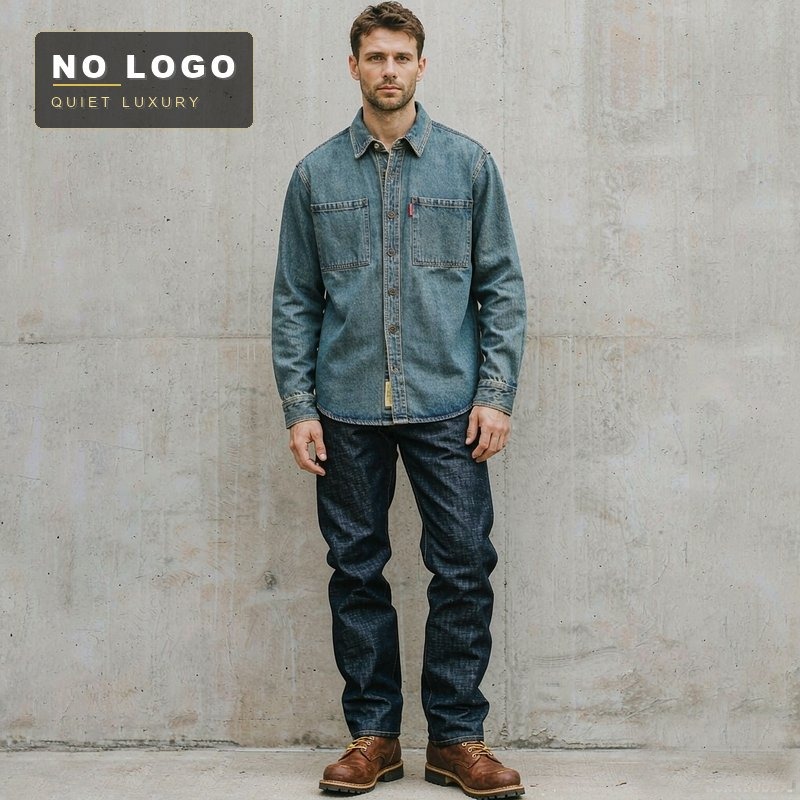
Why US Buyers Are Specing Heavier Twill Again, Even With Cotton Up 21%
Cotton is up roughly 21 percent year over year. US spot prices in the seven-market average sat at 75.00 cents per pound at the start of October, against 61.87 cents at the same point last year.
That is the number that makes the current buying behaviour look strange. When your main raw material gets a fifth more expensive, the intuitive response is to use less of it. Instead, a growing share of US buyers are specifying heavier fabric than they did two seasons ago, and paying for it. This article is about why that is rational rather than reckless.
Start With the Number: 320 to 400 Grams
The specification in question is a cotton twill in the range of roughly 320 to 400 grams per square metre. Below about 300 grams you are in shirting territory: the fabric moves with the body, drapes rather than holds, and starts to show wear at the high-friction points within a season of regular use.
Above 400 grams the fabric becomes a different problem. Cutting and sewing get slower, needle and thread specification changes, and the garment stops being a three-season piece and becomes a cold-weather one. The 320 to 400 band is where the fabric holds a line and still moves, which is why it is the band buyers keep returning to.
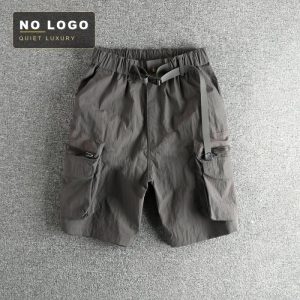
Cotton Is Up About 21% Year Over Year
The arithmetic of a price increase depends on how much fabric is in the garment, and the relationship is not linear. Moving from 280 to 380 grams per square metre adds more than 35 percent to the fabric weight in the same pattern, and fabric is typically the largest single cost line in a woven garment.
So the cost per unit goes up twice: once from the higher price per kilogram, once from the higher kilogram count. A buyer choosing heavier fabric in this market is not avoiding the cost. They are accepting a higher first cost, deliberately, which means the return has to be somewhere else.
Why Buyers Accept It: Wear Cycles Per Dollar
The return is durability, and it needs to be measured the way the end customer experiences it. A lighter twill trouser in regular rotation typically shows visible wear at the seat, the knee and the pocket corners inside one or two seasons. The same pattern in the 320 to 400 gram band commonly runs several seasons before those points open up.
If the customer measures value by cost per wearing rather than by sticker price, the heavier garment wins even at a higher ticket, because the number of wearings in the denominator grows faster than the price in the numerator. That is the whole argument, and it is why the shift survived a raw-material price rise instead of being cancelled by it.
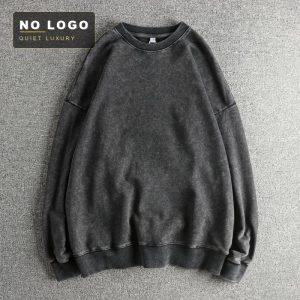
The same logic shows up outside trousers. Our “550g heavyweight hooded sweatshirt” and “400g terry cotton hoodie” are both specified with the gram weight written into the product name, because once a customer has paid for weight they want to see the number.
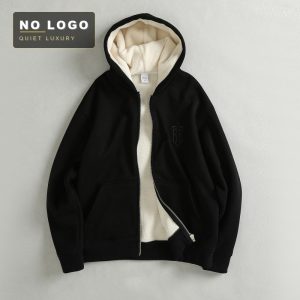
What Heavier Twill Changes on the Line
Weight is not only a customer-facing decision. It changes five things in production, and each one is a place where a quote can quietly go wrong:
- Cutting time. Heavier rolls are harder to lay flat and hold more tension. Ply height usually drops, which increases the number of lays for the same order quantity.
- Needle and thread. The stitch specification changes. Using the same needle and thread count as a lightweight twill produces skipped stitches and seam failure.
- Seam construction. High-stress seams need a different structure, not just a longer stitch. A heavier fabric pulls harder on every stitch line, so the weak point moves to the seam rather than the cloth.
- Washing behaviour. Heavier cotton moves differently through a wash and dry cycle. Shrinkage that was acceptable at 280 grams can put the same pattern out of tolerance at 380 grams.
- Trims. Buttons, snaps and zip tape all have to be sized to the fabric. A trim specified for a lighter cloth will fail at the attachment point, not at the mechanism.
Spec It So the Mill Cannot Drift
Because heavier fabric costs more, the temptation to drift downward is stronger. A variation of 20 grams per square metre is inside most mills’ standard tolerance and is invisible on a specification sheet, but across a full order it is a real cost and, more importantly, a real change in the garment the buyer approved.
Three specifications prevent the drift. Write the target weight with an explicit tolerance rather than as a single figure. Require the weight to be stated on the mill’s delivery note and verified on receipt, not assumed from the order. And name the construction — yarn count and weave — not only the weight, because two fabrics at 360 grams can behave very differently if one is a dense fine-yarn twill and the other a looser coarse-yarn weave.
Key takeaways
- Cotton spot prices are around 75 cents per pound, roughly 21 percent above the same point last year.
- The working band for a durable cotton twill is about 320 to 400 grams per square metre.
- Heavier fabric raises unit cost twice: higher price per kilogram and more kilograms per garment.
- Buyers absorb that cost because wear cycles per dollar, not ticket price, is what the end customer experiences.
- Weight changes cutting, needle and thread, seam structure, shrinkage and trim sizing. Quote all five, not just the fabric.
- Specify weight as a target with a tolerance, demand verification on delivery, and name the yarn count and weave as well as the grams.
FAQ
Is heavier always better?
No. Above roughly 400 grams a woven cotton garment stops being versatile and starts being seasonal, and the sewing difficulty rises faster than the durability gain. The right question is which weight band matches the climate and the wearing pattern, not which is heaviest.
How do I verify weight without a lab?
Cut a square of known size, weigh it on a kitchen scale, and convert. A 10 cm by 10 cm swatch at 360 grams per square metre weighs 36 grams. It is not laboratory precision, but it is accurate enough to catch a 20 gram drift, which is the failure that actually costs money.
If you are re-specifying weight for next season, send us the style and the target band and we will tell you what changes on the line before you commit the order. Start the conversation.