

What US Buyers Audit Before a Repeat Order: Five Gates, Counted Backwards
Last month a buyer sent me two inspection reports side by side. Same style, same factory, same specification sheet. The first order passed with zero major defects. The repeat order failed, and nothing in the second report looked dramatic: the waist ran 1.2 cm large, the sleeve had drifted 8 mm, and the wash was a shade closer to grey than the approved sample.
No single number on that report was alarming. Together they described a garment that was no longer the one the buyer had approved. The question I get asked most often is how a factory can pass the first order and fail the fourth. The answer is almost never sabotage. It is that a repeat order is a different project, even when the paperwork is identical.
A Repeat Order Is a Different Purchase
On a first order, everything is new and everyone is watching. The pattern is being cut for the first time. The sample room and the line are in contact daily. The buyer usually reviews the pre-production sample in person or on video. Attention is the variable that makes first orders good.
On a repeat order, that attention is gone. The pattern is already on file, the fabric is reordered from a mill that may not be running the same dye lot, and the line treats the style as routine because it is. Most of the failures we see in repeat orders are not caused by a change anyone made. They are caused by drift nobody measured.
Count Back From the Ship Date: Five Gates
The practical way to audit a repeat order is to stop auditing the finished goods and start working backwards. Take the ship date, subtract the transit and the finishing window, and you get the last moment each of the following five gates can still be corrected. After that moment, each one becomes a conversation about price instead of a conversation about product.
Gate One: The Measurement Sheet, Signed and Dated
This is the gate most repeat orders skip, because the sheet already exists from last time. It should still be re-signed, because the sheet from last time describes the sample that was approved, not necessarily the garment that shipped.
Two things to check. First, that tolerances are stated as ranges, not as single targets. A spec that says “waist 82 cm” cannot be inspected; a spec that says “82 cm, plus or minus 1.0 cm” can. Second, that the measurement points are the same ones the inspection report uses. Half the disputes I have seen come down to a buyer measuring the waistband relaxed while the factory measured it stretched.
Gate Two: Shrinkage, Tested on Your Fabric
Shrinkage is where a repeat order quietly becomes a different product. A mill’s test data tells you what that mill’s fabric does on average. It does not tell you what the roll in your warehouse does after a different dye lot, a different finishing line, or a different water temperature at your wash house.
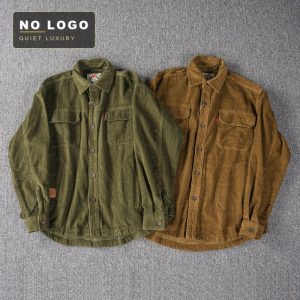
The audit here is a conditional one: take the actual production fabric, cut three swatches, wash them the way the finished garment will be washed, and measure again. Three swatches cost almost nothing. Finding out that a batch shrinks 3 percent instead of 1.5 percent after twelve hundred units are sewn is a different kind of cost. Our own “heavy washed denim work shirt” is built on yarn-dyed fabric specifically because the colour and the hand behave more predictably across repeat runs.
Gate Three: AQL Is a Sample, Not a Verdict
The number that gets quoted most often in repeat-order conversations is the AQL and the number that gets understood least. An AQL of 2.5 does not mean 2.5 percent of the shipment may be defective. It defines a sampling plan: how many pieces to pull, and how many defects are allowed before the whole lot is rejected.
Two consequences follow. A passed inspection means the sample was within limits, not that the shipment is clean. And a failed inspection with one major defect out of a large sample is worth a phone call before it becomes a rejection, because the defect may be a single operator rather than a systemic fault. Read the counts, not the verdict.
Gate Four: The Trim and Hardware Schedule
Trims are the least visible and the most frequently substituted part of a repeat order. Zippers, snaps, interlining, thread, labels, packaging bags: each one has its own supplier, its own minimum order, and its own substitution logic when the original is out of stock.
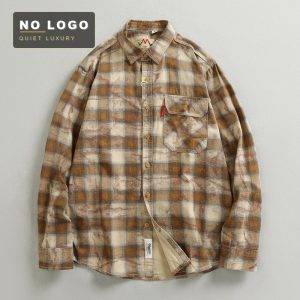
A substitution is not automatically a fault. An unbranded slider that matches the specification will perform exactly like the original, and no customer will ever know. What matters is that the substitution is declared before production, not discovered at inspection. Ask for the trim schedule with supplier references on every repeat order, and ask for a written note whenever an item changes. The pieces we make with piped patchwork and embroidered detailing, like this “heavyweight washed denim shirt jacket“, depend on trims and thread that have to match batch to batch, which is exactly why the schedule belongs in the audit.
Gate Five: Carton, Packing and Marks
This gate fails silently because it fails downstream. The garment is correct and the shipment is late or short because a carton mark was wrong, a polybag gauge changed, or the fold was different from the packing standard the receiving warehouse expects.
The check is cheap: open one finished carton in the middle of the run, not the last one before shipping. Confirm the fold, the bag, the hangtag position, and the carton mark against the approved standard. Then photograph it. A photograph dated mid-production is the single most useful document in a repeat-order dispute, because it shows what the standard actually was on the floor rather than what was written.

What to Write Before the PO, Not After
None of the five gates is complicated. They fail because they are unowned — nobody is assigned to them, so nobody is responsible when the drift appears eight weeks later. Before the repeat purchase order goes out, put these six lines in it:
- The measurement sheet, re-signed and dated, attached as an annex rather than referenced.
- Tolerances as ranges, with the measurement method stated for each critical point.
- A shrinkage test on production fabric, before cutting, with the result recorded.
- The AQL level, the sampling plan, and who attends the inspection.
- The trim schedule with supplier references, and a rule that any substitution is declared in writing before production starts.
- One mid-run carton photograph, dated, sent to you before the balance payment is released.
Six lines, written once, cost nothing. Written after a failed inspection they cost a rework negotiation, a delayed shipment, and a season you cannot get back.
If you want these five gates applied to your next repeat order, tell us the style and the ship date and we will work backwards with you. Start the conversation.