
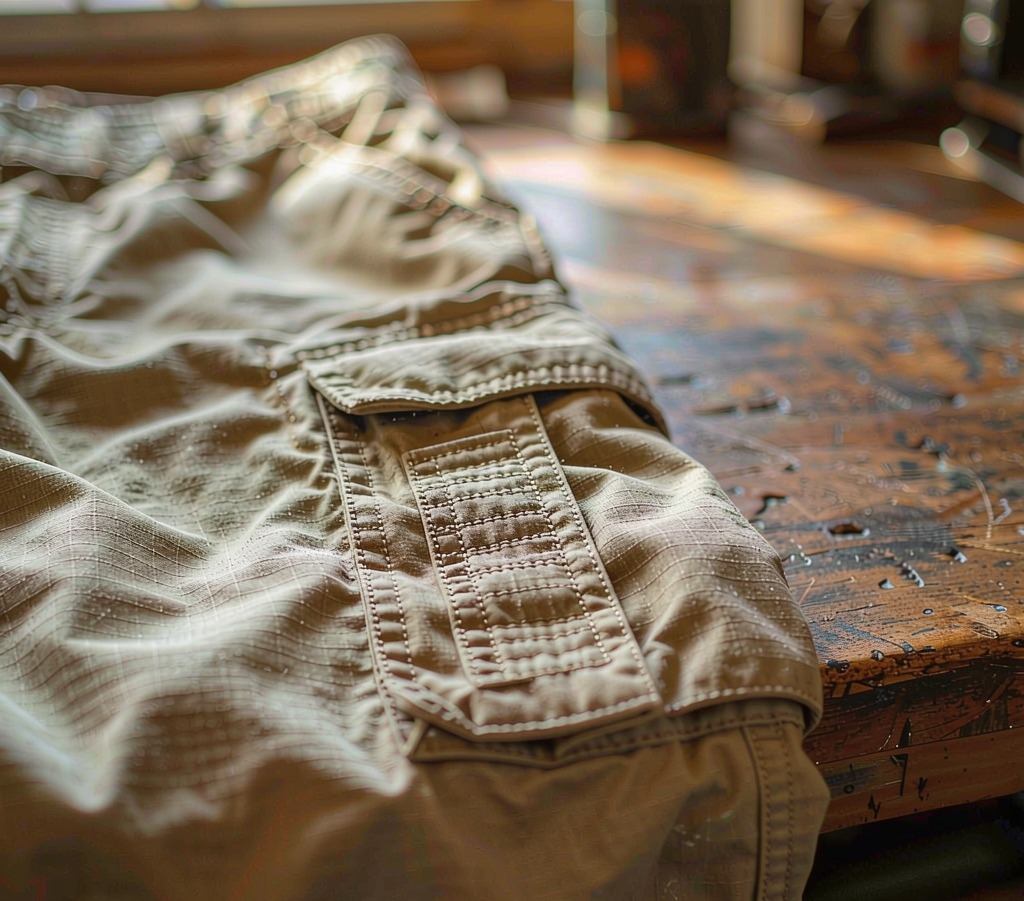
Most Cargo Pocket Failures Are Not Wear. They Are Missing Bar Tacks.
A bar tack is a short block of dense zigzag stitching, usually 10 to 16 mm long and 28 to 42 stitches, sewn across a pocket corner so the fabric cannot pull open. That small block is what fails first on most cargo pants, not the twill and not the zip. Fill a pocket with a phone and a set of keys for one season and every kilo of it hangs from four corners no bigger than a thumbnail.
If a corner has already split on you, you probably assumed you had been too rough with it, or that the cloth was too thin. Usually neither is true. The tack was cut short, it went through the pocket bag only, or nobody set one at all. Here is where the tacks belong, what a good one measures, and three faults you can find in ten seconds on a pair you already own.
Where the load actually goes
A cargo pocket is a box hanging on a flat panel. You load it from the top and the weight drops to the two bottom corners. You pull the mouth open and the two top corners take force sideways. That is four points, and they are the only four places on the pocket that need reinforcement.
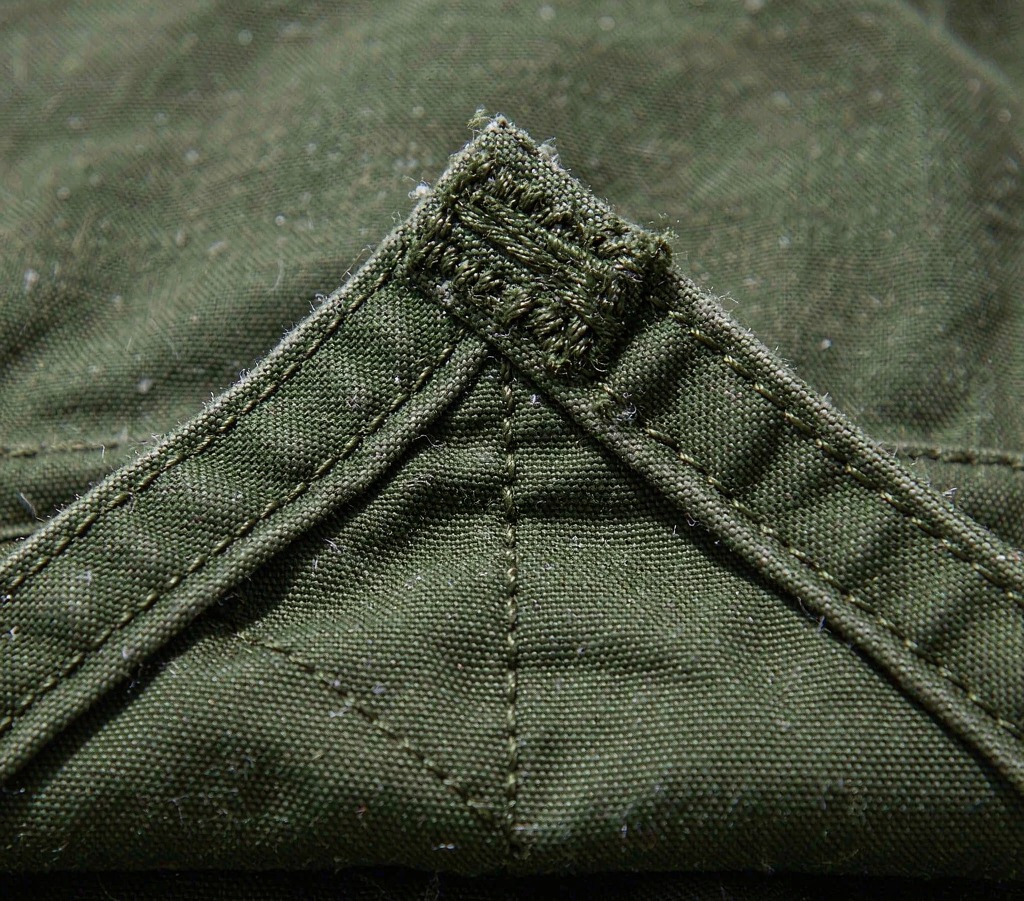
Look inside a pocket on a well-made pair and the corner has two layers of cloth behind it, sometimes a small triangle of interfacing, and a stitch block running across the seam where pocket meets leg. On a cheap pair the corner is one layer with an ordinary straight seam and nothing else. Same shape from the outside. Very different life.
Twelve millimetres, thirty stitches: what a real bar tack looks like
In the trade a bar tack is stitch type 304 in ISO 4915, the same family as the zigzag. On a pocket corner it runs 10 to 16 mm long and 2 to 3 mm wide, with 28 to 42 stitches packed into that length. Dense enough that a needle will not pass between the threads, long enough to span the whole corner instead of nicking it.
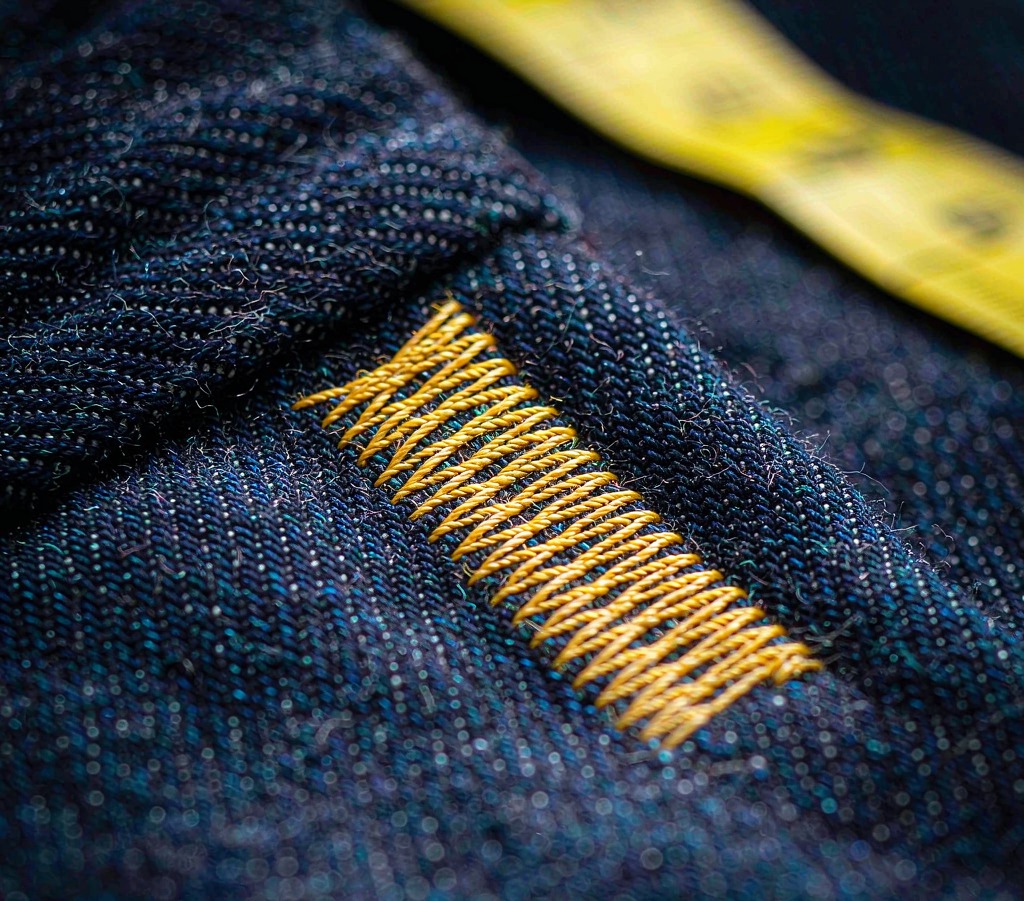
The thread matters as much as the count. Bonded polyester or core-spun holds up. Soft cotton on a heavy pocket corner fuzzes out in a season of washing. Rub the tack with your thumbnail: if the threads move as one block, it was sewn tight. If single threads lift, the tension ran loose.
The three faults you can spot in ten seconds
Turn the pocket inside out. These are the three things worth checking, ordered by how often they cause the split.
One: the tack stops short. It sits beside the corner rather than across it, so the seam carries the whole load alone. You can see a millimetre of bare seam at the point.
Two: it only crosses the bag. The tack holds pocket cloth to itself and never reaches the leg panel or the waist seam allowance. The pocket tears off as a unit.
Three: it is a backtack, not a bar tack. Two or three reverse stitches at the end of a seam look similar from a metre away and do nothing at a corner. Reverse stitching locks a seam end. A corner needs the block.
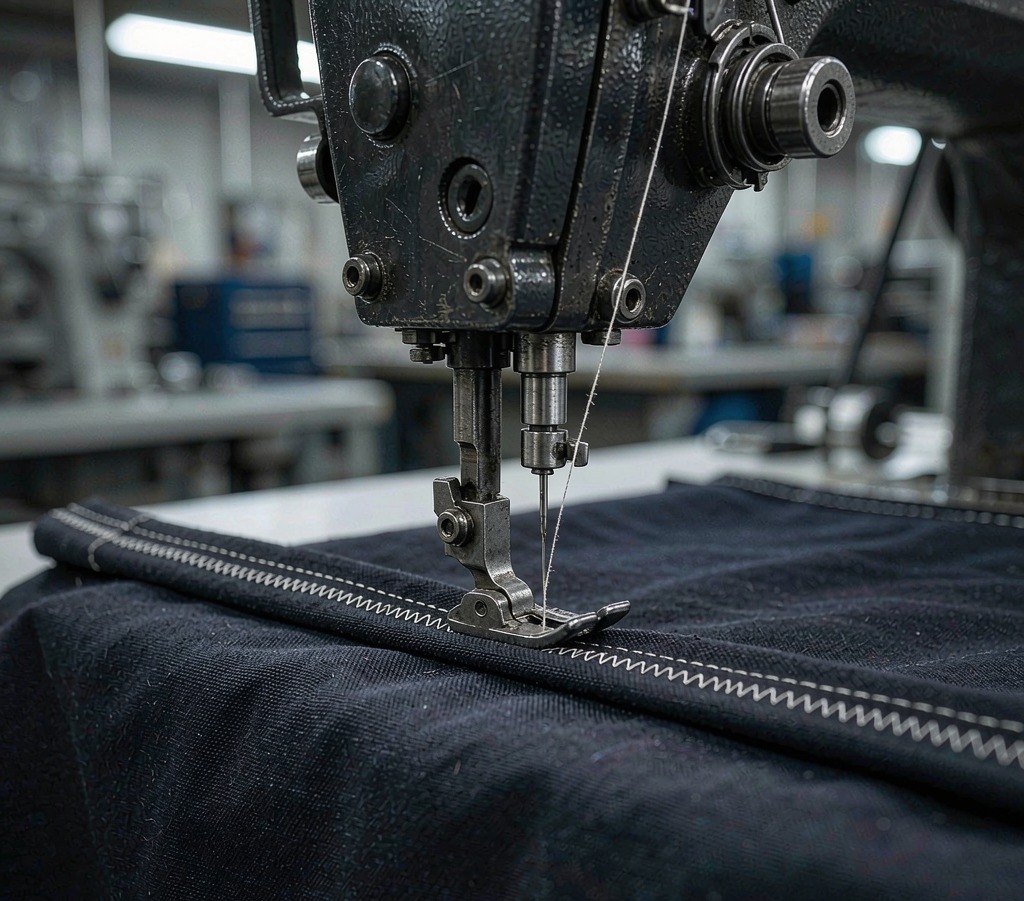
None of the three shows up in a product photo, which makes the pocket corner a fair test of who is actually building the garment and who is only styling it.
What a second tack costs, and what a repair costs
A second bar tack at each bottom corner adds a few seconds of machine time per pair. A repair at a tailor costs more than the gap between a cheap trouser and a decent one, and a patched corner never carries weight the same way again.
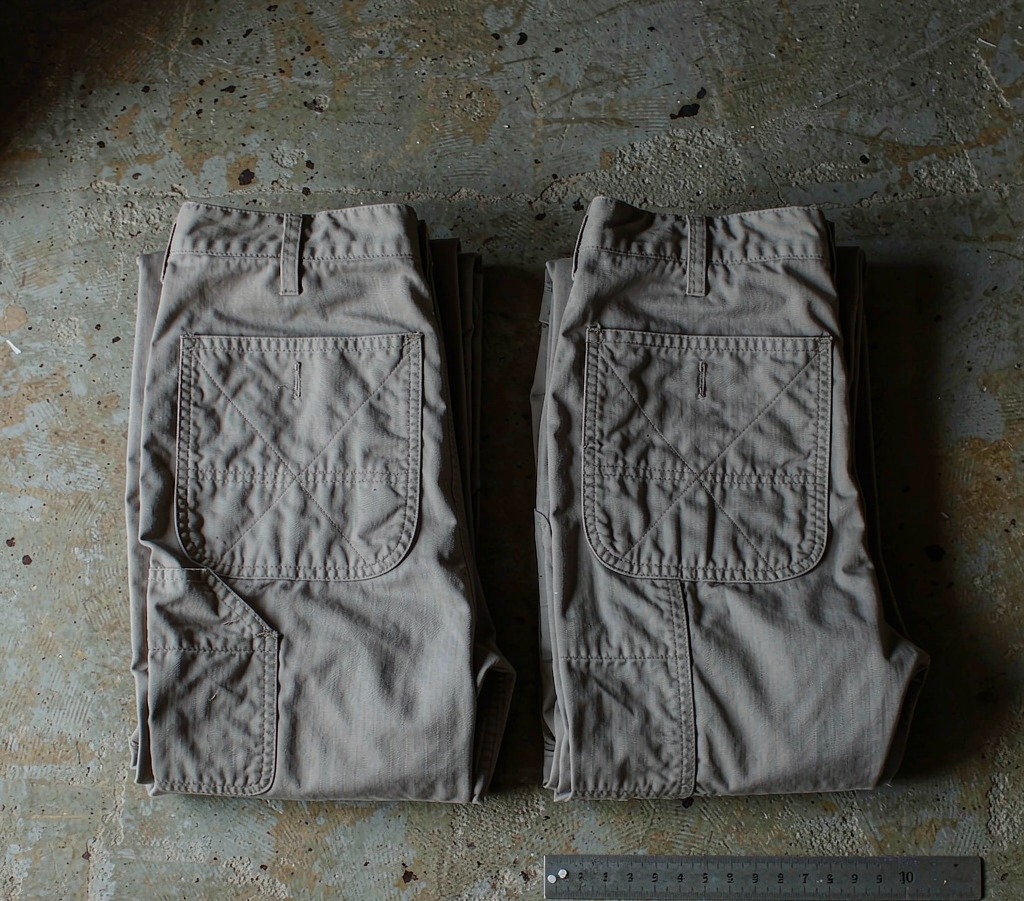
You can also do the reinforcement yourself. Turn the pocket out, set the machine to a narrow zigzag, and run a 12 mm block across the corner through every layer you can reach. At BenClothing we would rather put a second bar tack on a corner than a second logo on a chest panel. One of those keeps the pocket on.
Loading a pocket so the corner lasts
Heavy things high, not at the bottom. A phone sitting at the base of a cargo pocket swings with every step; the same phone clipped near the mouth moves less. Keep each pocket under about a kilo if you can, and stop using the mouth as a handle when you sit down. Wash inside out with the pockets empty, because a set of keys in a wet drum is a hammer.
Between two pairs with identical spec sheets, the pocket corner is the honest tell. For the hardware that fails next, read how to spot a good zipper. For the cloth behind the pocket, see what fabric is most durable for cargo pants. The multi-pocket jackets in our range (460g denim, plaid overshirt) are tacked the same way.
Key takeaways
- A bar tack is 10 to 16 mm of dense zigzag, normally 28 to 42 stitches, set across a pocket corner.
- A cargo pocket has four load points, two at the top corners and two at the bottom.
- A tack that stops 2 mm short leaves the seam carrying all the weight by itself.
- A backtack at a seam end is not a bar tack and does nothing at a corner.
- Keep each loaded pocket under about 1 kg and the corners last far longer.
FAQ
Is a bar tack the same as a backstitch?
No. A backstitch reverses over the last few stitches to lock a seam end. A bar tack is a separate short block of dense zigzag, usually 10 to 16 mm long, sewn across a stress point such as a pocket corner, a belt loop or the end of a fly.
Can a split pocket corner be repaired?
Yes, if the cloth around it is still sound. A tailor can set a new bar tack across the corner and add a small patch behind it. If the twill itself has torn more than a few millimetres, the repair will keep opening and the pocket needs replacing rather than re-tacking.
A pocket corner is four thumbnail-sized points holding everything you carry. Twelve millimetres of dense stitching at each one is the difference between a pair that lasts five years and a pair that splits in a season.