
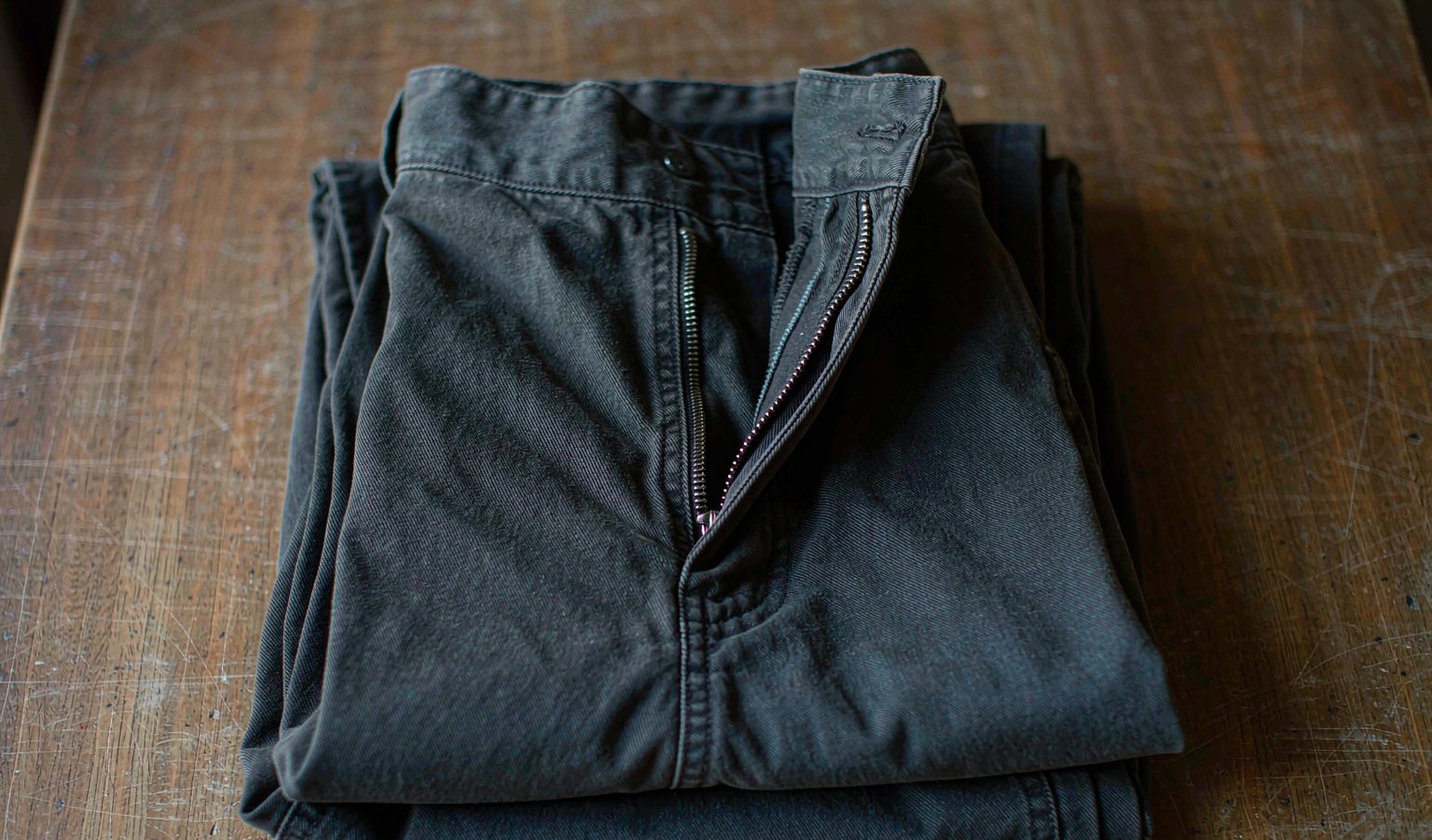
A Cheap Zip Twists. Here Is How to Test One in a Shop.
A zipper that twists after a few washes almost never has bad teeth. The warp comes from two quieter sources: a zipper tape that shrinks at a different rate than the cloth sewn to it, and sewing tension that drags the tape sideways while the fly is stitched. If a fly has ever buckled under your fingers at mid-zip, you know the feeling: the pants still fit, but the front looks tired. Both causes are visible before you pay. Four quick checks in the shop, about ten seconds in total, and a cheap zip gives itself away.
The twist is in the tape, not the teeth
A zip is an assembly, not a single part. The teeth take the blame because they are the loudest component, but the teeth do not decide whether a fly lies flat. The tape does. It is a narrow band of woven polyester stitched into your garment, and it behaves like a second fabric with its own weight, weave and shrinkage. When the front of a pair of pants starts to twist, the tape has changed length or the stitching has changed angle. Teeth that skip or catch are usually a symptom of a tape that no longer runs straight, not the start of the problem.
Two cloths, two shrinkage rates
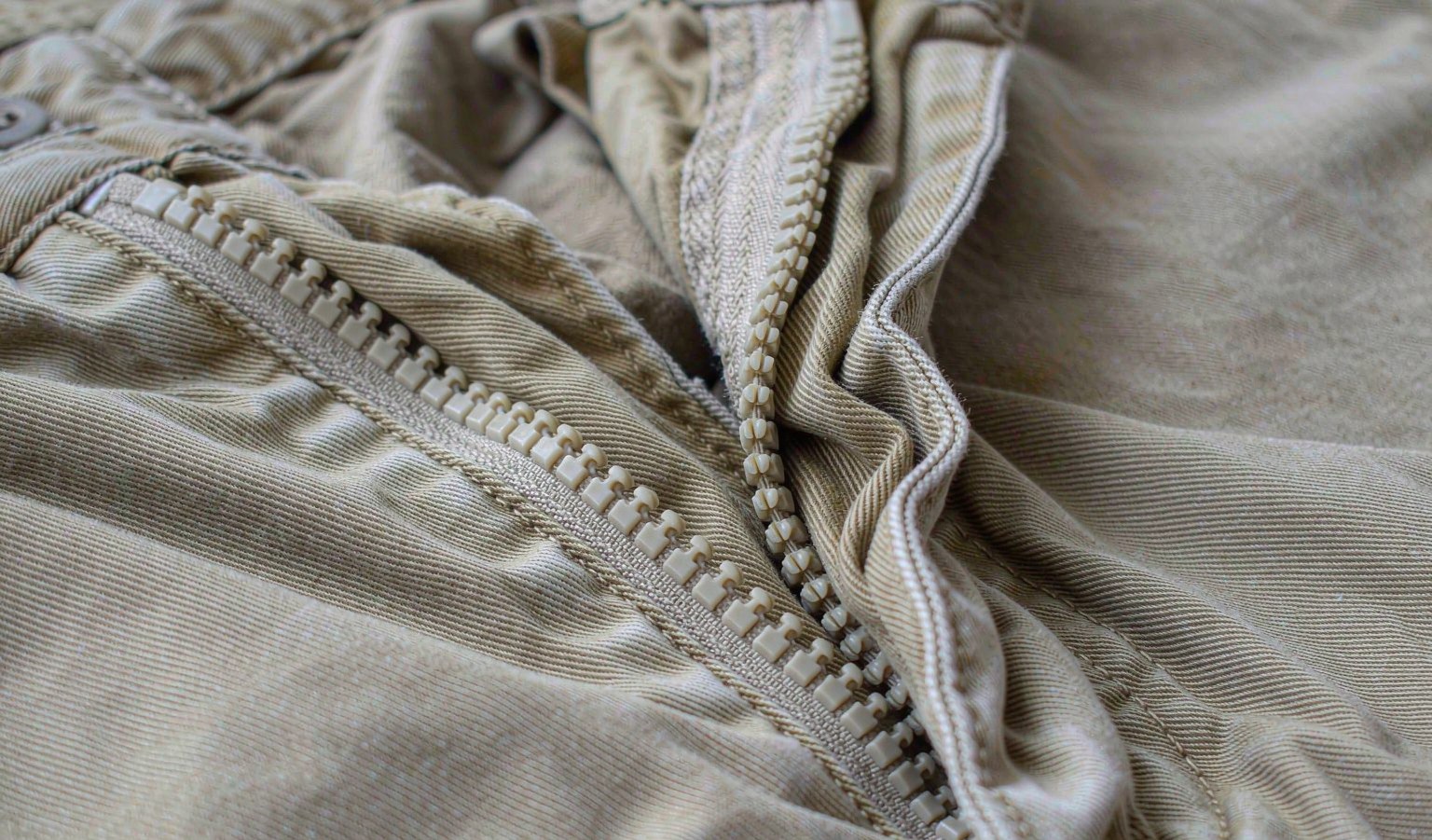
Your work pants are cotton. The zip tape is polyester. Cotton gives up more of its length in the first hot washes; polyester barely moves. A good supplier pre-shrinks the tape or cuts it slightly long so the two materials settle together. A cheap zip skips that step, so the cotton panel shrinks against a tape that will not, and the fly bows. The distortion grows wash after wash, because the mismatch repeats every cycle. That is why a fly can look perfect on the rack and wave three washes later. Jeans follow the same logic, and it is one more reason to know how to tell good denim before the zip ever gets sewn in.
Sewing tension can bend a straight fly
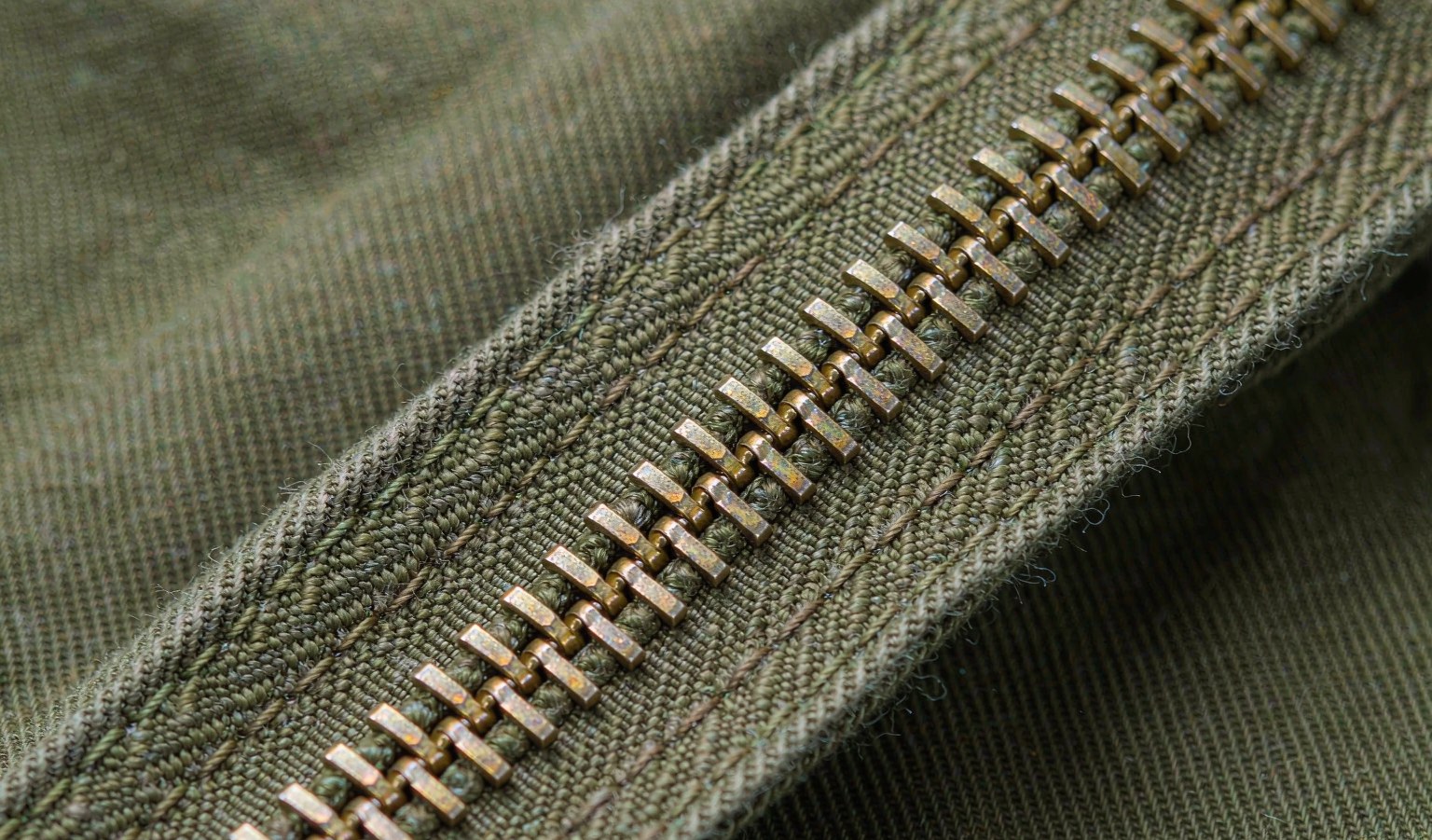
Even a decent zip can be installed badly. The fly is stitched in several passes, and if the feed tension runs unevenly, the needle line pulls one edge of the tape tighter than the other. The tape leans, the placket leans with it, and the lean is set permanently by the stitching. Look at the two rows of thread next to the teeth: they should run parallel to the tape edge with even spacing. Wandering lines or tight ripples in the cloth beside the stitches mean the installer was fighting the machine. At BenClothing, we baste the zip flat and balance the presser foot pressure before the final pass, because a twisted fly reads as a fit problem even when it is a sewing problem.
Cheap sliders jam in the middle
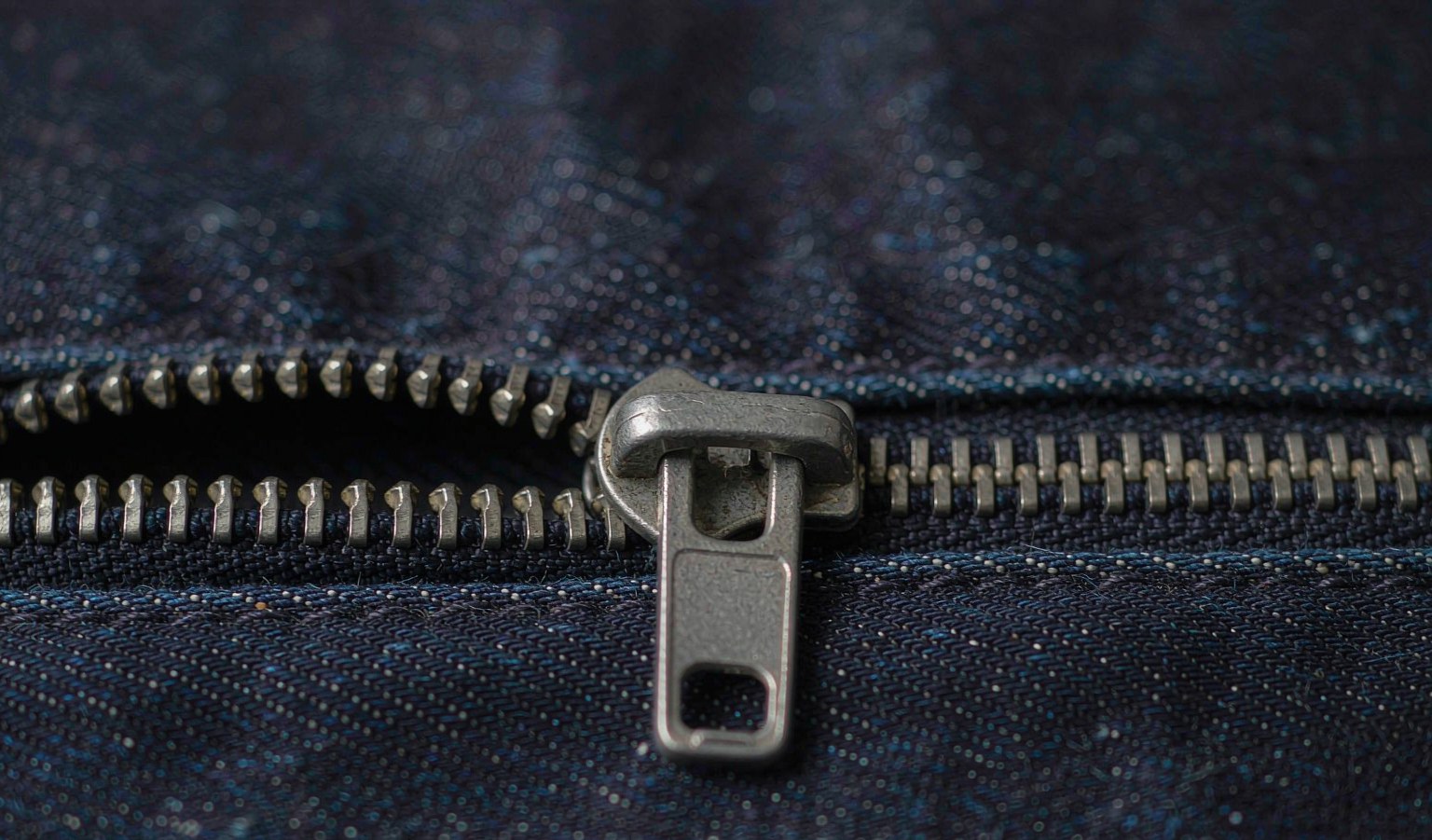
The slider is the moving part, and it is where cost cutting shows first. A loosely die-cast slider runs with extra play between its body and the teeth. It works fine at both ends of the chain, where the stops guide it, and jams at the midpoint, where nothing aligns it but its own tolerance. Zipper testing has its own standard family: ASTM D2061 defines ten methods covering chains, stops and sliders, including a resistance-to-twist test for the pull and slider, and the standard itself notes that no single method proves a zip fit for use. Ask which methods a supplier tests their zips against. Silence is an answer too.
The ten-second shop test
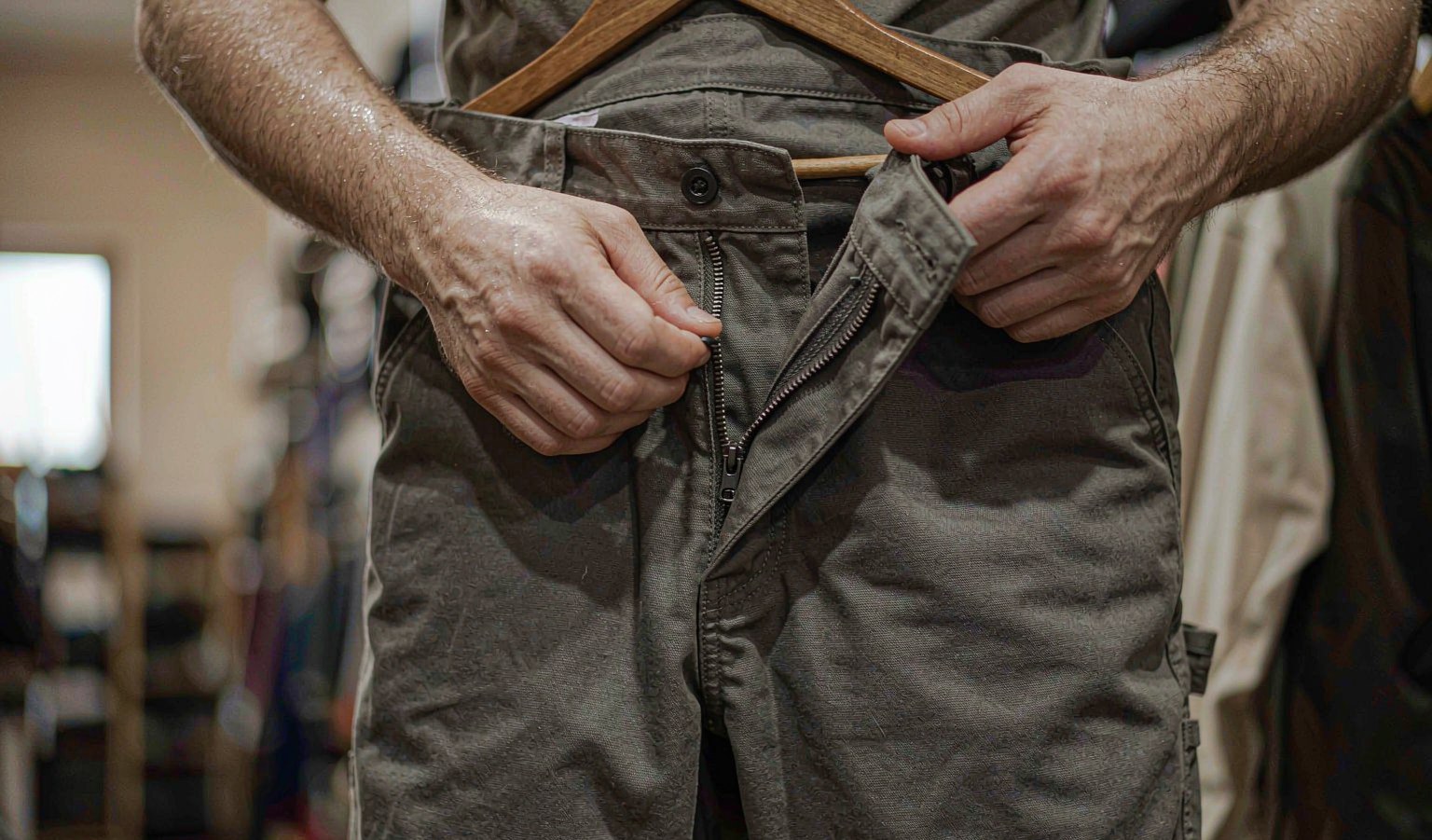
Four checks, in this order. One: zip up and down five times at normal speed. It should travel the full length without catching, and it should not change character at the midpoint. Two: look at the closed fly from the side, at eye level. The tape should sit dead flat against the cloth; any ripple or lean is shrinkage or tension you cannot fix at home. Three: pinch the tape between thumb and forefinger and tug it gently across the placket. It should not gape away from the cloth. Four: close it fully and press the pull sideways. A self-locking slider holds. A pull that swings open on its own will not survive a packed day. The same habit works on any zip-up layer, from a Japanese outdoor hooded shell to the plainest fly.
Key takeaways
- A twisting fly is a tape and stitching problem; the teeth are usually the last component to fail.
- Cotton cloth and polyester zip tape shrink at different rates, so an un-pre-shrunk cheap tape bows the fly wash after wash.
- Uneven sewing tension leans the tape permanently; two parallel, evenly spaced stitch rows next to the teeth signal a straight install.
- Cheap sliders jam at the midpoint of the chain; ASTM D2061 lists ten zip test methods, and a supplier who cannot name them is telling you something.
- The shop test takes ten seconds: five strokes, a side view, a pinch tug and a sideways press on the pull.
FAQ
Can a twisted fly be fixed at home?
A lean caused by stitching or by tape shrinkage cannot be ironed back, because the distortion lives in the tape and the thread lines. A tailor can restitch the fly with a new zip, which is worth it on heavy pants and rarely on light ones. Prevention costs less: run the four checks before you buy.
Do metal zips twist less than plastic ones?
The slider material does not decide the twist; the tape and the installation do. Metal and plastic zips both run on woven polyester tape, so both twist when the tape shrinks or the stitching pulls. Choose by the job the fly does, then judge the tape.
A zip is small hardware doing a big job: holding the front of your pants flat for years. The test costs ten seconds in the shop and saves a pair of otherwise good work pants. We put the same thinking into the details that outlive trends. If you want work pants whose fronts stay flat, Shop our collection.