
Oil, Paint, Grease: Getting Real Stains Out of Canvas and Twill
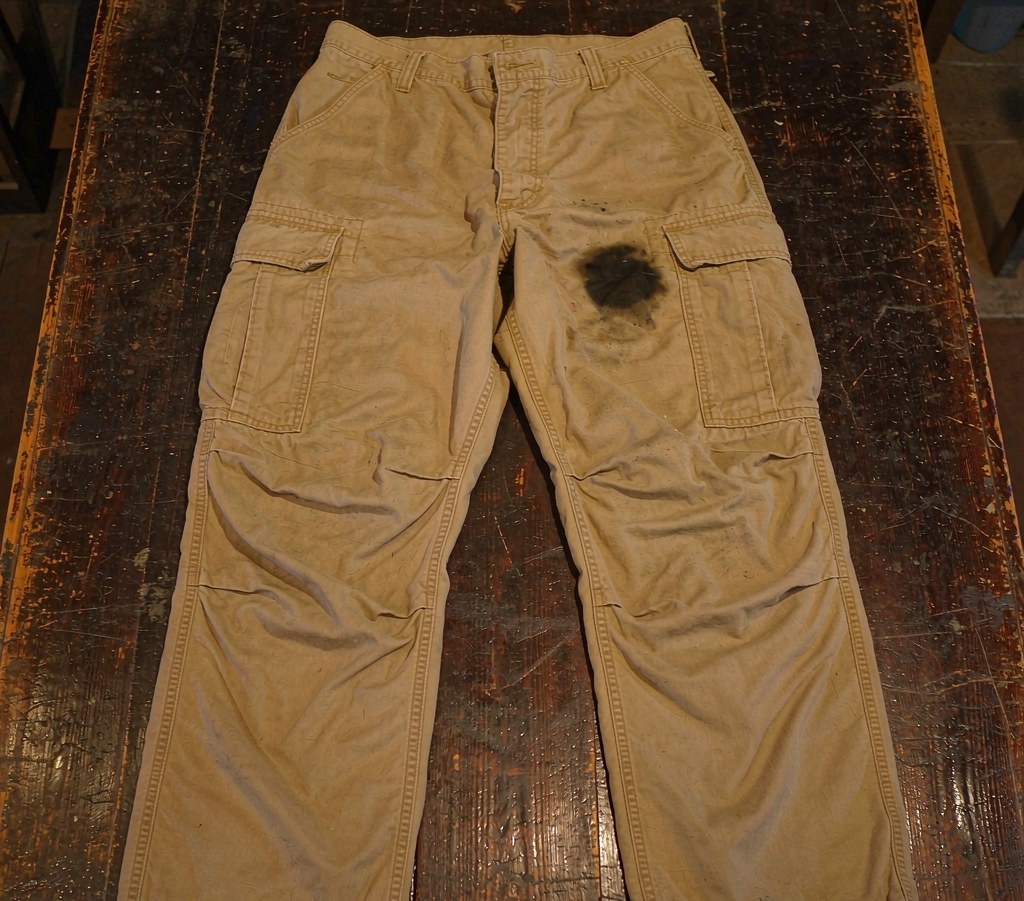
Most stains are not removed in the washing machine. They are removed in the first ten minutes at the sink, before the wash ever starts. Fresh oil sits between the yarns of canvas and twill; it has not bonded to the fiber yet, and what you do in that window decides whether the stain leaves in one round or lives on the pants for years. If you want to remove oil stains from canvas pants, the order of operations below is the whole game: what to do first, what never to do, and why heat is the step that turns a stain into a permanent resident.
The first ten minutes decide how the stain ends
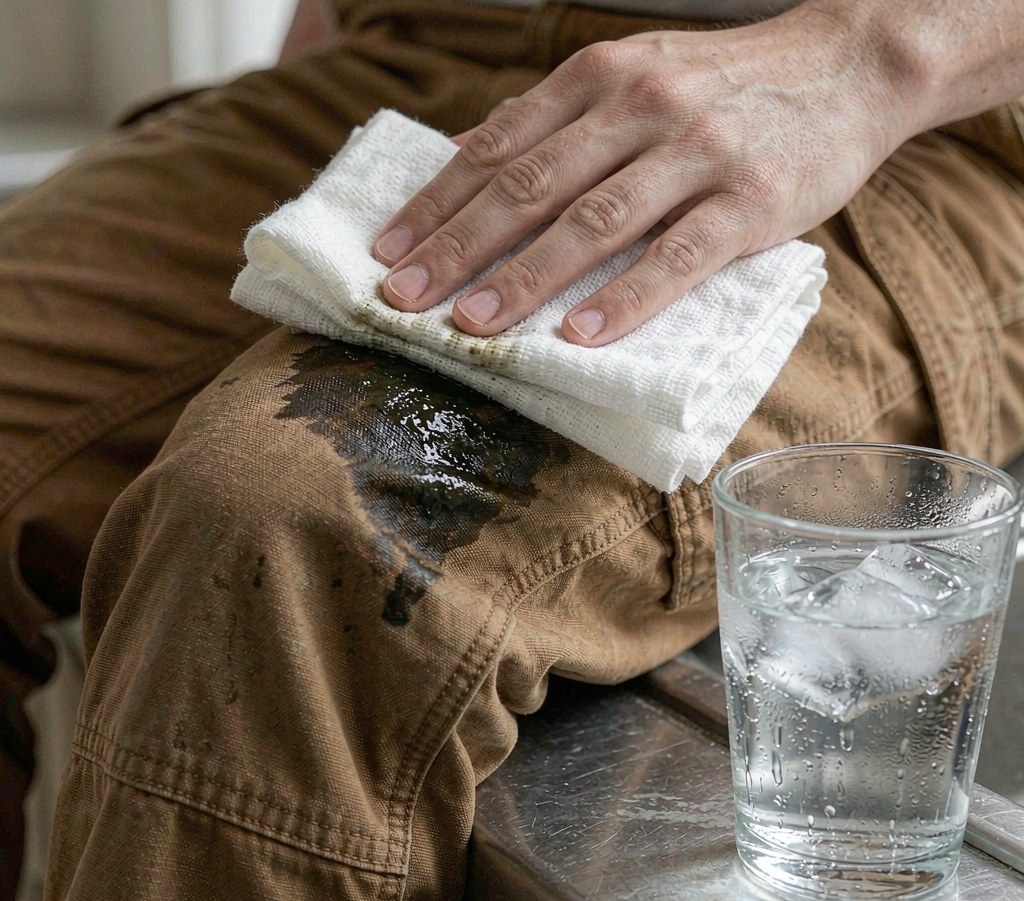
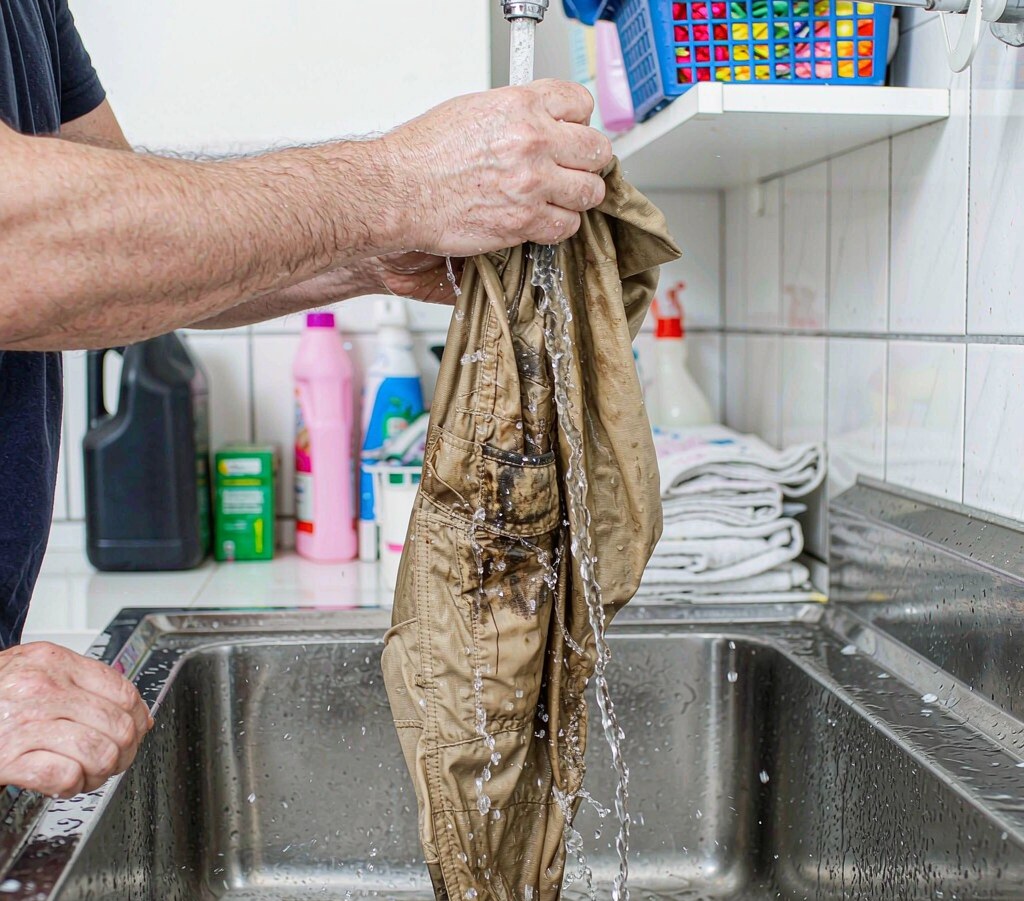
Start by scraping off anything solid with a spoon edge or a card, working toward the middle of the spill so you do not widen it. For liquids, press an absorbent cloth straight down and lift; do not rub. Rubbing is the fastest way to grind oil into a dense weave and to push the halo outward in a ring. Use cold water only at this stage, because heat makes oil wick deeper into the fiber and can cook protein stains like sweat and blood into the cloth permanently. Canvas and twill are tightly woven, so anything you force in comes out slowly. Patience at the counter beats any wash setting later.
Grease and oil: dish soap, from the edge inward
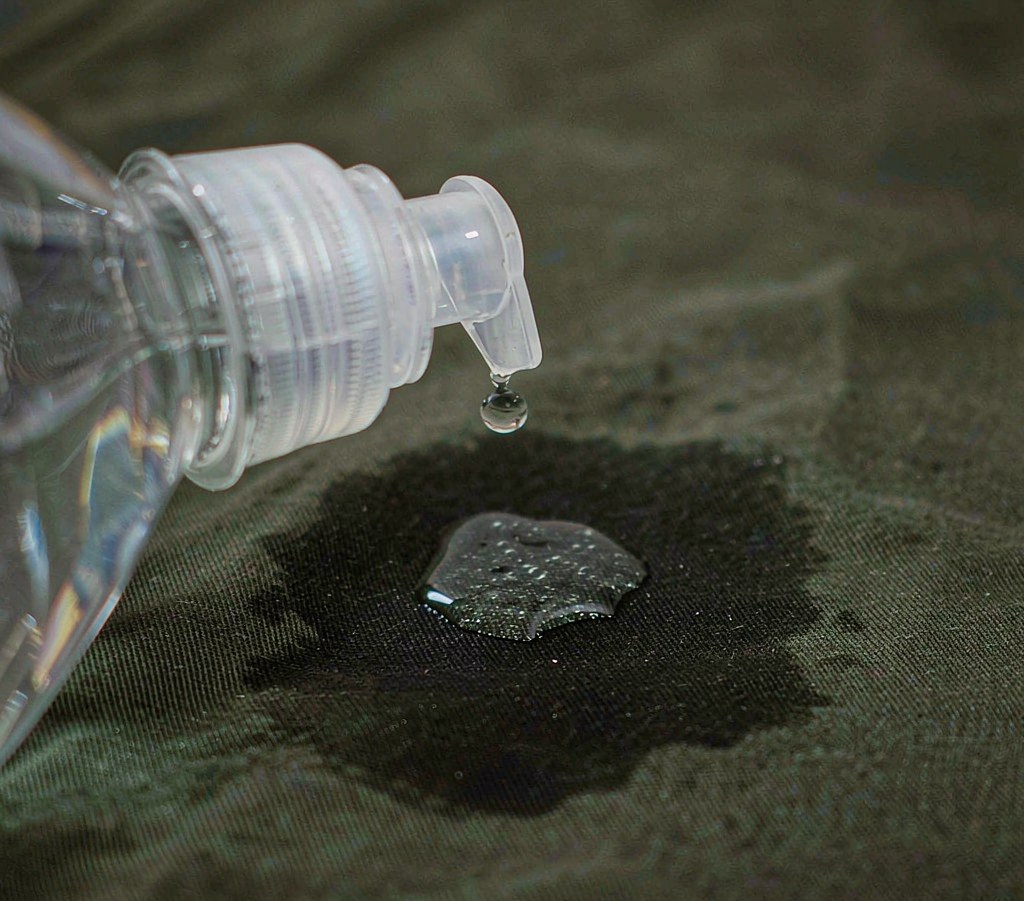
Dish soap exists to break down oil, which makes it the right first tool. Put one drop on the stain and work it in gently with your fingers or a soft brush, starting at the outer edge and moving inward so the spot shrinks instead of spreading. Give it five minutes, then rinse from the back of the fabric with cold water so the oil travels out of the cloth, not through more of it. Let the pants air dry and judge the result before any machine heat, because a damp stain looks worse than it is. Textile labs take oily stains this seriously too: AATCC TM130, the standard test for oily stain release, presses a measured amount of corn oil into fabric under a fixed weight, launders it a set way, and grades what remains on a scale from 5 to 1. That is the level of scrutiny behind any fabric that claims to release stains. The same patient routine works on a heavy yarn-dyed work shirt when bacon grease lands on the chest pocket.
Paint: two different jobs, pick the right one
Water-based paint and oil-based paint are two different problems, and using the wrong method on either one can set it for good. Fresh water-based paint rinses out under cold running water, so head to the sink immediately and work the fabric from the back. Dried water-based paint needs a long cold soak first, then the same edge-inward treatment. Oil-based paint is the harder case: it needs a general-purpose solvent, and you always test the solvent on a hidden area first, inside the waistband or a pocket bag, to make sure the finish and dye survive. Scrape off any thick dried paint before you treat, so the solvent has less work to do. On a jacket like a washed denim jacket with corduroy panels, where the panels take different dyes, the hidden-spot test is not optional.
Three habits that lock a stain in for good
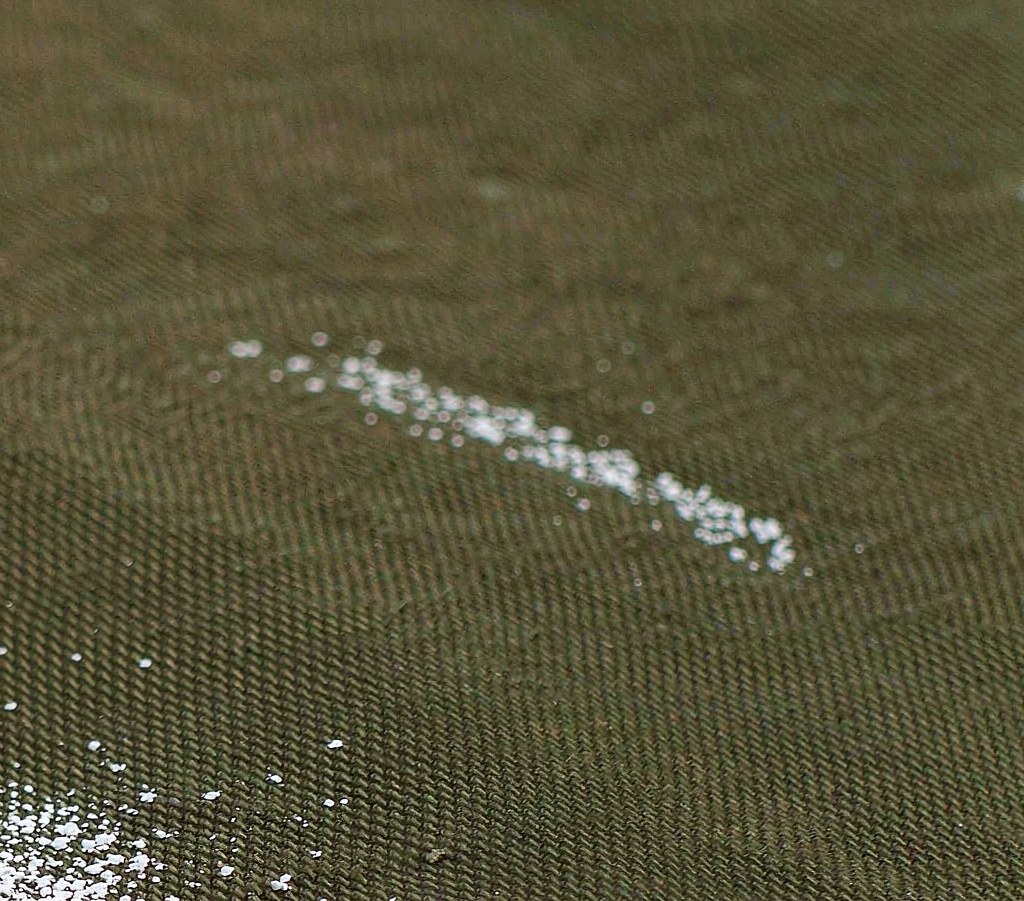
The first habit is hot water on a fresh stain. Heat drives oil deeper and fixes what should have rinsed out. The second, and the worst, is the dryer: if any ghost of the stain remains and the pants go through a hot cycle, the heat bonds the residue into the fiber and no later treatment gets it fully out. Air dry, check in daylight, repeat the soap cycle if you must, and only wash-and-wear normally once the stain is truly gone. We explained this mechanism in why the dryer ages workwear; a stain you cannot see wet can still be sitting in the cloth. The third habit is reaching for bleach first. Bleach attacks the fiber and the dye together, weakens the fabric at the spot, and on canvas it often leaves a lighter halo that looks worse than the original stain. Cold water, soap, patience, in that order.
Key takeaways
- The first ten minutes decide the outcome: scrape solids toward the middle, dab liquids without rubbing, and keep the water cold because heat pushes oil deeper.
- Dish soap is a surfactant built for oil: one drop, worked in from the outer edge inward, five minutes, then rinse cold from the back of the fabric.
- AATCC TM130, the standard oily stain release test, grades how much corn-oil stain survives laundering on a scale from 5 to 1, so oil release is a measurable fabric property, not luck.
- Water-based paint rinses out fresh and needs a cold soak when dried; oil-based paint requires a solvent tested on a hidden spot first.
- Never machine dry a stain that is not fully gone: heat bonds residue into the fiber permanently, and bleach as a first move damages dye and fiber together.
FAQ
Can an old oil stain that already went through the dryer still come out?
Partly. Heat-bonded oil rarely leaves completely, but repeated dish soap cycles with cold rinses and air drying between attempts will usually fade it a shade at a time. Set expectations honestly: a stain that survived a hot wash and a dryer may improve, not vanish. Lighter canvas shows the improvement more than dark twill.
Should I use a solvent on every stain to be safe?
No. Solvents are for oil-based paint and a few bonded stains, and each one needs a hidden-spot test first because solvents can dissolve finishes and pull dye. Oil, grease and food stains respond to dish soap and cold water, which is safer for both the cloth and you.
At BenClothing, we choose canvas and twill that can survive real work, and we would rather you rescued one good pair twenty times than replaced it twice. Ten patient minutes at the sink keep a pair in rotation for years, and that is the cheapest and most honest way to buy less. If you want pants built to be worth rescuing, Shop our collection.