
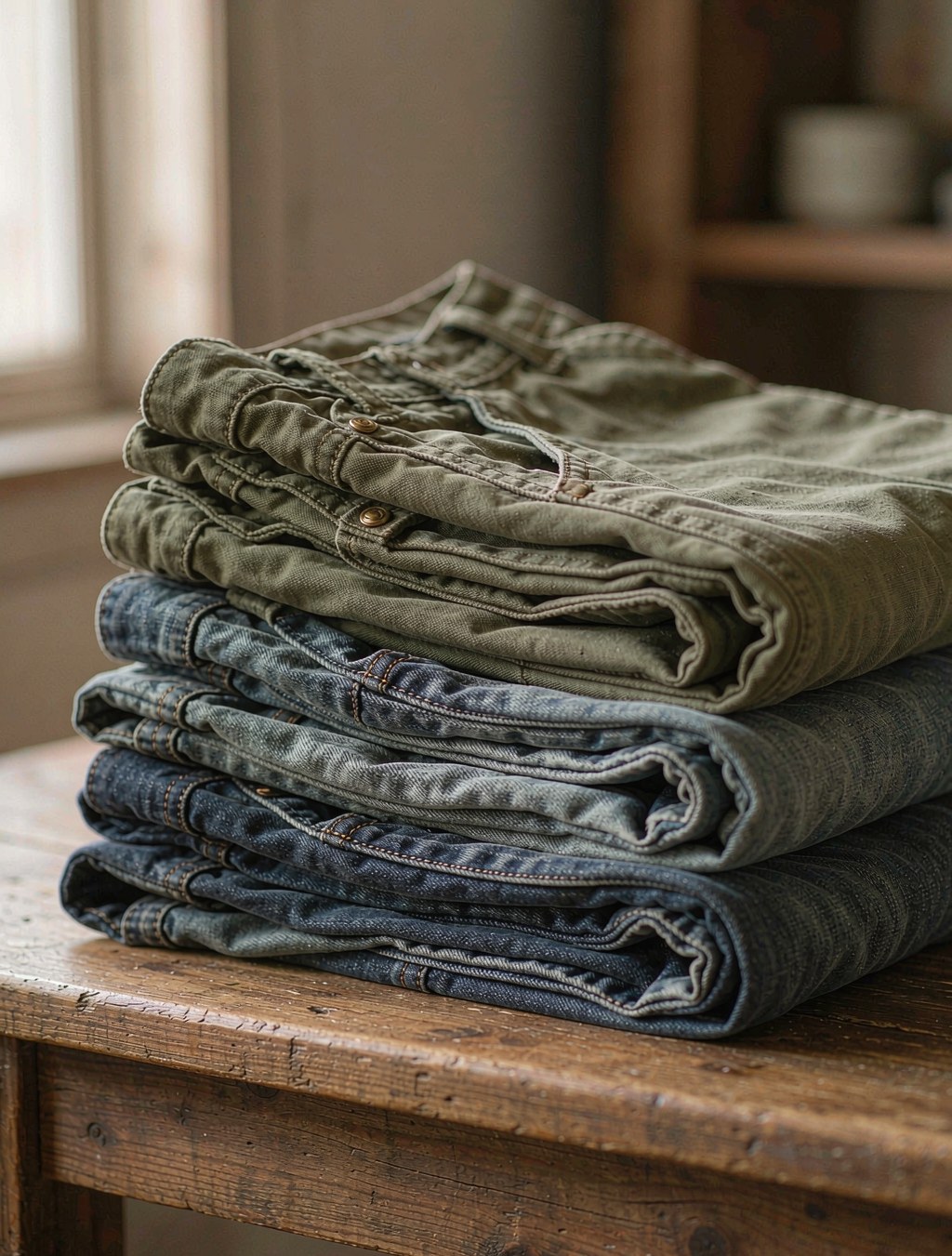
If You Sit at a Desk, the Washing Machine Is What Wears Your Work Pants Out
Work pants should be washed by wear count, not by the calendar. The short version: eight to ten wears for desk and shop wear, four to five for warehouse and delivery work, two for hot, dusty job sites, and zero once grease, paint or chemicals are involved. The reason is arithmetic, not opinion. Every machine wash is a mechanical event, and if you sit at a desk, it is usually the hardest thing your pants do all week. This piece gives you the counting rule, a five-tier table, six habits that add wears between washes, and the cases where you skip the count and wash tonight.
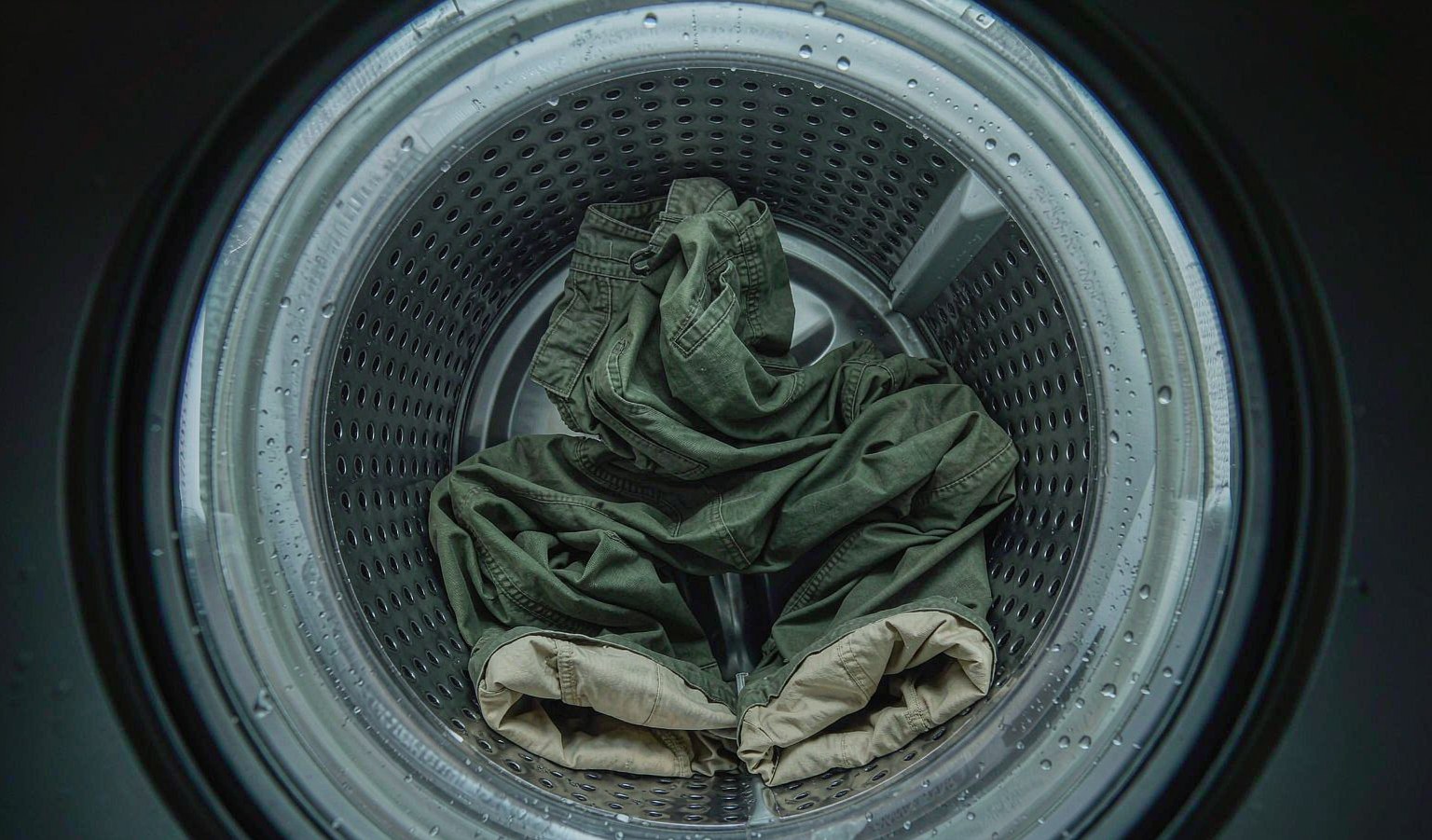
Nobody sets out to over-wash. The weekly wash just happens because laundry day arrives and everything goes in. The problem is that the drum does not know your pants spent the week in an office chair.
Count wears, not days
A wear is any day the pants were on your body for a few hours or more. That is the whole unit. It sounds silly until you try it, and then it settles most of the arguments, because “once a week” treats a week of desk work and a week of drywall dust as the same event. They are not even close.
The habit is simple. Hang the pants on the same hook each evening and remember the number, the way some people keep a tally on a freezer bag. After a wash, the count resets. After a few weeks you will know what your own number feels like, smells like and looks like, which matters more than any table, including the one below.
What builds up between washes
Three things accumulate on work pants, and none of them is the dirt you can see. Sweat carries salt, and dried sweat leaves salt crystals in the weave. Salt pulls moisture from the air, which is why a pair worn five days can feel faintly clammy at the waistband even in a dry room. Body oil collects in the same zones, the seat, the thighs and the inside of the waistband, and it holds odor the way a filter holds dust.
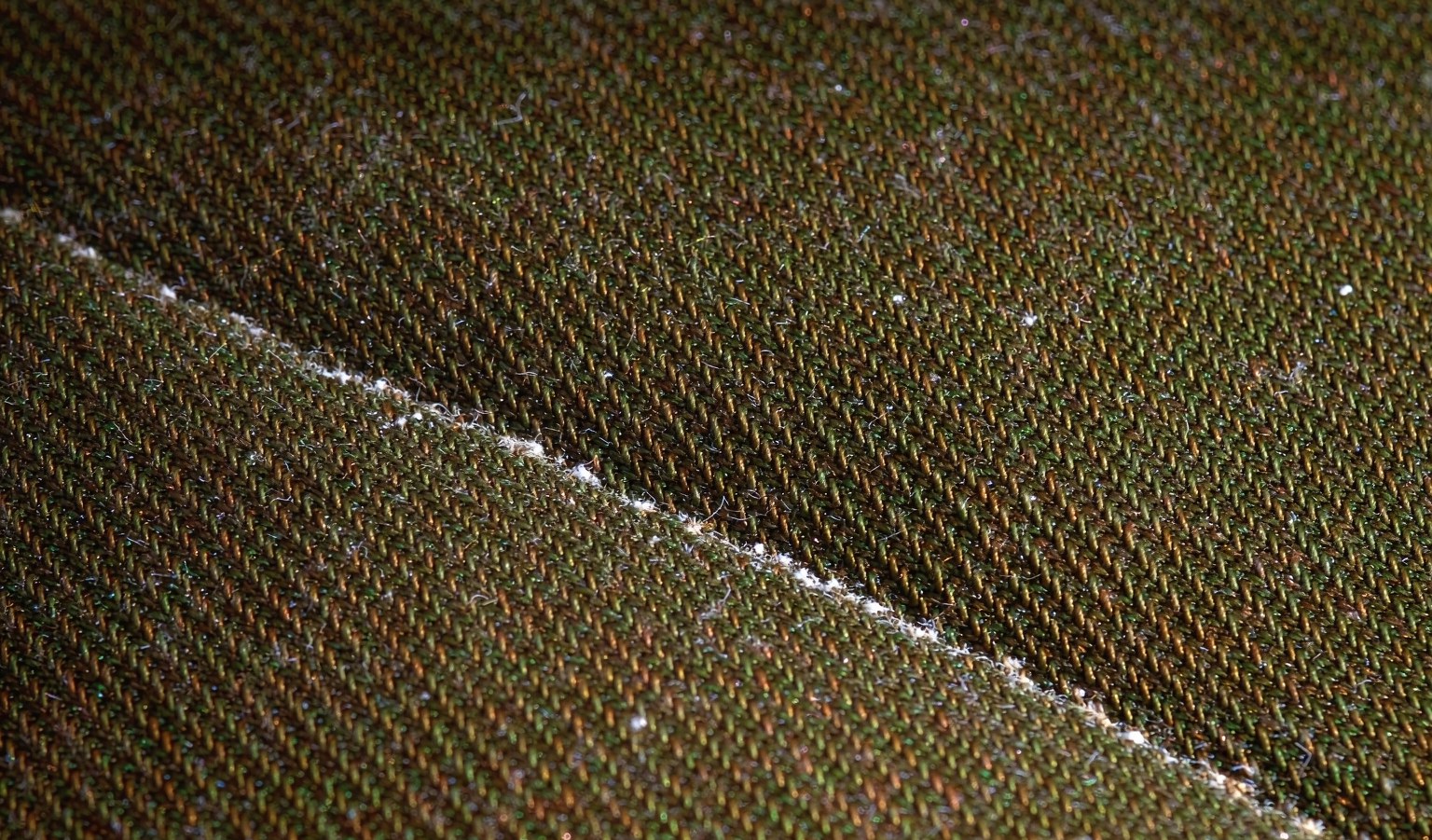
The third one is grit. Office dust, yard soil and workshop powder settle into the twill, and every fold you make presses it against the yarns. Textile labs measure what laundering does to cloth by running repeated home wash cycles under a fixed method, AATCC TM135, precisely because the damage adds up cycle by cycle. That slow step-by-step change is also why some fabrics shrink gradually rather than all at once; our piece on clothes that do not shrink goes into that side of it.
A wear-count table by how you use them
These are workshop numbers, not regulations. They assume cotton or cotton-rich twill, a low-temperature wash and a line dry where possible.
| How you wear them | Wash after |
|---|---|
| Desk, shop floor, errands | 8 to 10 wears |
| Warehouse, driving, delivery, light yard work | 4 to 5 wears |
| Construction site, landscaping, hot and dusty work | 2 wears |
| Grease, paint, chemicals involved | Immediately, count resets |
| Going into seasonal storage | Wash once before it goes away |
Treat the tiers as starting points and adjust after the first month. If the waistband smells before the count does, your number is lower. If a pair comes out of six wears looking untouched, raise it and save the cloth. And if you are choosing cloth for a high-count life in the first place, weight is the lever; our 10 oz, 12 oz and 14 oz denim comparison shows what each tier survives.
Six habits that buy more wears
- Air them. Twenty minutes on a line or over a chair after each wear does most of what people expect a wash to do. Odor is bacteria at work, and moving dry air slows that down before it starts.
- Spot clean the waistband. A damp cloth with a drop of soap on the inside band resets the worst zone without a full cycle.
- Rotate two pairs. Alternating gives each pair a full day to dry out, and a dry pair wears slower than a damp one.
- Brush off dry soil before it sets. A stiff brush on the thighs after dusty work removes most grit while it still sits loose on the surface.
- Hang by the cuff instead of folding over a chair. An overnight fold is a permanent crease in the making, and creases are where salt and grit concentrate.
- Keep the count honest. A “roughly five” that is really eight is how over-washing sneaks back in.
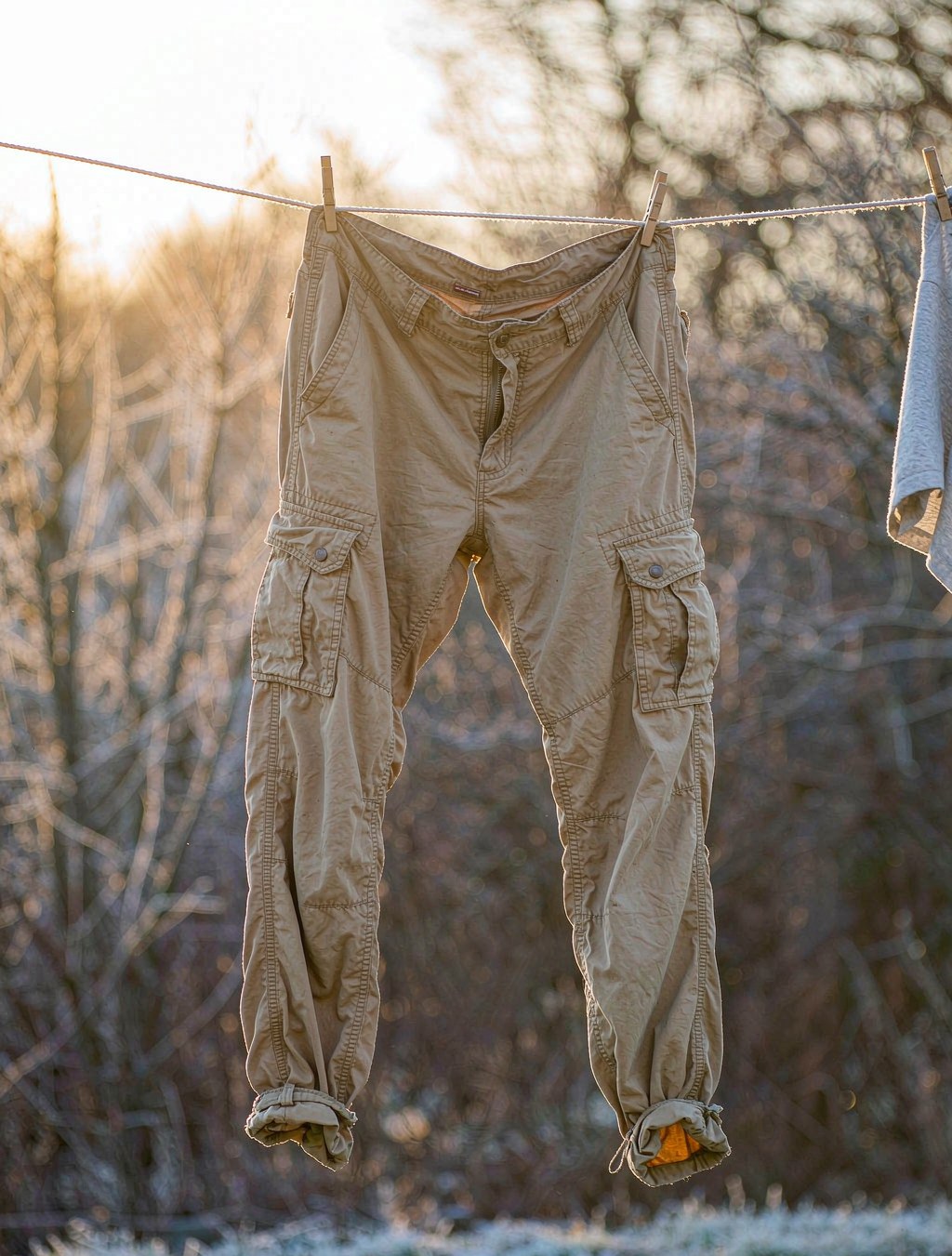
None of these take real effort. Together they are the difference between a pair that lives two years and one that lives five.
Four cases where the count resets to zero
Some events do not wait for a number:
- Fuel, grease or oil. These marks do not wait, and the longer oil sits the harder it sets. Wash the day it happens.
- Chemicals, bleach mist, battery acid, wet cement. Some of these eat cotton. Rinse and wash immediately, then inspect the cloth.
- A full day in rain or heavy sweat. Salt dissolves, migrates and dries in new places. Wash before it settles.
- Blood, food, anything biological. Warm water and soap the same evening, or the stain and the smell both move in.
What the count saves over a year
Run one year of steady rotation. A pair worn three days a week sees about 150 wears a year. Washed after every wear, that is 150 cycles; washed every six wears, it is 25. A modern front loader uses roughly 50 litres (13 gallons) a cycle, so the gap is about 6,000 litres of water and 125 fewer trips through a drum that slowly eats the surface of the cloth. The pants keep the color and the fit that took weeks to settle in. At BenClothing, we build our trousers for years of service, and the wear count is the cheapest way to collect those years.
Key takeaways
- Wash work pants by wear count: 8 to 10 wears for desk wear, 4 to 5 for warehouse and delivery, 2 for hot dusty sites, zero for grease or chemicals.
- Sweat salt, body oil and grit are what build up between washes, and laundering damage adds up cycle by cycle, which is the whole basis of the AATCC TM135 method.
- Washing after every wear instead of every six turns 25 cycles a year into 150, about 6,000 extra litres of water and far more surface fiber lost to the drum.
- Airing, spot cleaning the waistband, rotating two pairs and brushing off dry soil cover most of what a wash would do.
- Rain, heavy sweat, biological stains and solvents reset the count to zero the same day.
FAQ
Is it unhygienic to wear work pants six times between washes?
No, as long as they get aired and there is no odor or visible soil. Outer layers carry dust and dried sweat, not the bacterial load that shirts and underwear carry against skin. The waistband is the one zone worth a spot clean between full washes.
Does freezing work pants kill the smell?
Only briefly. Cold slows the bacteria that create odor, which is why the trick seems to work for a day, but it removes none of the salt, oil or grit, and the smell returns as soon as the cloth warms on your body. Air, spot clean and count wears instead.
A wash is maintenance with a price, and the price is paid in cloth. Count your wears, wash when the count or a real event says so, and the same pair serves twice as long. If you are due for a pair that can take the count, our multi-pocket cargo work trousers are cut from heavyweight cotton for exactly that job. Shop the collection and start a count worth keeping.