
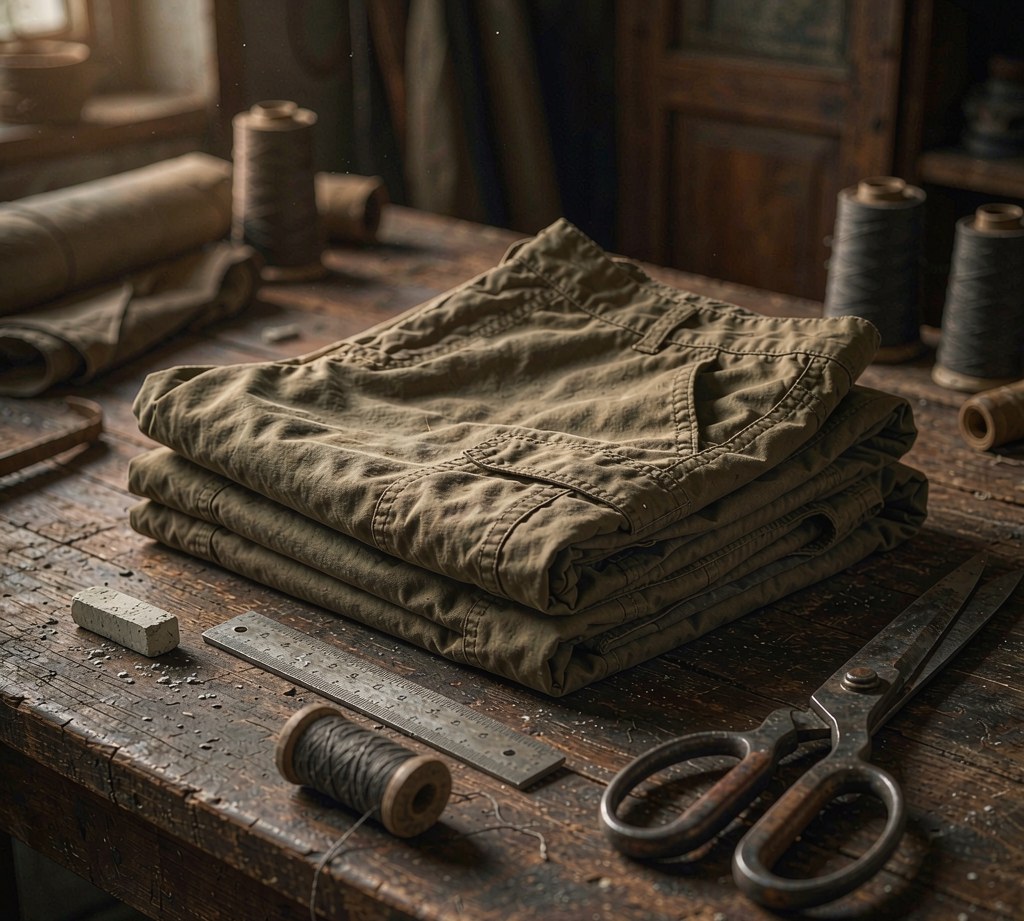
A Tailor Can Fix Your Waist and Hem. The Other Three Problems Are Yours.
One centimetre. That is roughly all the spare cloth hiding behind the side seam of a finished pair of trousers, and it decides almost everything a tailor can do for you. A tailor can take in the waist, shorten the hem and slim the leg, and the result looks factory-made. What he cannot fix is the rise, the seat and the hip, because those sit where there is no spare fabric at all. If you own a good pair that almost fits, one centimetre of seam allowance is what tells you whether to pay for alterations or swap the size while the return window is still open.
Almost every man owns at least one pair in that state: right at the waist, wrong everywhere else, sitting in the drawer because returning felt like a hassle and altering felt like a gamble. The gamble is real, but it is not a mystery. The numbers are small, they are printed on every product page, and once you read them you can predict what a tailor will tell you before he says it. Fit problems are common enough that one British menswear retailer launched a dedicated fitting and alteration service this September, after fit-related returns climbed 14 percent in a single year. You do not need their service. You need a tape measure and three numbers.
The seam allowance: where the one centimetre comes from
When trousers are cut, the pattern carries a seam allowance, usually about one centimetre at the side seams. That strip exists so the seam can be joined cleanly. Once the seam is sewn and the edge is overlocked, most of the allowance is gone for good, and ready-to-wear keeps even less because trimming cloth saves money at scale. Turn a finished pair inside out and look behind the side seam. What you find there, a finger-width of fabric or less, is the entire budget a tailor has for letting anything out.
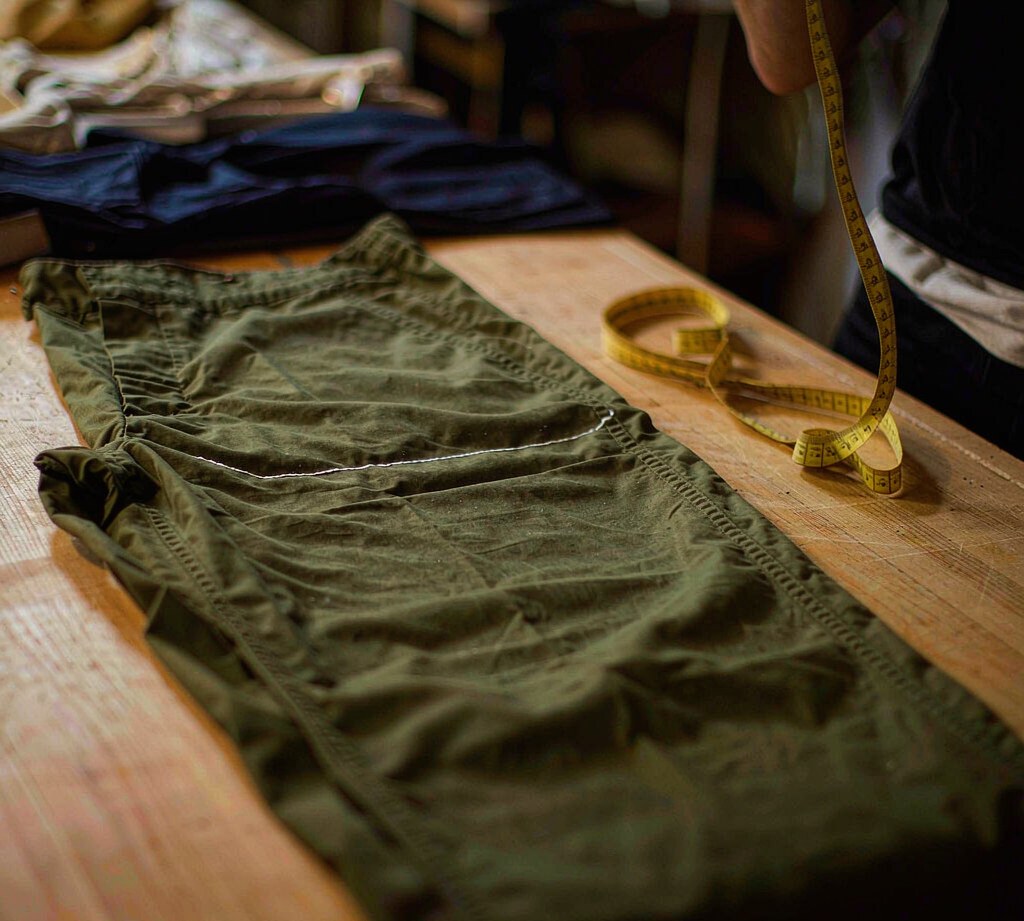
Taking in is a one-way street. Five centimetres is a full size.
Going smaller is a different job. A tailor can open the side seams and the waistband, remove cloth and rebuild the seam, and nobody can tell afterwards. How much is possible? Read the chart. On our own size chart, a 32 measures 81 cm at the waist and a 34 measures 86 cm, so one full size in the middle of the range is 5 cm. At the bottom of the range the steps shrink: 29 to 30 is only 2 cm, which means a 5 cm take-in equals two sizes there. Most tailors treat 4 to 6 cm at the waist as routine. Push well past that and the front pockets start to angle forward and the fly stops hanging straight.
Letting out works the other way around. With about one centimetre per side seam, you might recover 2 cm in total before the cloth runs out. A waist that is too tight is a buying mistake, not a tailoring job.
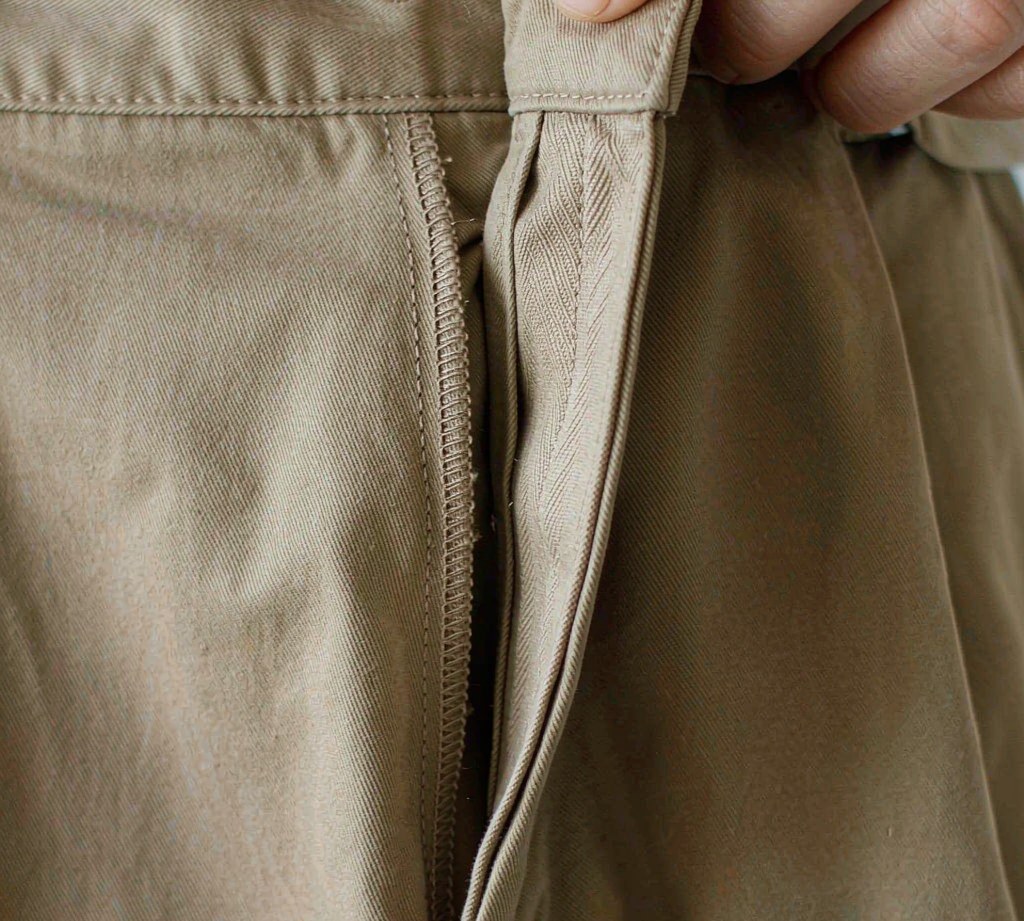
Length is the easiest fix you will ever buy.
Waist and length are not equally hard. Length runs from 98 to 103 cm across our entire chart, seven sizes from 29 to 38, so almost every problem that is only about length gets solved at the hem. A hem job is quick, it is the least invasive alteration there is, and on jeans a good tailor preserves the original stitched edge by cutting from the inside. The reverse almost never works: lengthening needs cloth that was never sewn in, so buy long and shorten, never the other way around.
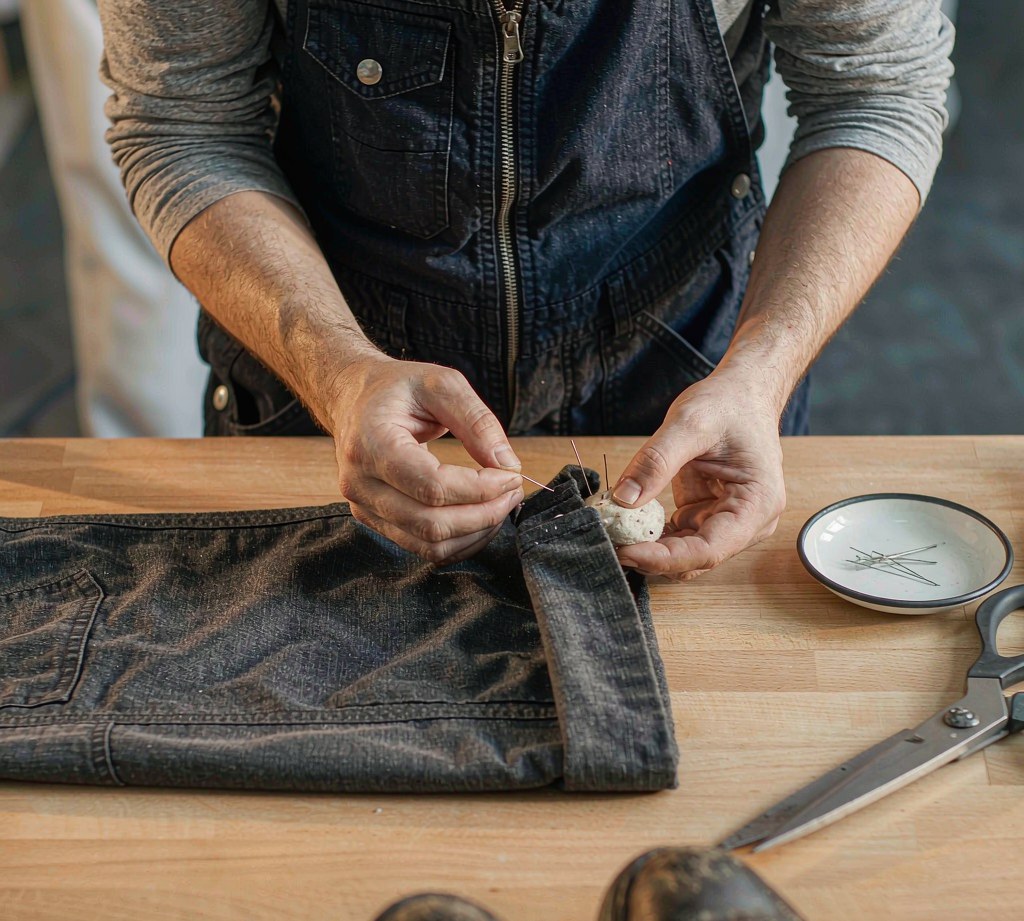
Three problems a tailor will tell you to return instead
Then come the changes that look simple and are not. The first is the rise, the distance from the crotch seam up to the waistband. Drop it or raise it and you rebuild the whole lower half of the pants, so a crotch that hangs too low stays too low. The second is the hip and the seat. Our chart jumps 5 cm of hip between a 32 and a 34, from 107 to 112 cm, and cutting that out walks the back pockets toward your spine while the front pockets slide off the hip bone. The third is the thigh at the seat, where no usable seam allowance is left. A good tailor is honest about all three, and the honest answer is usually the same: wrong cut, exchange it.
Check three numbers before you pay anyone
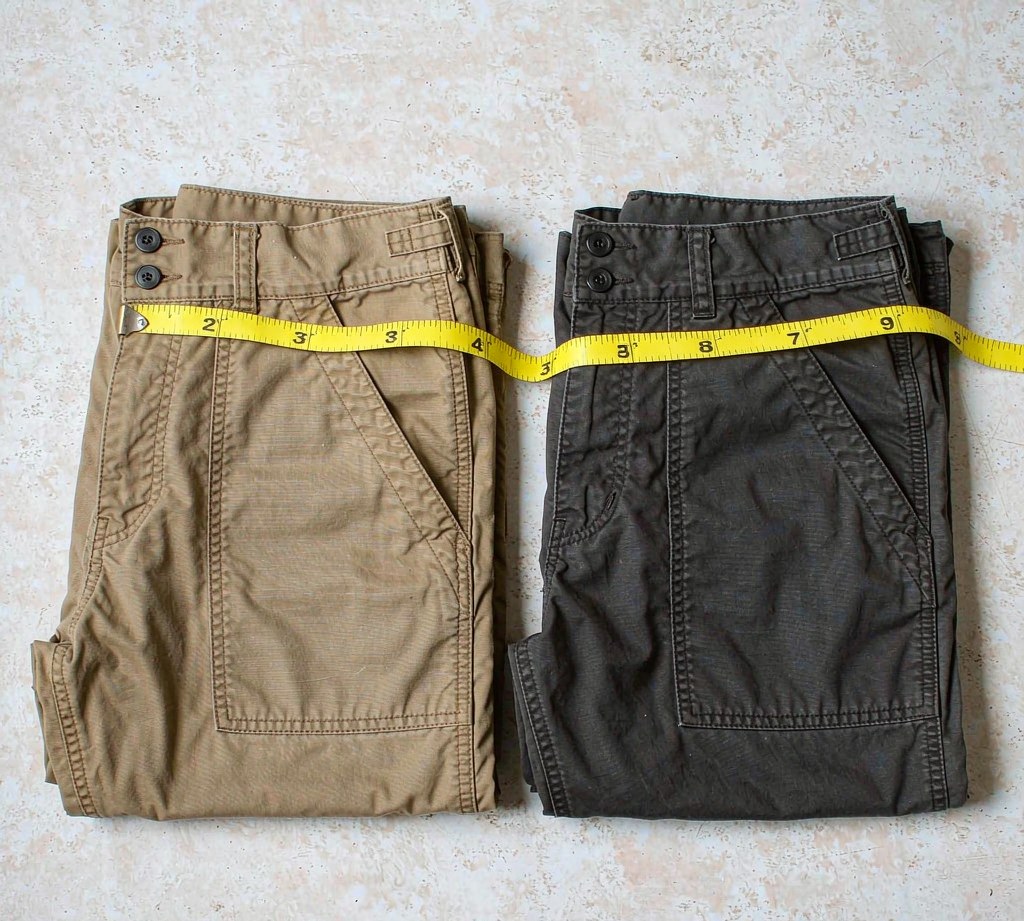
Here is the two-minute version. Take the best-fitting pair you own, lay it flat and measure the waist, the hip and the length, then set those three numbers against the chart on the product page. At BenClothing, we print the waist, hip and length of every size on every pants page, because those are the three numbers a tailor asks for first. If one or two of them are off, an alteration earns its money. If three or more areas are wrong, the size or the cut is wrong, and no needle fixes that at a sensible price. And if the pair is still returnable, use that first: unworn, with tags, within seven days of delivery beats any alteration receipt.
The full policy lives on our refund and return page, and the same three numbers sit on every pants page in our pants category.
The maths only works when the cloth is worth it.
One last number that nobody prints: the alteration has to cost less than the garment deserves. Heavy cotton twill takes a second round of sewing without complaint, which is exactly why we cut work pants the way we do. A thin, badly made pair will not survive being taken apart and rebuilt, so paying to alter it is money into a bin. Buy cloth that lasts, alter it once, and wear it for years. That is the argument against fast fashion, measured in centimetres.
A tailor is not a miracle worker. He is a craftsman with about one centimetre of margin, and he can do a lot with it: waists, hems, legs. The rise, the seat and the hip are decisions you make at the checkout, not at the alteration shop. Read the chart, measure your best pair, and buy the number that is already right. Shop our collection.
FAQ
Can a tailor make trousers a full size smaller at the waist?
Usually yes. One size is about 5 cm at the waist in the middle of a size range, and a 4 to 6 cm take-in is routine work. Beyond roughly 6 cm the pockets and the fly start to move with the seam, so ask the tailor to check the pocket bags before you commit.
Can cargo pants be tapered without ruining the pockets?
Yes, below the pocket bags. The taper starts under the pocket and runs down to the hem, so the pockets keep their position and shape. A taper that starts above the pocket drags the pocket opening out of shape, which is the one thing a good tailor will refuse to do.