
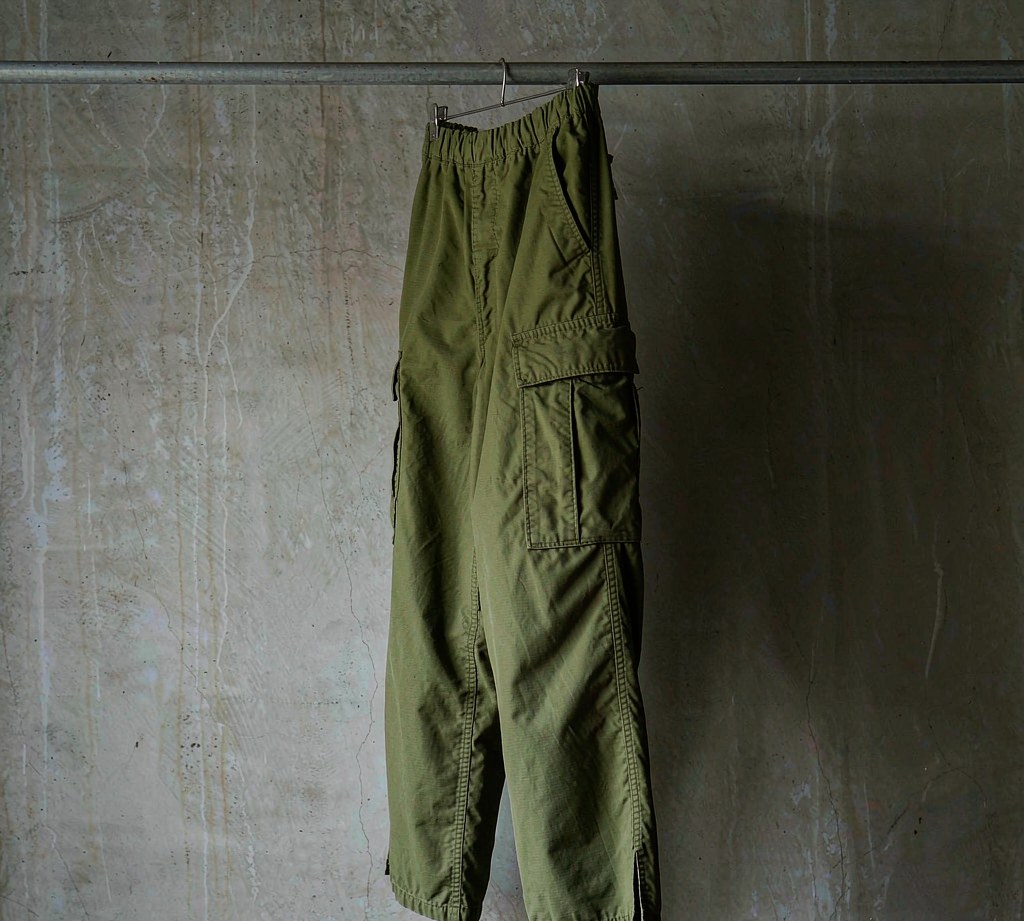
There Is No Size 33: What to Do When You Land Between Sizes
Between two sizes, going up feels like the safe answer, and it is still the wrong first move. The centimetres you are missing at the waist rarely travel alone. The same size step adds them at the hip, the thigh and the hem, so a pair that closes comfortably in the morning can hang like borrowed clothes by the afternoon. Most men stand between two tabs and guess. You do not have to. Measure the pair you already own, read the size chart as three numbers instead of one, and the choice usually makes itself.
The Size on the Tag Is a Bucket, Not a Measurement.
A size 32 does not describe a garment. It describes a range. On our own size charts, the garment waist of a 32 measures 81 cm, but the same tag can cover a hip anywhere from 107 to 117 cm depending on the cut, and cargo pockets add their own bulk on top of that. Two pairs with the same number can sit a hand-width apart before you even put them on. The tag tells you where to start looking. It does not tell you how the pants will fit.
At BenClothing, we print the waist, hip and length of every size on every pants page, because a number on a tag answers nothing by itself.
Mistake One: Comparing Numbers Instead of Garments.
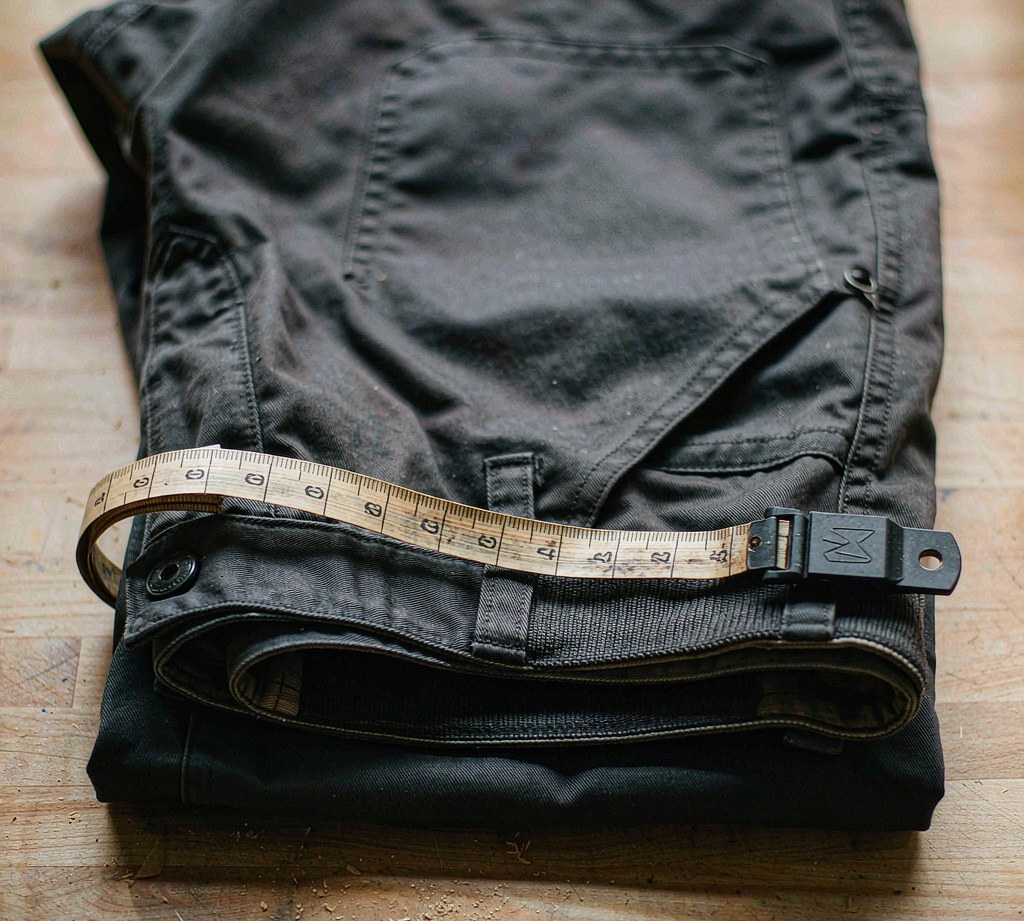
The fix is boring and it works. Lay your best-fitting pair of pants flat, measure across the waistband and double it. Measure the hip at its widest point and the length from waistband to hem. Write the three numbers down. Now open the size chart and compare garments, not tags. If your tape says 84 cm at the waist and the chart shows 81 for the smaller size and 86 for the larger, you are one centimetre over one size and two under the other. That is a real decision. “Somewhere between 32 and 34” is not.
The four measurements that decide fit are laid out in our cargo pants fit guide, and the flat-lay method there is the same one.
Mistake Two: Sizing Up to Fix Something That Is Not the Waist.
Sizing up adds centimetres everywhere at once. If the waist closes fine but the thigh pulls when you sit down, a bigger size buys 5 cm of waist you did not need and still changes how the seat hangs. Find the number that is actually short before you move. A short waist on a fixed waistband calls for the size up. A short thigh on a roomy cut usually does not, because the smaller size often keeps enough room and hangs cleaner.
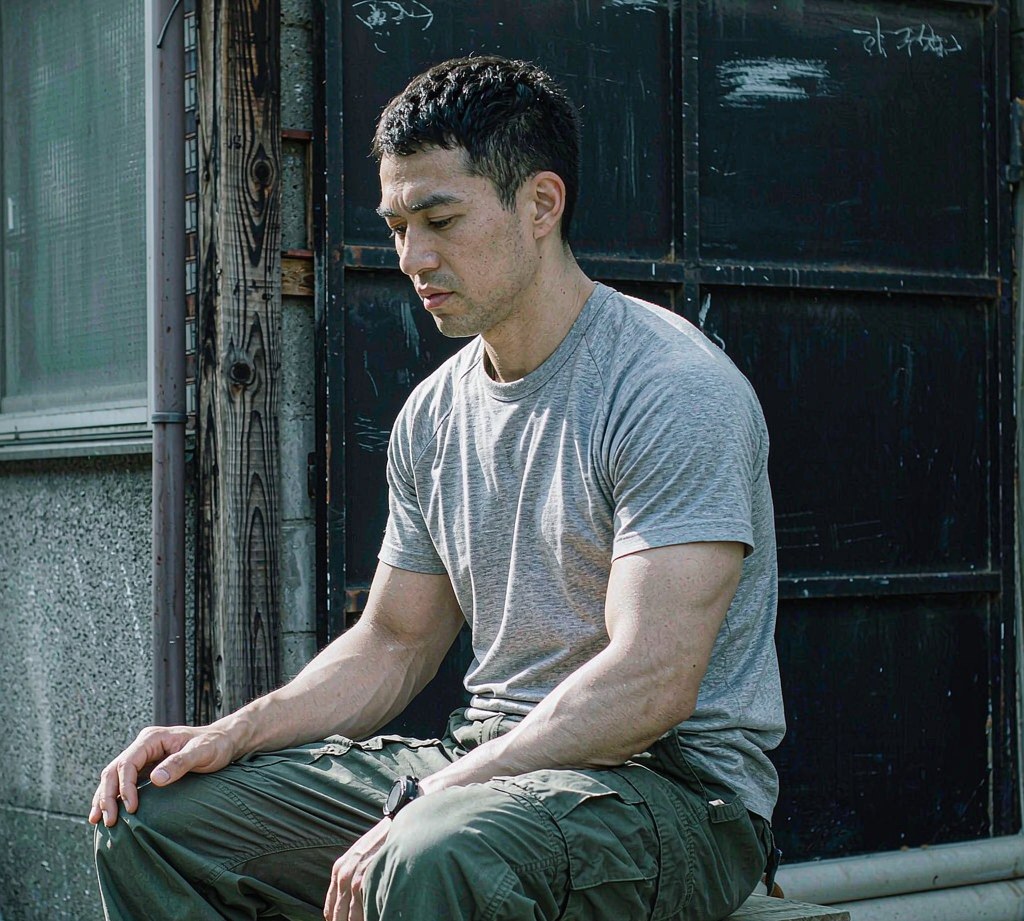
This is why cut matters as much as size. Our relaxed multi-pocket cargo pants are built with a fuller thigh, so a 32 in that pair wears like a 33 in a tapered one.
The Steps Between Sizes Are Not Even.
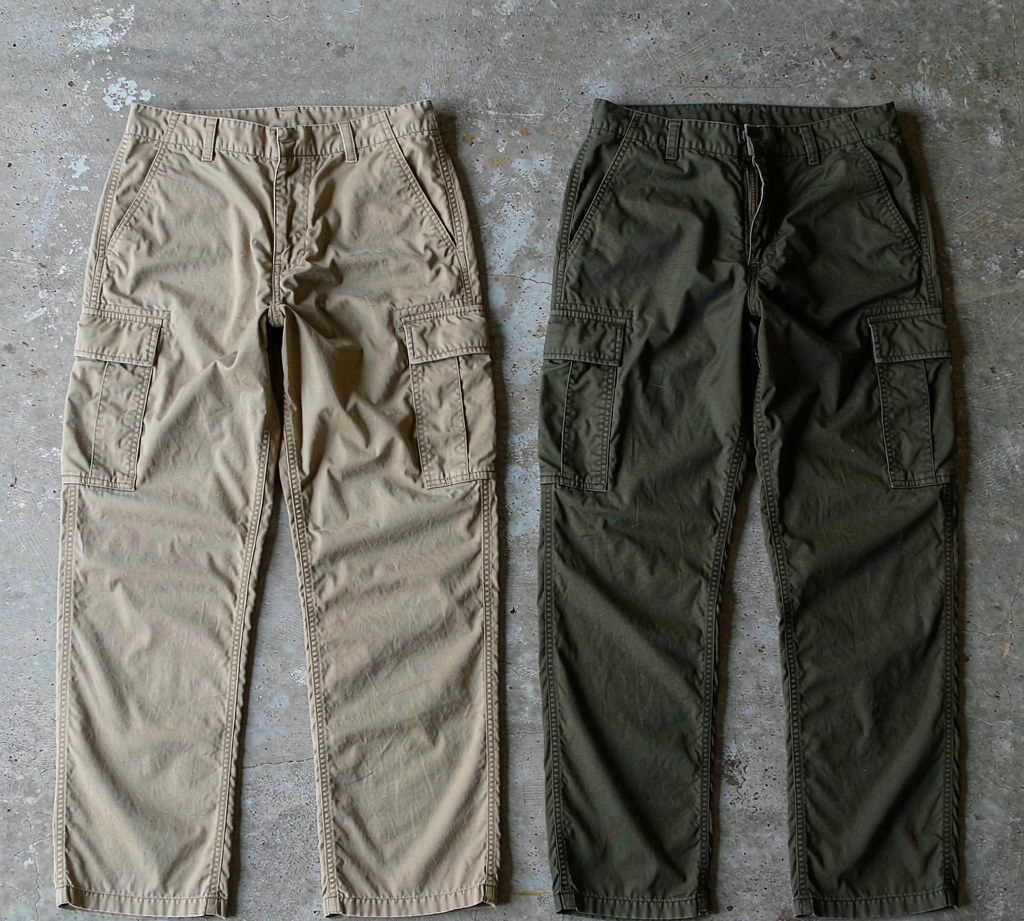
Here is the part almost nobody checks. On our charts, one step through the middle of the range moves the garment waist by 2 to 3 cm. Where a size is skipped, the jump is 5 to 6 cm. One of our cargo cuts runs 29, 30, 31, 32, 34, 36 and 38, with no 33, 35 or 37 at all. If your waist sits at 33, the chart is asking you to choose between 81 cm and 86 cm. That is a 5 cm gap, not a 2 cm one. On a different pair the 33 exists and the choice disappears. The right answer depends on the chart in front of you, not on a rule you memorised once.
Length Moves With the Size. Almost Nobody Checks It.
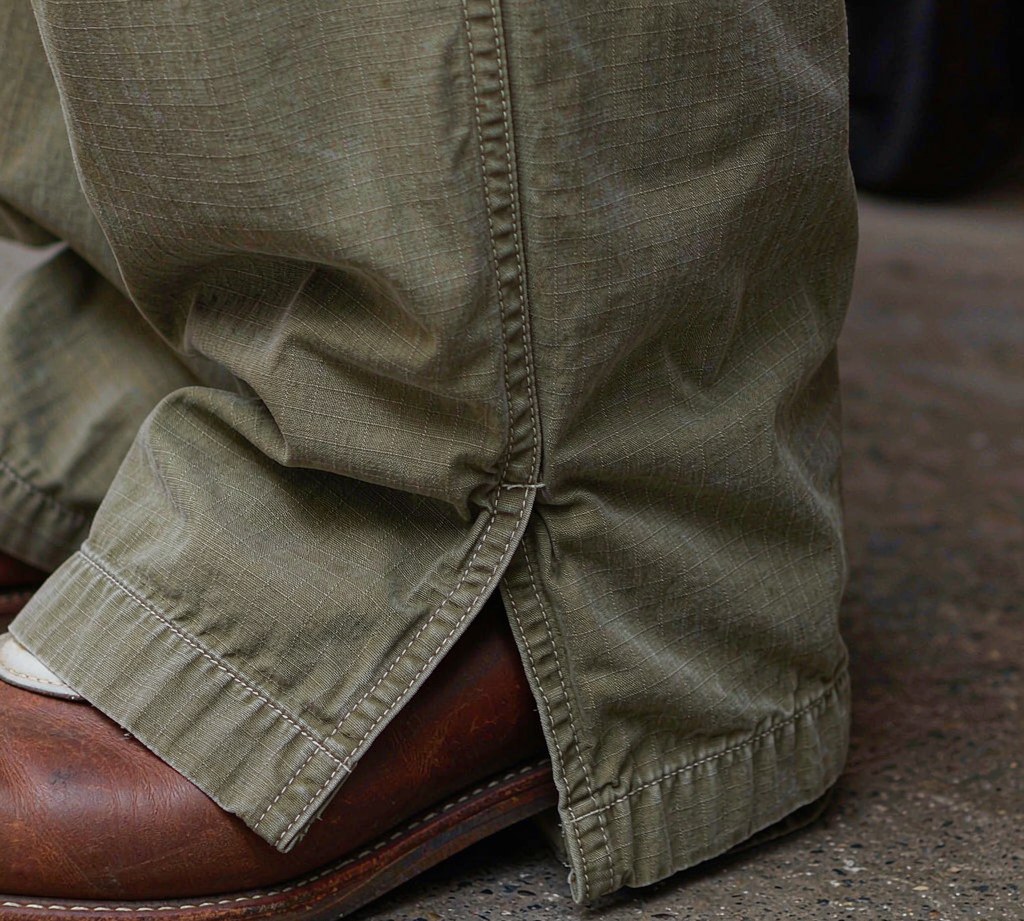
The length column on a size chart is not decoration. On our pants it runs from 98 cm at the small end to 103 cm at the large end, so sizing up for the waist also buys you longer legs, and the hem that broke once over your boots starts to pool on the floor. If you go up a size, read the length column before checkout. On a wide straight pair the extra length shows up faster than on a tapered one.
Mistake Three: Letting the Return Window Decide.
Yes, there is a 7-day return window on our refund policy page, and it exists for surprises: a faulty stitch, a colour that reads differently in daylight, a size that ran true to nothing. Using it as a sizing strategy costs you shipping both ways and about two weeks of waiting for a pair you could have measured in two minutes. Order the size your tape measure points to. Keep the return for the day the tape measure is wrong.
The Two-Minute Version.
- Measure your best pair flat: waist doubled, hip, length. Keep the note in your phone.
- Stay within about 2 cm of those numbers when you read any size chart.
- If the next size up means a 5 cm jump because a size is skipped, stay down on a roomy cut and go up only when the waistband is fixed and the fabric has no give.
- Check the length column after any change of size, and add 1 to 2 cm only if you wear the pair over boots.
FAQ
Should I size up or down when I am between sizes?
Let the missing centimetres decide. If the waist is the only short number and the waistband is fixed, go up. If the shortfall is under 2 cm and the cut is roomy, stay down. The note on our size charts says to size up, and as a default for a rigid waistband it is the right one. As a verdict for every pair, it is not.
Do cotton work pants stretch enough to cover half a size?
The knee and the hip relax a little during the first weeks of wear, especially on heavier twill. The waistband barely moves. Fit the hip and the thigh as they are on day one, not as they might be in month three.
A size is a bucket. The garment is a set of numbers, and you already own the reference pair. Measure once, keep the note, and the moment between two sizes stops being a coin flip.