
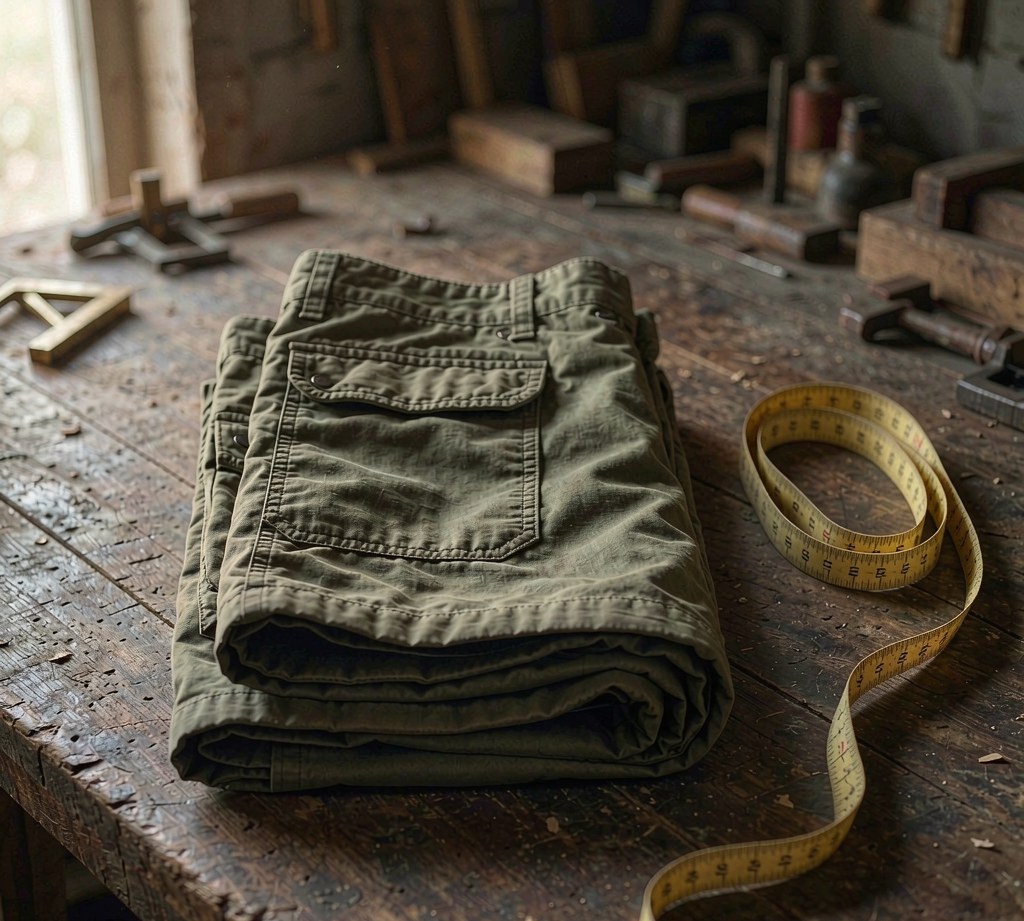
Cargo Pants Fit Is Not About Size: Four Measurements That Decide It
Two pairs of cargo pants can carry the same size and fit nothing alike. Four measurements decide the fit: hip, thigh, inseam and leg opening. None of them are printed on the label. If your size has not changed but a new pair feels wrong the moment you stand up, one of those four numbers is off. This season the problem shows up more often, because menswear editors keep steering everyone toward straight, relaxed trousers with nineties proportions: a higher waist, a fuller thigh and a clean line down to the shoe. That look cannot be bought by size alone. It has to be measured.
The Label Tells You the Waist. Everything Else Is a Guess.
A size on a tag describes one number. A 32 can hide a hip anywhere from roughly 104 to 116 cm depending on the brand, the cut and the year of the pattern. Cargo pants widen the gap even further, because the pockets, the reinforcements and the roomy block they are built on all change how the same “size” hangs on the body. So the tag is a starting point, not an answer.
The good news: fit is measurable. Four numbers decide how a pair looks and wears, and every one of them can be checked at home with a tape measure and two minutes.
Hip and Thigh: Where the Room Actually Lives
The hip decides whether the pair sits well when you move. Stand up, sit down, climb a step: if the seat pulls or the waistband dips at the back, the hip is short on room. On a pair laid flat, measure straight across the top and double it. Your best-fitting old pair is the reference, not the size chart.
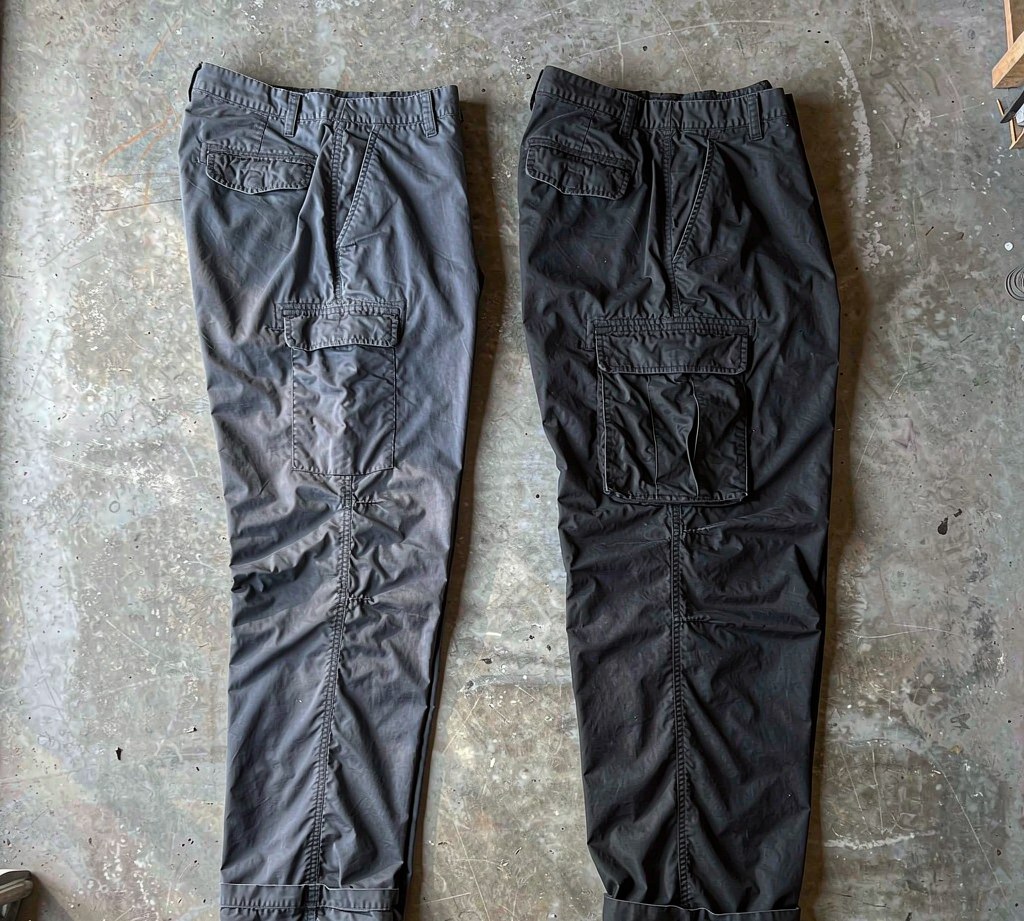
The thigh matters even more on cargo pants, because the side pockets add their own bulk. A thigh cut with less than about 2 cm of spare room will make the pockets push forward and gap every time you walk. Around 3 cm of spare room keeps the pockets lying flat while keeping a straight line through the leg. Our relaxed multi-pocket cargo pants are cut for exactly that kind of fuller thigh without ballooning below the pocket.
The Inseam Decides Where the Hem Breaks.
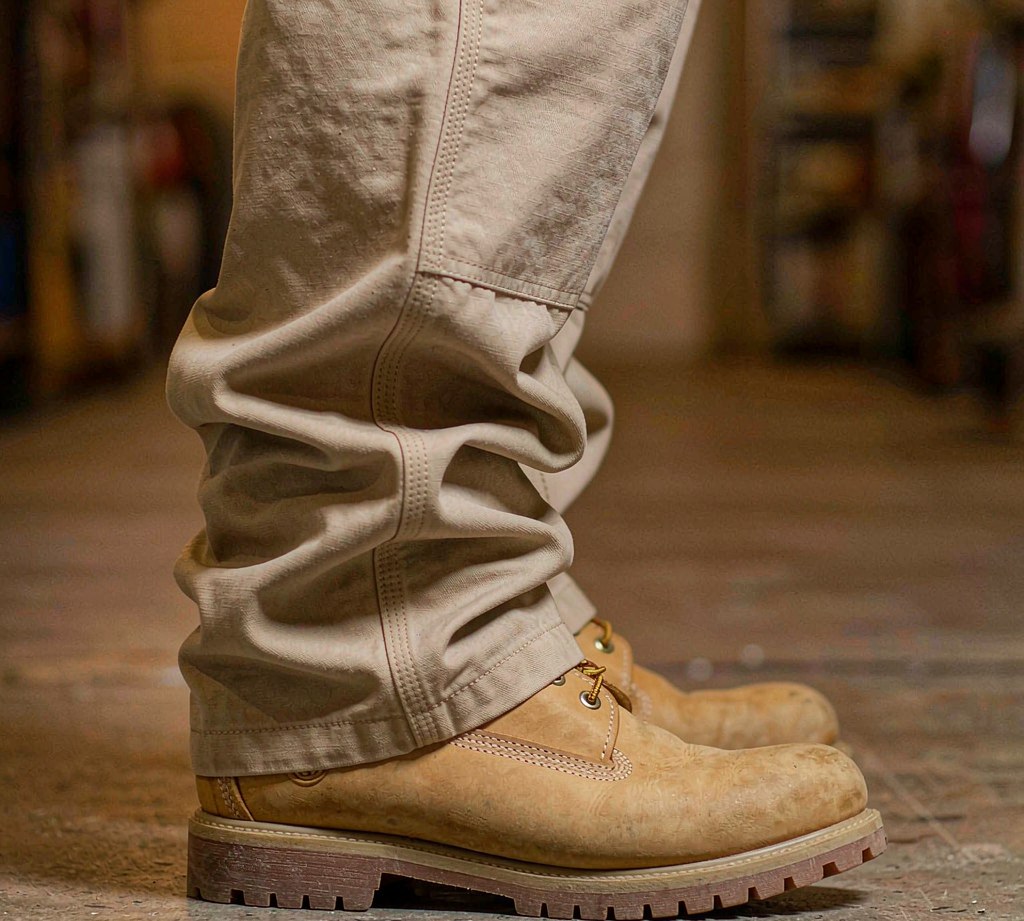
Inseam is the number nobody checks and everybody notices. Measured seam to seam from the crotch to the hem, it decides whether the hem kisses the top of your shoe, breaks once in front, or pools on the floor. Over boots, most men want one clean break, which usually means about 1 to 2 cm more length than a clean sneaker hem.
When you buy online, check the inseam on the size chart instead of trusting your usual length. A 78 cm inseam on a tapered leg lands differently than the same 78 cm on a wide straight cut. Our quick-dry wide straight cargo pants, for example, are meant to fall straight to the boot, so the same inseam reads shorter than on a tapered pair.
Leg Opening: Stacking, Boots and Proportion
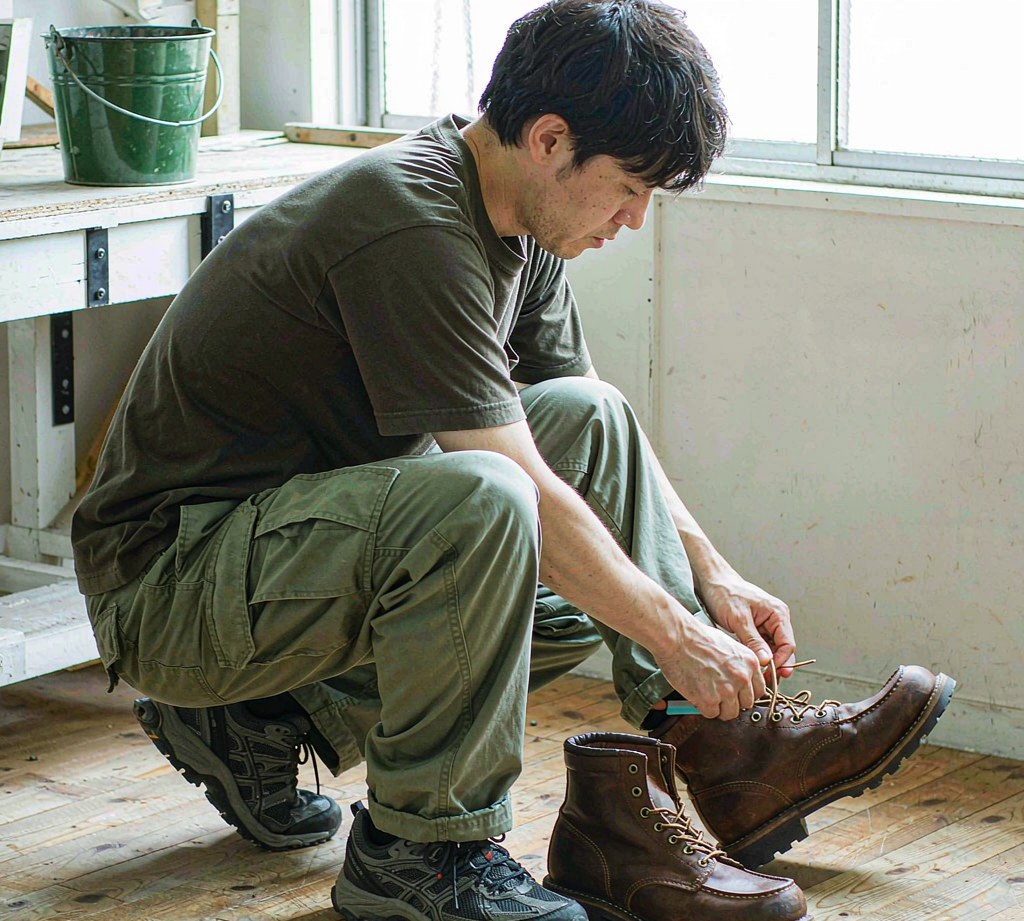
The leg opening is the smallest number with the loudest effect. Around 20 to 22 cm lets a straight leg stack naturally over a work boot. Below about 19 cm, the hem fights the boot and rides up at the ankle, which is why some pairs only look right with sneakers. Above about 24 cm, the pair starts to swallow the shoe, and with it your height.
This is also where the nineties proportion everyone keeps talking about gets decided. A fuller thigh needs a wider opening to keep the line clean. Put a wide opening on a thin thigh and the whole leg collapses. Match the two numbers and the pair carries itself.
A Tape Measure and Two Minutes: The Flat-Lay Check
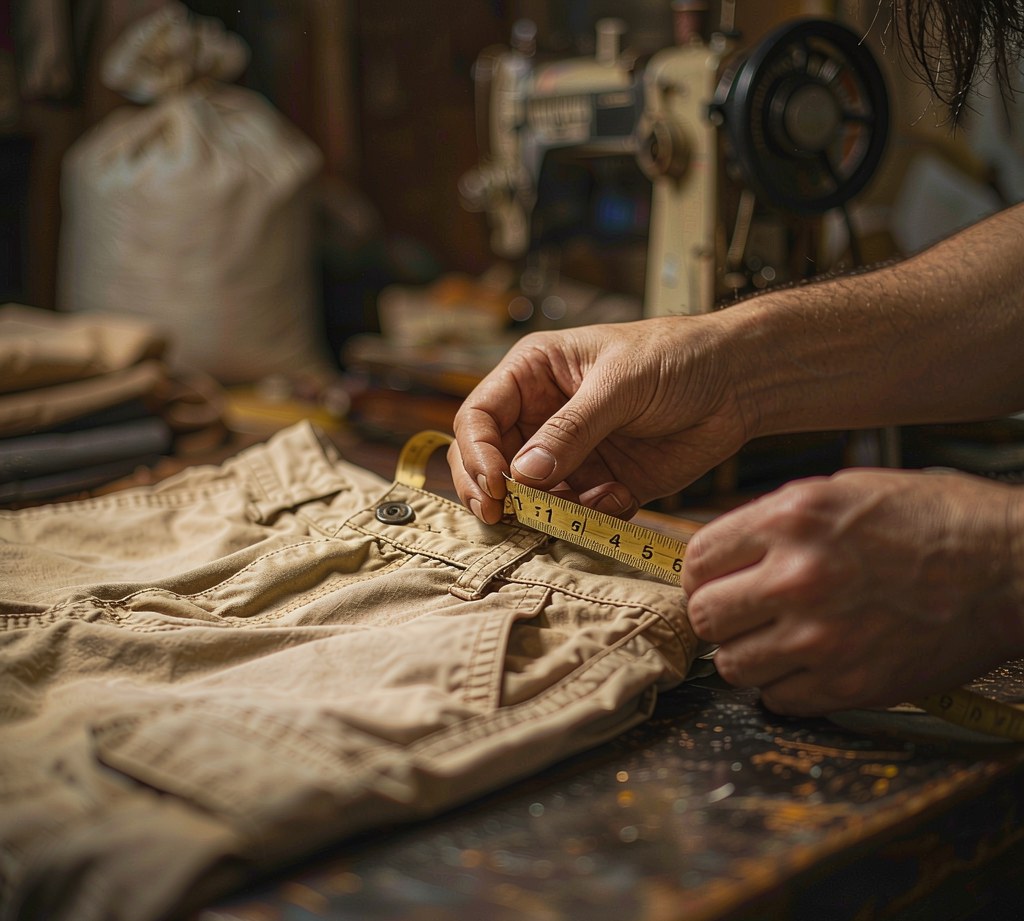
Lay your best-fitting pair of pants flat. Measure across the waistband and double it. Measure the thigh width right at the crotch point. Measure the inseam from seam to seam. Measure the leg opening at the hem. Write the four numbers down. Then open the size chart on any pair you want to buy and compare. Stay within about 2 cm of your reference on each number and the new pair will fit the way the old one does.
At BenClothing, we put full flat-lay measurements on every pants page, so this check takes one screen and no guesswork. The Japanese vintage tapered cargo pants and the relaxed multi-pocket pair both list waist, thigh, inseam and leg opening for every size.
Key takeaways
- Two pairs with the same size tag can differ by more than 10 cm at the hip.
- Keep about 3 cm of spare room at the thigh so cargo pockets sit flat when you walk.
- Over boots, add 1 to 2 cm of inseam for one clean break at the hem.
- A leg opening of 20 to 22 cm stacks well over work boots; under 19 cm it fights them.
- Measure your best pair flat and stay within 2 cm of its numbers when buying a new pair.
FAQ
Do cargo pants stretch over time?
Cotton twill relaxes a little at the knee and hip during the first weeks of wear, especially on heavier weights. The waistband rarely changes much. Fit for the thigh and hip as they are, not as they might become.
Should I size up or down between sizes?
Let the thigh decide. On a roomy cut, sizing down usually still leaves enough hip room. On a slim or tapered cut, sizing up protects the thigh and the pockets. Check the inseam separately either way, because length does not follow the waist.
Fit is not luck and it is not a size. It is four numbers you can keep in a notebook. Measure once, and every cargo pair you buy after that starts with the answer already written down.