Why Dressing Warmer Makes the Walk to Work Colder
A winter layer insulates only while it stays dry. A walk to the station warms you within ten minutes, cotton holds that sweat against the skin, and damp fabric pulls heat out of you far faster than cold air does. That is why the coldest moment of a commute often arrives indoors, and dressing warmer makes it worse. Start the walk slightly cold, open a layer before you sweat, and keep the thickest cotton dry.
Twenty minutes, three climates: a commute is never one temperature
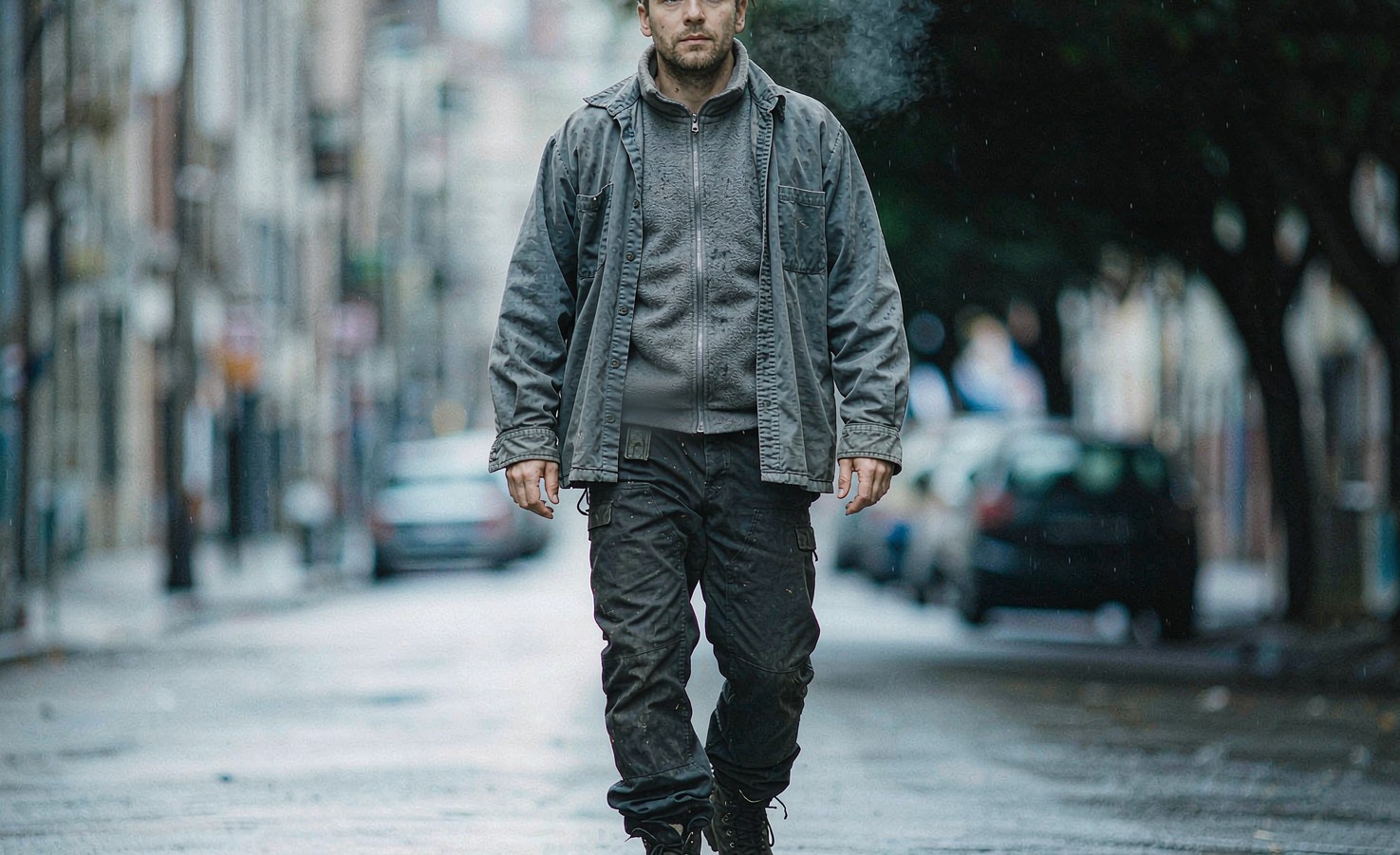
The street, the platform and the office are three climates. On a two degree morning the walk itself warms you: ten minutes of movement more than doubles the heat your body makes, and the jacket that felt right at the door starts trapping it. Then you stop. On a still platform the wind dies, the carriage adds its own warmth, and the sweat on your back has nowhere to go. Twenty minutes later you walk into a 22 degree lobby in a base layer that is quietly damp. The outdoor temperature never changed. Your layers did.

What a damp layer actually costs you
These are old textile numbers, not marketing. Cotton’s standard moisture regain sits near 8.5 per cent, polyester’s near 0.4, so a cotton base layer stays damp long after a synthetic one stops feeling wet. Once fabric holds water, the still air that was insulating you is replaced by water, which moves heat roughly 25 times faster. A damp layer does more than stop insulating. The moisture keeps evaporating off your skin for as long as you wear it. The chill you feel at your desk is evaporation, not the air conditioning.
The heaviest layer is the one that soaks the most
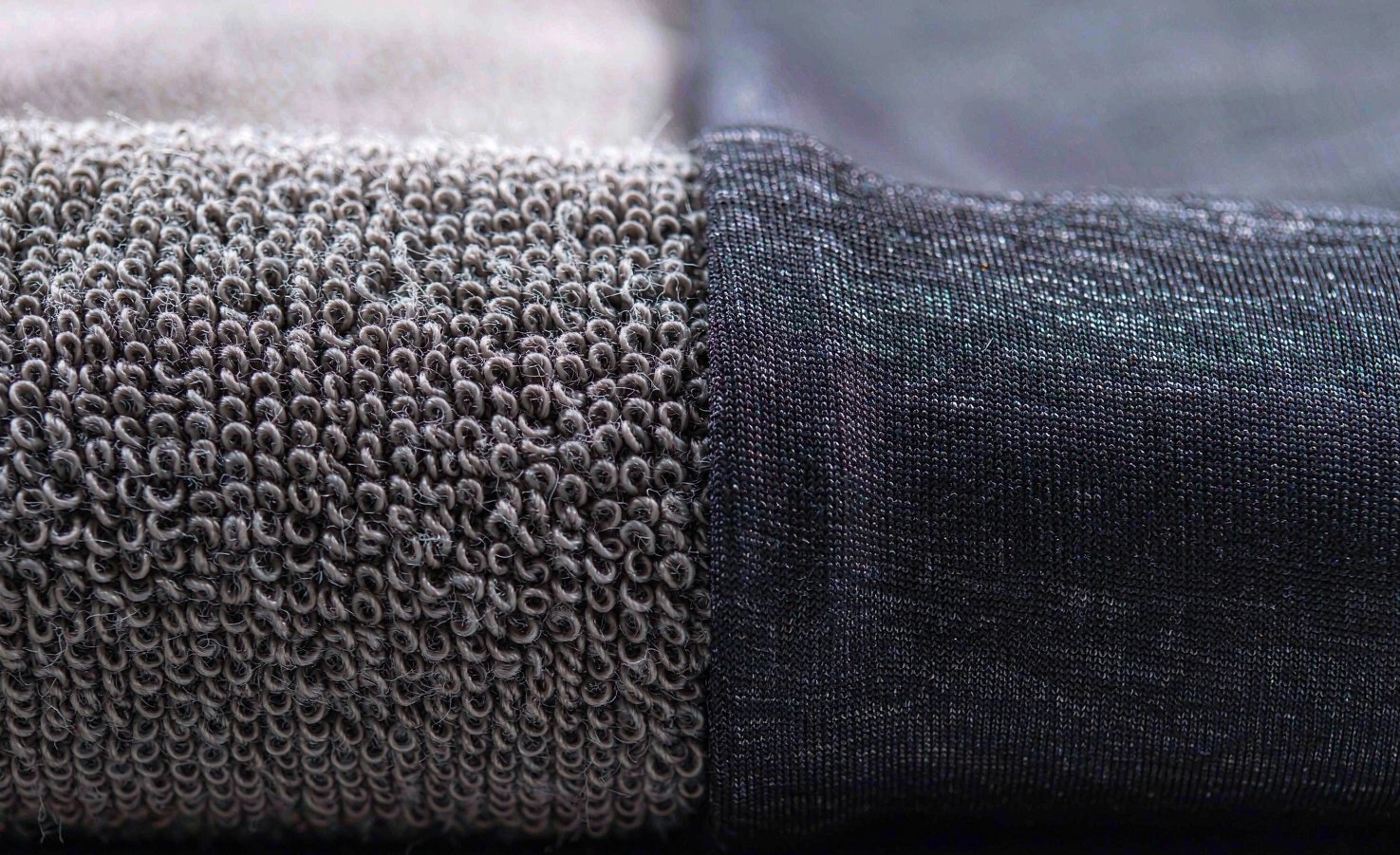
Heavy cotton earns its keep in dry cold and betrays you on a sweaty walk. A 550 gram fleece-lined hoodie absorbs a real share of its own weight in moisture on a brisk commute and will not dry before lunch. Wet weight also cancels warmth: a soaked mid layer loses the loft that made it warm and presses flat under your shell. A 400 gram terry hoodie that stays dry beats a 550 gram one that spends the morning wet. At BenClothing, we weigh both options before a season starts, because washing changes the maths: collapsed loops hold less air even when bone dry. We wrote about that separately in what washing does to hoodie fabric.
Start colder than is comfortable, then open before you sweat
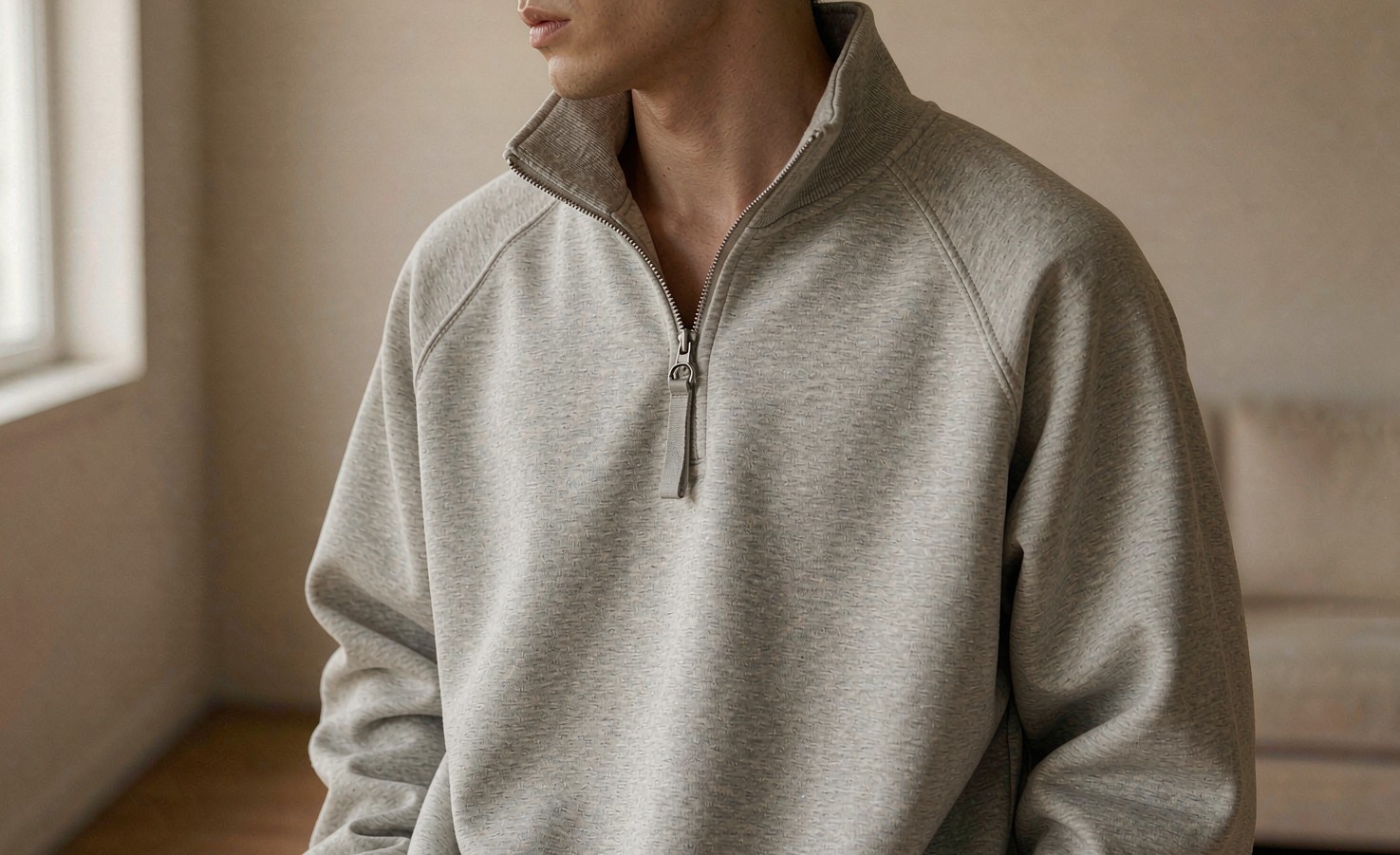
The fix is timing, not thickness. Dress for minute ten of the walk, not minute one: at the door you should feel slightly underdressed, and the first two minutes should feel brisk. Then open something before your back warms: a half zip, a placket, a cuff. Sweat you never produce is warmth you keep, and most of the office problem never gets made. The habit to drop is the sealed collar for the whole walk. A closed shell turns your back into a kettle.
What the layers themselves should do
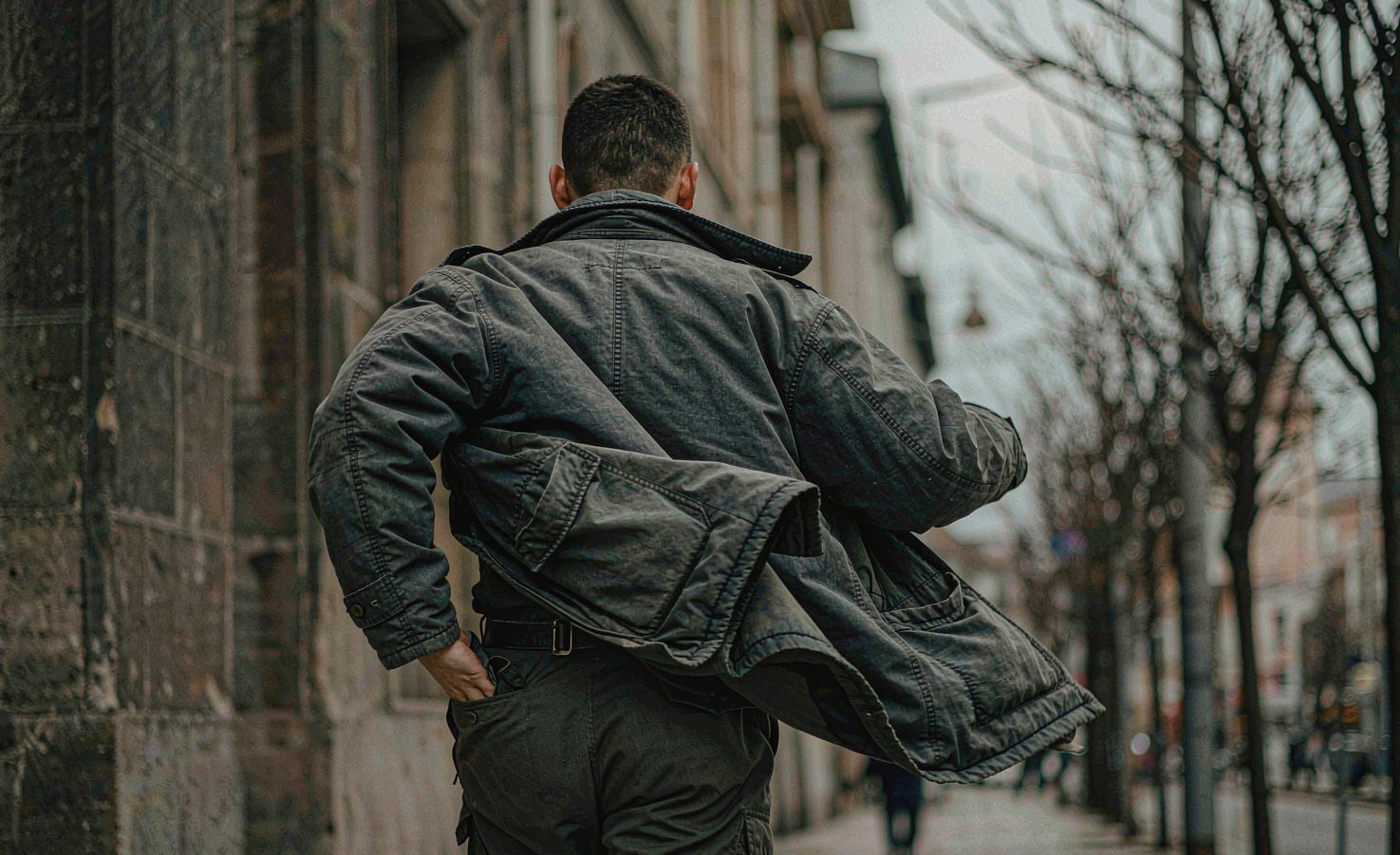
Three layers, three jobs. The base layer sits close and moves moisture; its thickness barely matters. The middle layer carries the warmth, so pick one whose thickness comes back after you squeeze it: dense terry or a firm knit, not fleece that has already flattened. The shell blocks wind, which matters more than insulation while you are moving, and it has to open in seconds. A field jacket with a full placket does that job on a commute, and in deep winter a 550 gram fleece-lined hoodie under it covers the coldest stretch.
Key takeaways
- Water moves heat about 25 times faster than still air, so a damp layer insulates worse than a thin dry one.
- Cotton’s standard moisture regain is about 8.5 per cent against roughly 0.4 for polyester, and heavy cotton dries for hours.
- Dress for minute ten, not minute one: slightly cold at the door is the correct setting.
- Open a zip, a placket or a cuff before your back warms. Sweat you prevent is warmth you keep.
- A windproof shell you can open beats extra thickness on any commute that involves walking.
FAQ
Is the fix just a synthetic base layer?
Partial. A synthetic or merino base dries faster and stops feeling wet sooner, and it earns its place in wet winters. But the commute problem is mostly about the heat you produce, and venting beats fabric choice. Even a perfect base layer fails under a sealed shell on a brisk walk. Do both.
At what temperature does this stop applying?
The three-climate problem is strongest between about 10 and -5 degrees, where you overheat moving but freeze standing still. In real deep cold, below roughly -10 degrees, start warmer and keep the shell closed, because the walk home at night is the longer exposure. The layering logic stays the same. Only the starting point moves.
The short version
A winter commute is three climates packed into twenty minutes, and sweat, not cold, is what defeats your layers. Start underdressed, open something before you warm up, keep heavy cotton dry, and let the shell handle wind. Shop our collection for mid layers and shells built for that walk.