
Your Work Pants Aren’t Too Long. The Hem Opening Is Too Narrow.
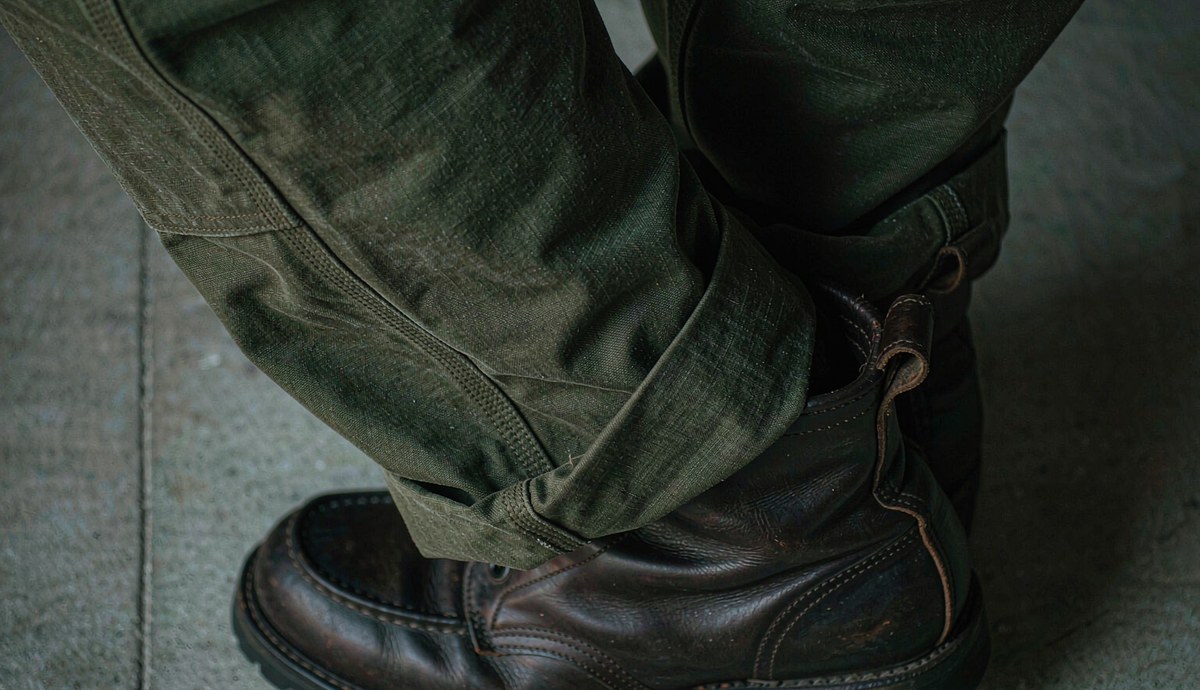
Not a word about length. When work pants look wrong over a boot, the length is usually right and the hem opening is wrong. A hem 20 cm across laid flat is a 40 cm opening, and over a 34 cm boot shaft the surplus cloth has one place to go: a fold that rests on the shaft like a ring. The pants get called too long. Here are the two numbers that meet at your ankle and what can still be changed.
Forty against thirty four: the two numbers that meet at your ankle
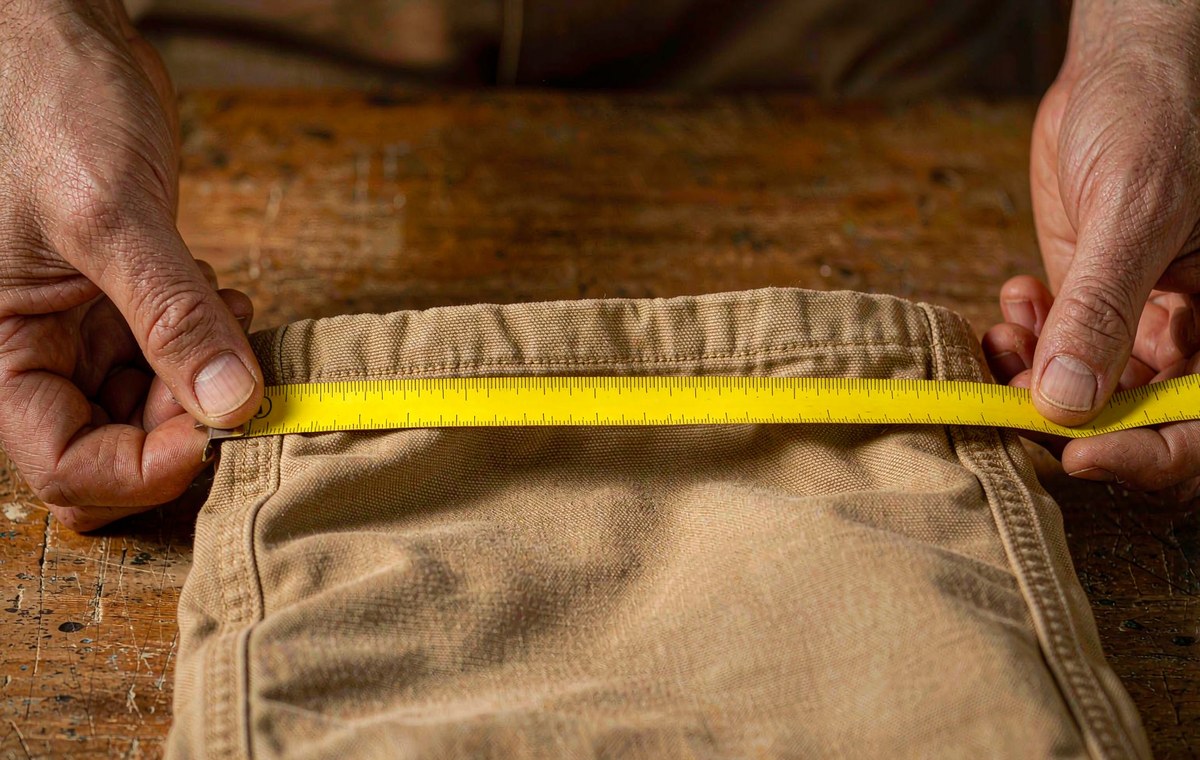
One number is the hem opening, read as a full circumference. The other is the boot shaft, measured where that hem will land. Everything at the bottom of the leg is those two numbers negotiating. Measure standing with a cloth tape at the widest point the hem will touch. On a lace boot that sits just above the ankle bone; on a pull-on boot, nearer the top rim, and the rim is wider than the shaft below it.
Measure the hem flat, then double it. Half a number is a lie
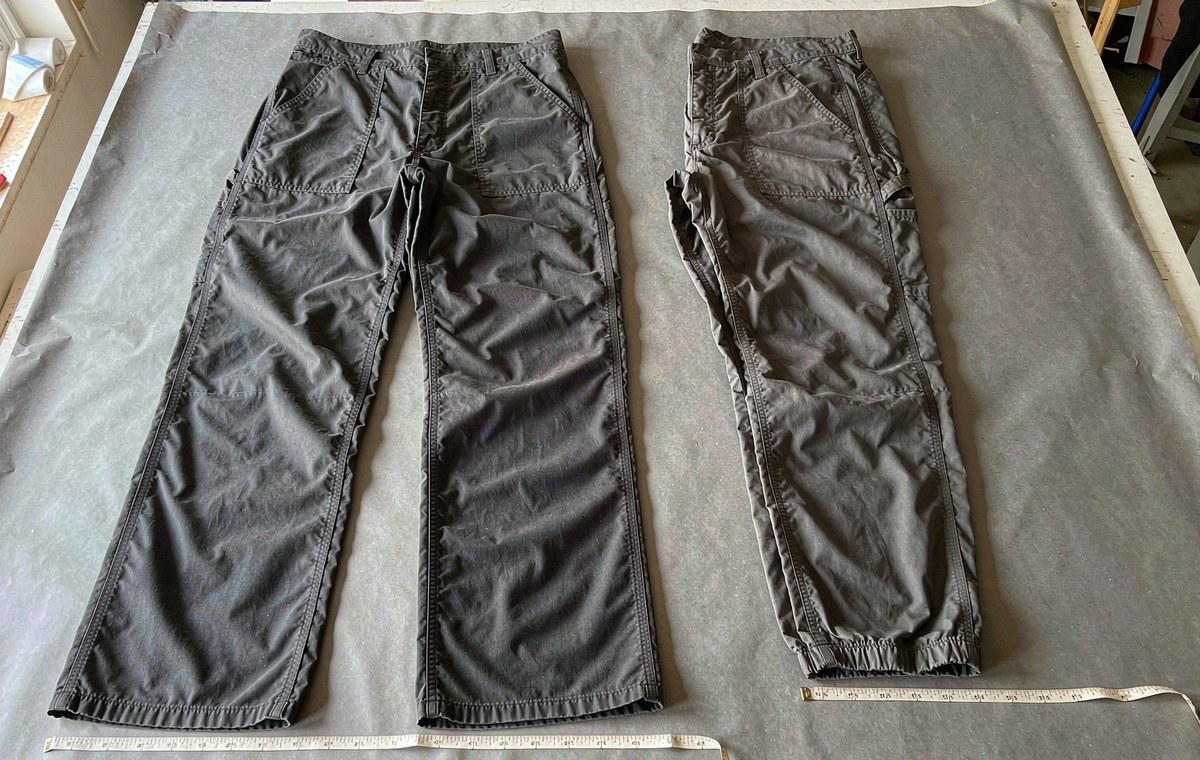
Charts quote a flat measurement, one leg, edge to edge, because that is what gets measured on a table. Double it. A 20 cm flat hem is a 40 cm opening before the edge is turned and stitched, and the turn pulls the cloth in by 1 to 2 cm, so what you wear is nearer 38 cm. Heavy canvas pulls in more than a light twill. No hem figure on the chart? Lay a pair you own flat, measure the bottom edge, double it, keep that as your baseline.
A shaft is not a cylinder, so the hem lands on a slope
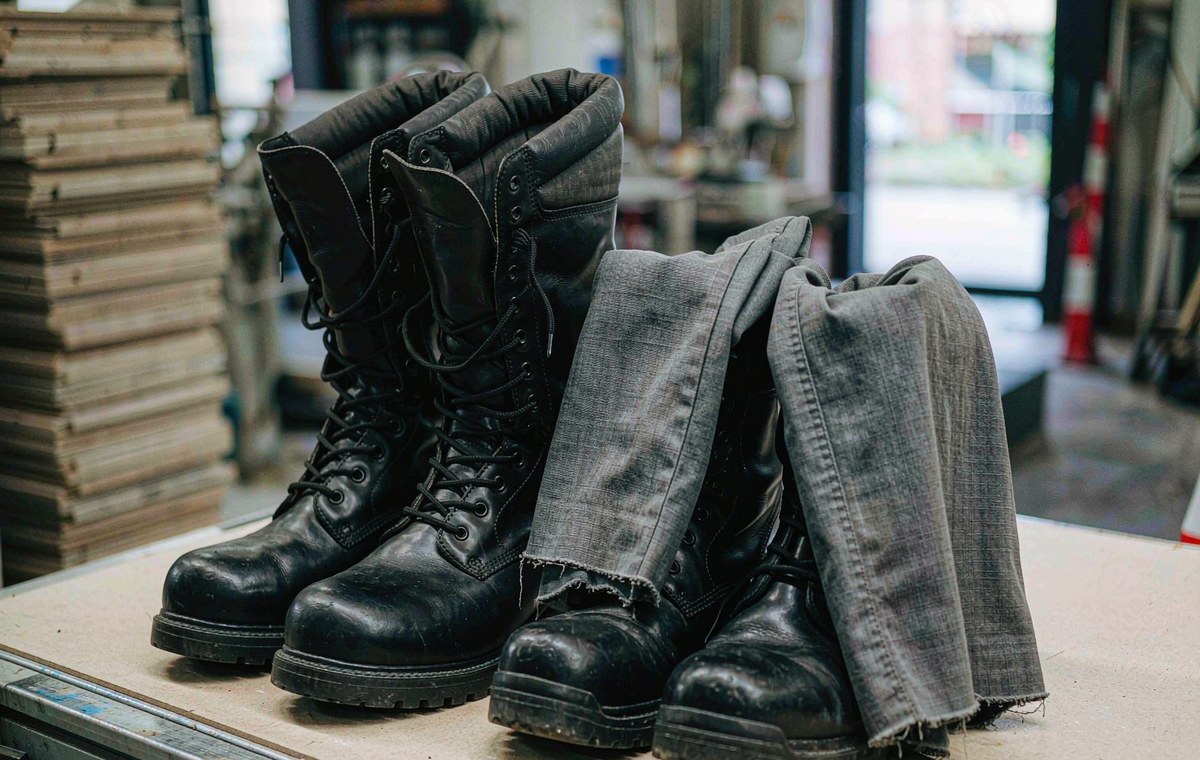
Boot shafts taper. The top opening is the widest point on most shapes, then the leather narrows toward the instep, and that slope decides where the hem stops. A hem on the widest part has room to move; the same hem 3 cm lower meets a tighter shaft and grips. Nothing about the trouser changed, which is why a pair can look right on one boot and pinched on another.
Two to four centimeters of clearance is the working range
Clearance is opening minus shaft, and it sets the fall. Under 2 cm the cloth grips: the hem climbs when you sit and folds across the shin. Between 2 and 4 cm it drops back on its own and holds one soft break. Past 5 cm a stiff canvas swings and the folded edge works against the rim. For a 34 cm shaft you want 36 to 38 cm, and heavy canvas belongs at the top of that range. A wide straight leg gives you that room without reading as oversized.
What a tailor can change, and the one thing it cannot
Length comes up easily, and 4 cm of hem allowance lets the edge be redone later. A wide opening can be narrowed by taking 1 to 2 cm off each leg from the knee down, which sharpens a straight leg and leaves the hip alone. Widening cannot be done: a finished leg carries no allowance inside to give back. If the boot is still an open question, the hem is where that decision starts.
Key takeaways
- A 20 cm flat hem is a 40 cm opening, and the turned edge pulls it in by 1 to 2 cm.
- Under 2 cm of clearance the cloth grips; 2 to 4 cm gives one soft break; past 5 cm the edge works the rim.
- A 34 cm shaft wants 36 to 38 cm of opening, with heavy canvas at the top of that range.
- Length and a narrower opening can be fixed at a tailor. A cramped opening cannot be widened.
- Keep 4 cm of hem allowance so the edge can be reworked instead of replaced.
FAQ
Why do my work pants bunch at the ankle when the length is right?
The opening is too close to the shaft. Measure the hem flat, double it, then measure around the boot where the hem lands. Under 2 cm of difference leaves the cloth nowhere to fall except into a fold, and taking 1 to 2 cm off each leg fixes it.
Can a tailor widen a narrow hem opening?
Not in practice. A finished leg has no spare allowance folded inside, so there is nothing to let out. A false hem band is the usual workaround, and it changes the line of the leg. Buy a straight or relaxed pattern instead.
At BenClothing, we check hem openings on the table before a line goes anywhere, because the ankle is where a good pair gets judged. Fewer pairs that fall clean over your boots beat a drawer full of near misses. Shop our collection.