
Denim Head to Toe: Why Matching Exactly Is the Wrong Move
You bought the jacket and the jeans from the same page and wore both on the same morning. Something was off, and it was not the fit: two flat planes of identical blue, nothing for the eye to land on. Most people decide double denim is not for them.
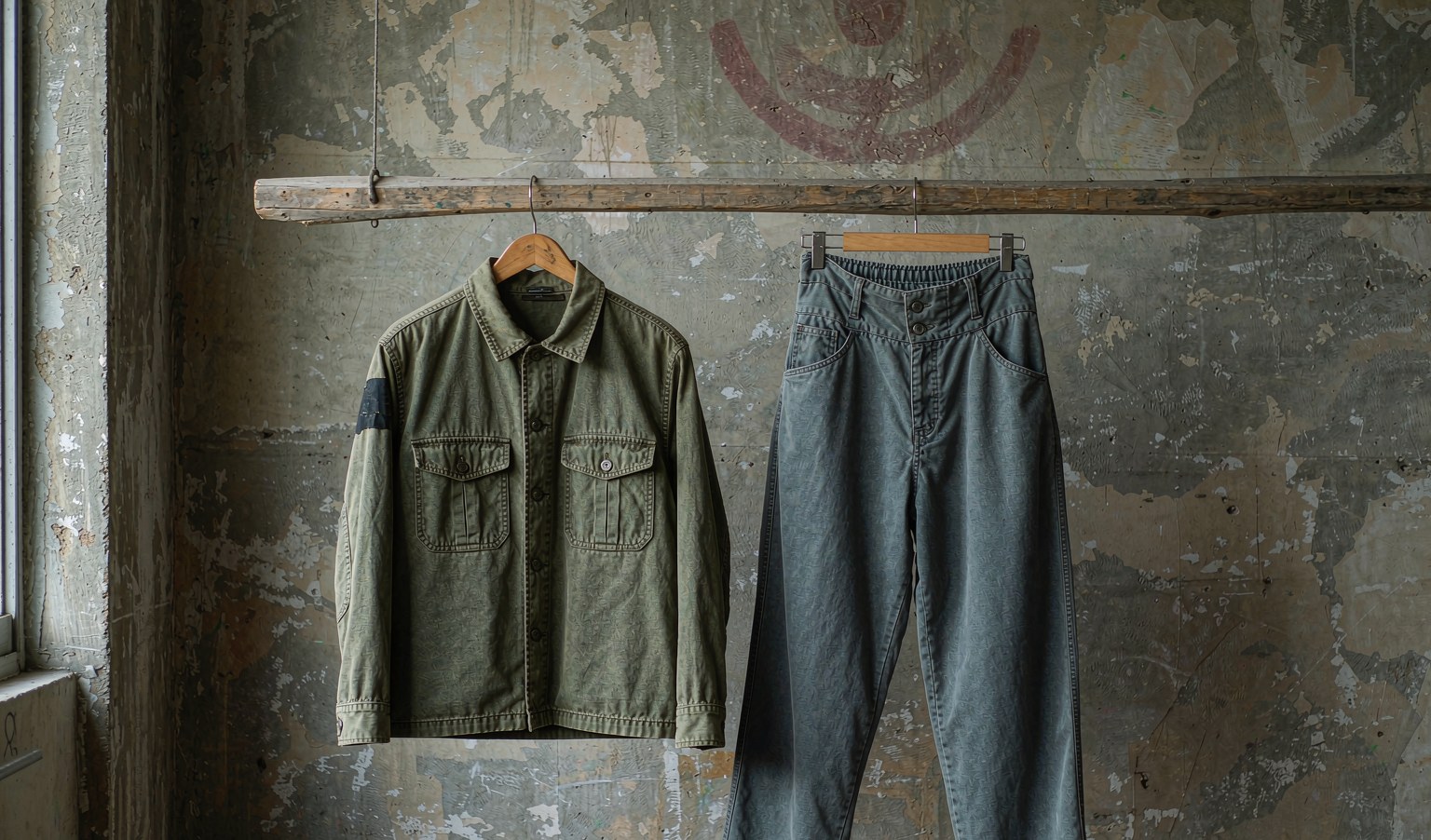
The problem is the word. Matching does not mean identical. Two pieces from the same family, one step apart in shade, weight or texture, read as one deliberate outfit; two in exactly the same shade read as workwear issued at the start of a shift.
Two ways to wear denim head to toe
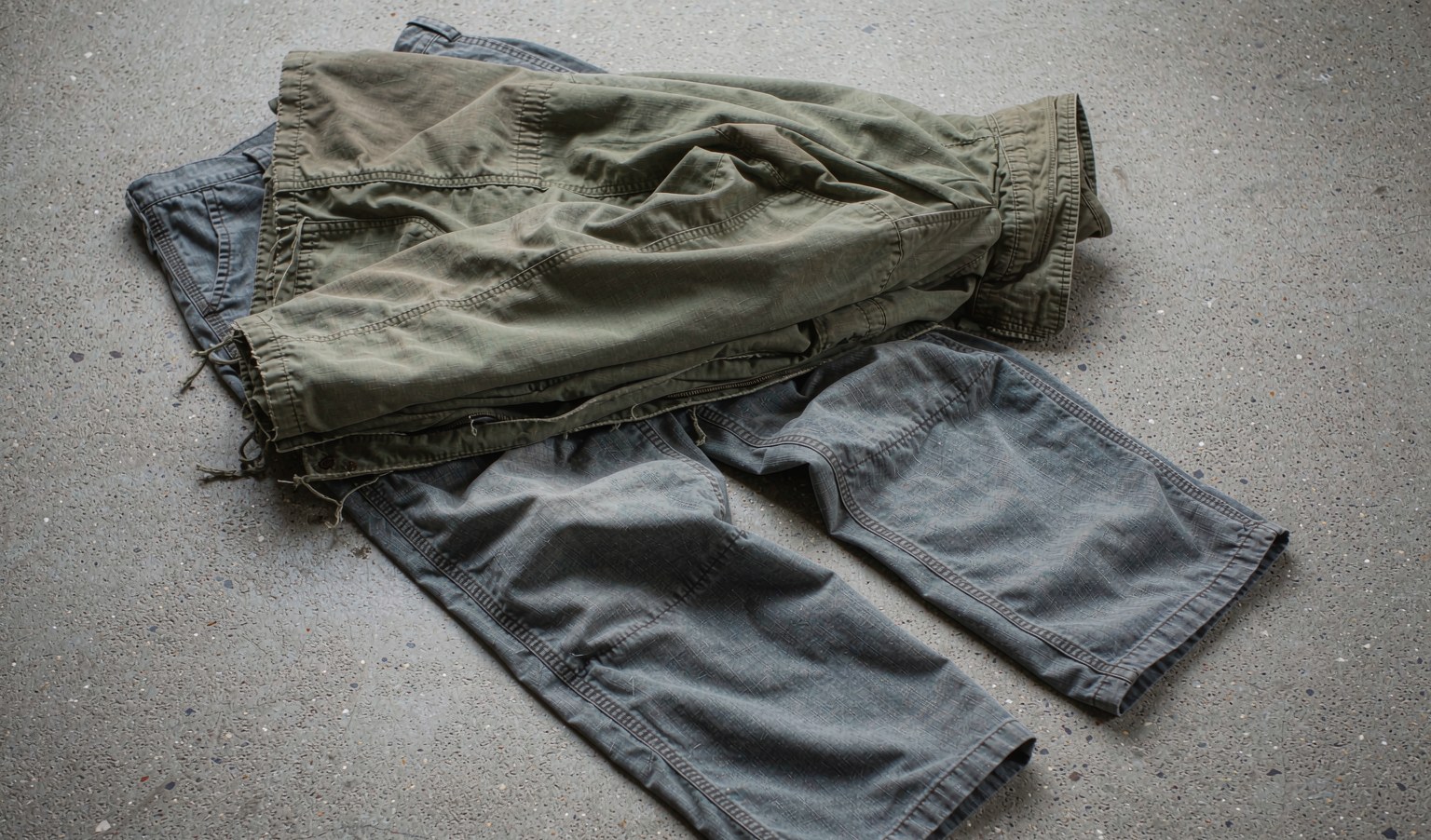
Coverage in early November framed coordinated denim as the season’s move, in shades well past traditional blue. It did not settle which kind survives a winter. There are two routes.
| The pairing | What the eye reads | Who it works for |
|---|---|---|
| Same shade, same weight | One plane; every fit flaw is the headline | Almost nobody |
| Same shade, other weight | Still flat, slight relief | Tall, narrow frames |
| Same family, a step apart | Two pieces that belong | Most people, most weather |
| One denim piece only | Clean; never worn as a set | Anyone with the rest |
Why identical is the harder route
An exact match does not stay exact. Jacket and pants can come off one roll and finish a wash at different depths, because a placket, two chest pockets and a doubled yoke take up water and abrasion differently from a flat leg panel. Weeks later the jacket is half a step lighter and the set looks mismatched. That is worse than never matching it.
The wash is what actually holds a set together
Two things matter more than the colour card. The dye lot: fabric from another lot pulls a different depth on an identical recipe. And the wash recipe, where most sets fail quietly. Jacket and pants are washed separately even in the same fabric, because one drum and one time do not act alike on a lined body with six pockets and on a flat leg. Aim for an equal shade leaving the machine, not an equal recipe.
Ounces before shade
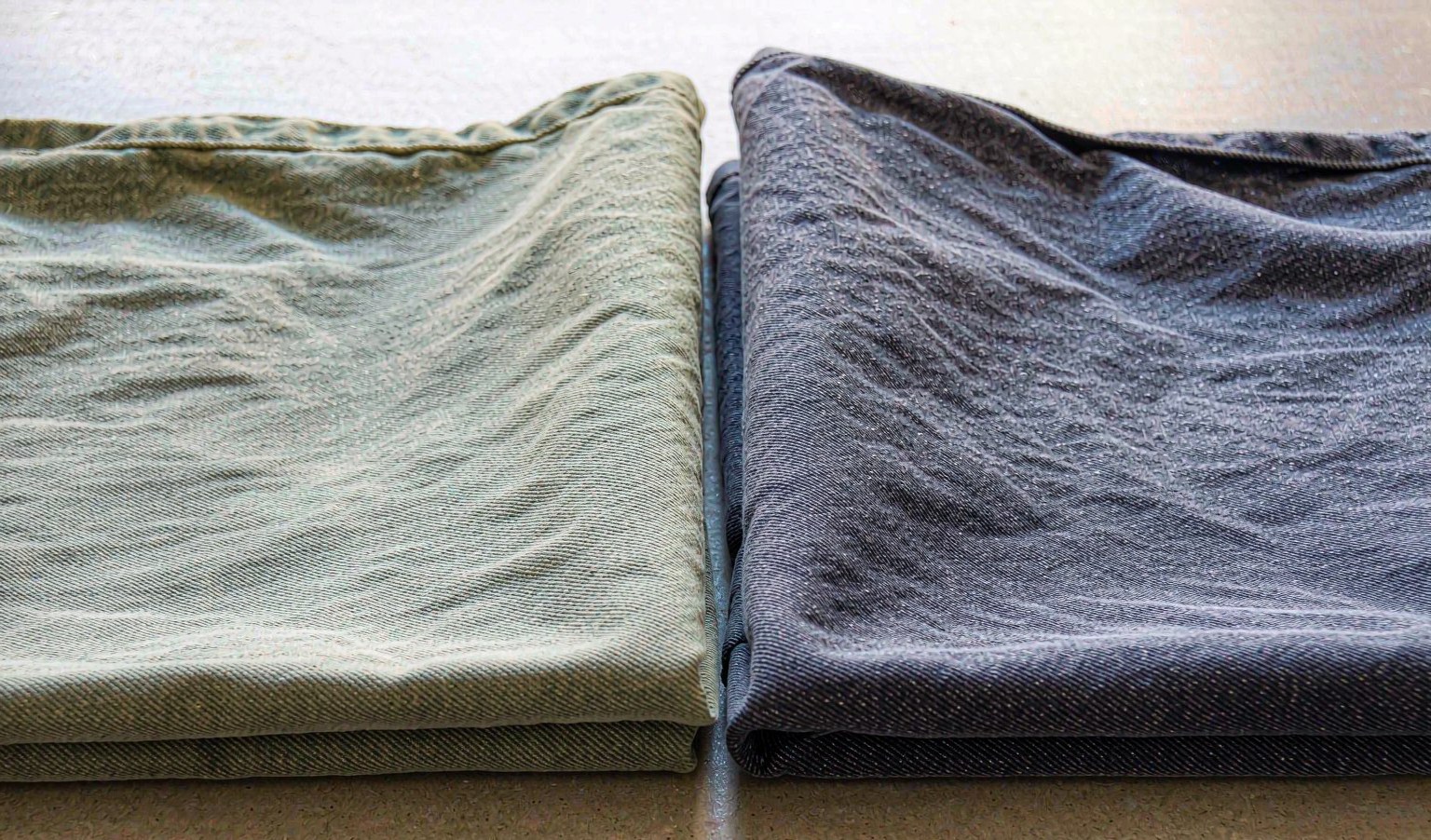
Weight decides more than colour and gets skipped. One ounce per square yard is about 33.9 grams per square metre. Shirting denim runs 4 to 6 ounces, work pants 10 to 14, a jacket body 12 to 14. Our 460 gsm washed denim work jacket lands near 13.5 ounces; the blue-grey jeans cut against it sit lighter and still read as a set. Keep them within two or three ounces and colour stops mattering.
Structure gives the eye something else to read
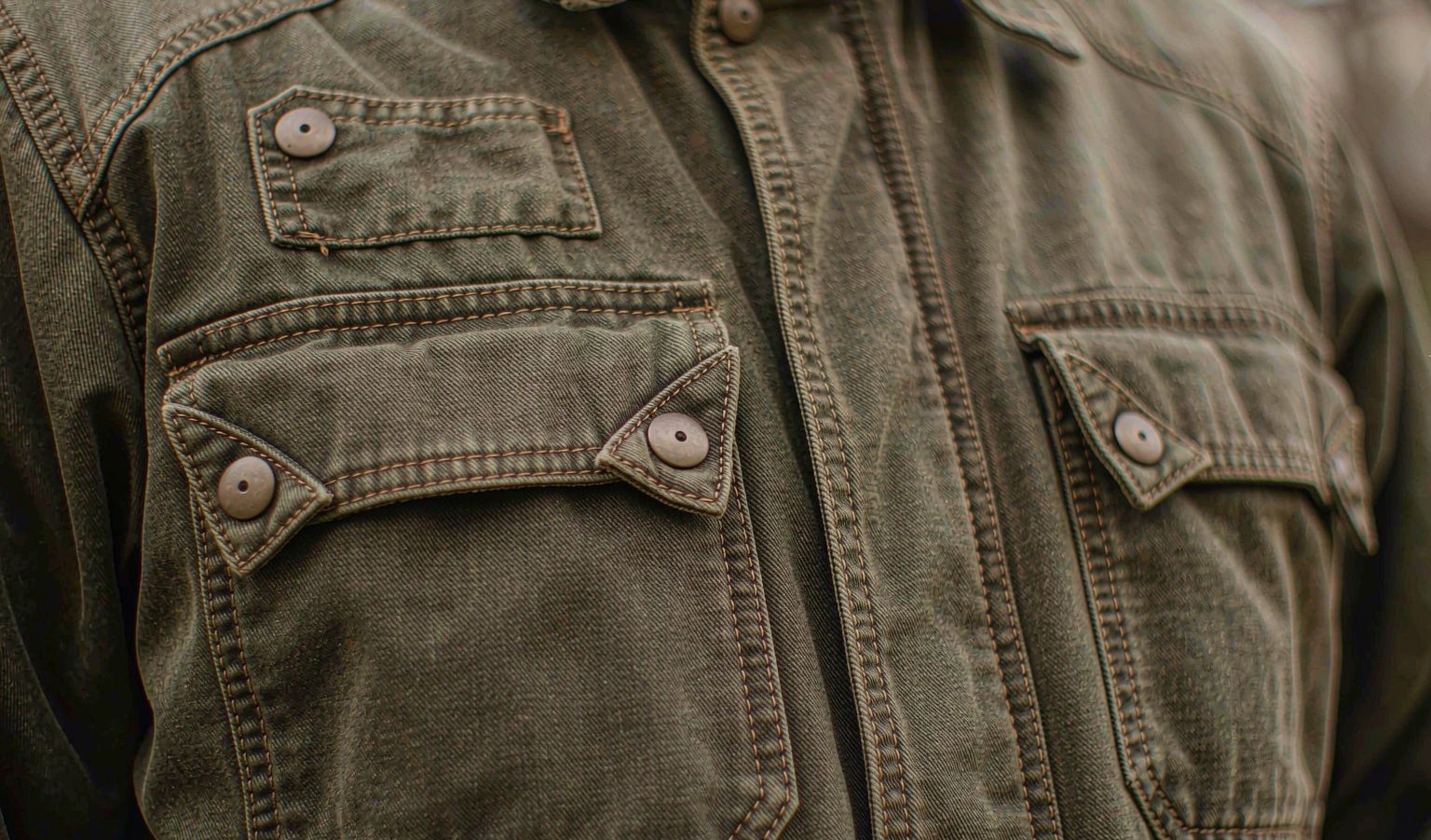
Detail buys depth without touching colour. Flap pockets with bar-tacked corners, a utility pocket above a larger one, dense topstitching: the eye gets a second place to land. It is also practical. A pocket tacked at the corners survives a phone pulled out a hundred times; one sewn only along the top edge tears at the corner first.
How to wear it without looking like a uniform
Once the pieces are a step apart, break the vertical block. Four moves.
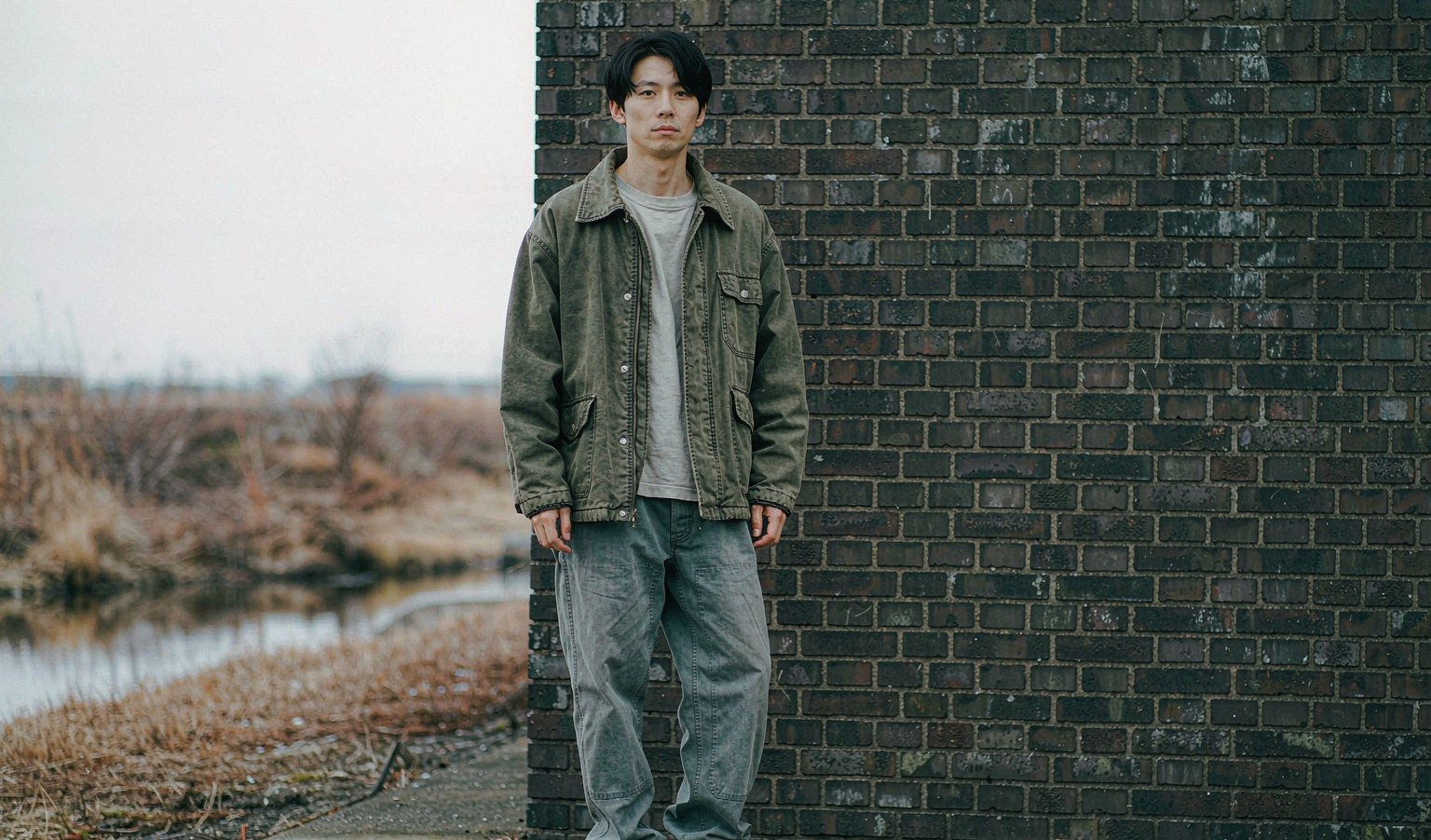
- Put a third piece in the middle: a grey tee or an oxford breaks the denim at the waist.
- Leave one piece open or turned up, so the silhouette has an edge.
- Change family at the shoes and belt; brown leather reads as dressed, not issued.
- Wear the set apart once a week so both pieces fade at their own speed.
Key takeaways
- Matching means same family, not same shade: half a step reads deliberate, an exact match reads as a uniform.
- An exact match drifts. Jacket and pants take up wash differently even from one roll, so the set mismatches itself within a season.
- Hold the two within two or three ounces. One ounce per square yard is about 33.9 grams per square metre.
- Buy depth from structure: bar-tacked flap pockets, utility pockets, dense topstitching.
FAQ
Can I wear a denim jacket with jeans in the same wash?
You can, and it reads as a uniform unless the fit is sharp and the rest of the outfit is doing something else. A step apart in shade or weight is the safer version of the same idea, and it stays right as both pieces fade.
Is a heavier denim set always better?
Heavier is better where the garment carries load: a jacket body, a work pant leg, a pocket holding tools. On a shirt it is worse, where 14 ounces becomes a board. Match the weight to the job, then the two pieces to each other.
Two pieces, one rule: same family, a step apart. That is the difference between a set that looks built and a set that looks issued.
See the washed denim collection or read how one washed jacket covers three weeks of weather before you add the second piece.