
How to audit a clothing factory before you place your first order
Most buyers who contact us have been burned before. They paid a deposit to a factory they never visited, the samples looked fine, and the bulk order arrived late or worse. The problem is rarely bad luck. It is skipping the audit step because a video call and a price list felt like enough. We run a workwear factory in Shishi, and we also sit on the other side of this when we buy zippers and fabric, so here is the exact checklist we would use if we were placing a first order anywhere.
Ask for the business license and check the scope
Any factory can send you a logo and a website. Few send a business license with the business scope line readable. Ours covers garment manufacturing, and you should be able to match that line to what you are buying. Two details matter. First, the registered name on the license should match the name on the bank account you are asked to pay. Second, check how long the company has existed. A license issued three months ago is not automatically a scam, but it changes how big a deposit you should agree to.
Request a live video walk of the floor, not a montage
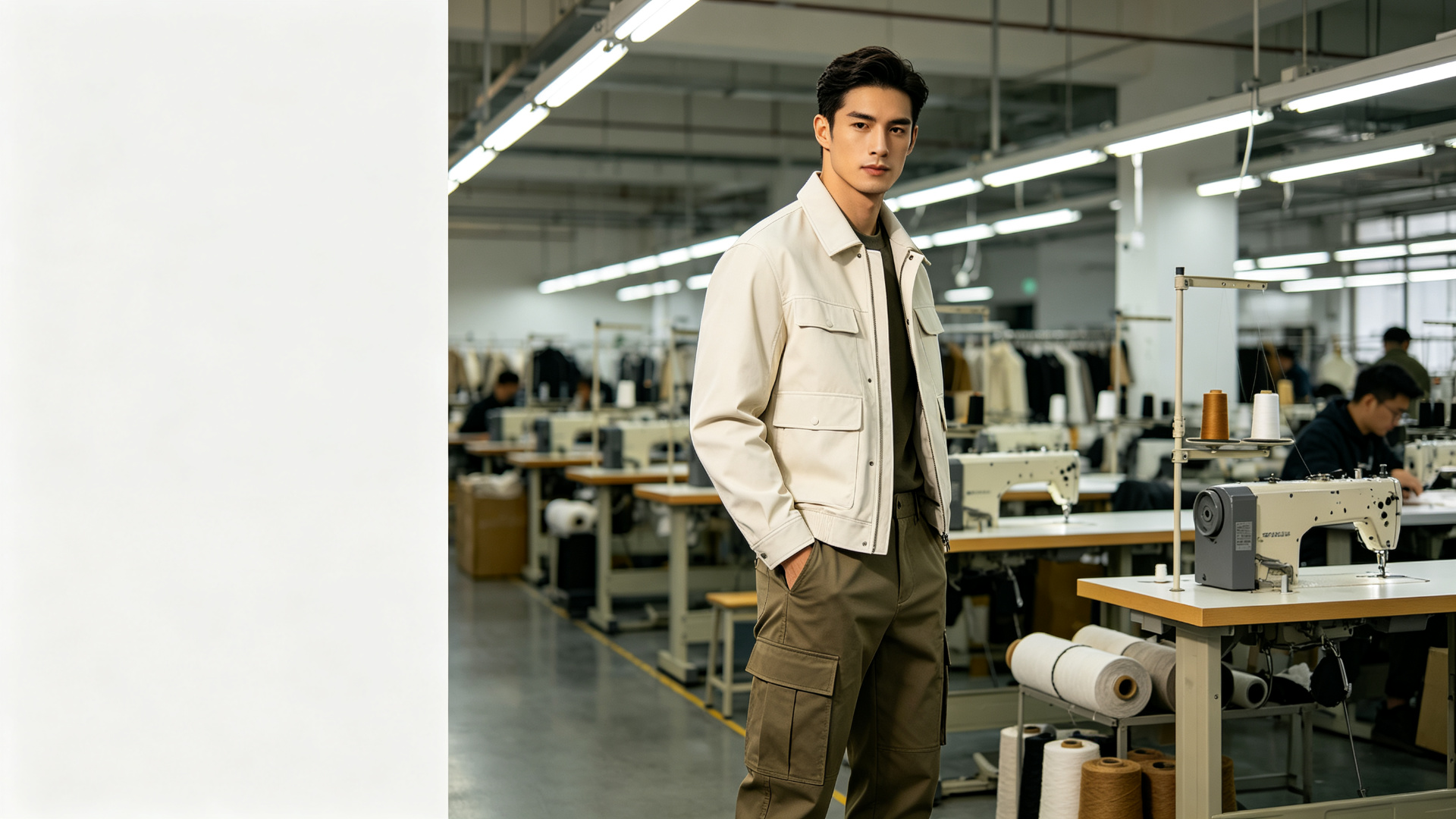
A polished factory video tells you almost nothing. What you want is a 10 minute live call where the host walks from the cutting tables to the sewing lines to the packing area, on a normal working day. Ask them to open a bundle on a sewing line and show you the operation ticket. Ask what the machines are: we run JUKI and Brother lockstitch machines with bar tack units for stress points, and we can say that on camera without cutting. A factory that hesitates to show its own floor usually has a reason, often that the work is subcontracted somewhere you will never see.
Judge the sample against the sales story
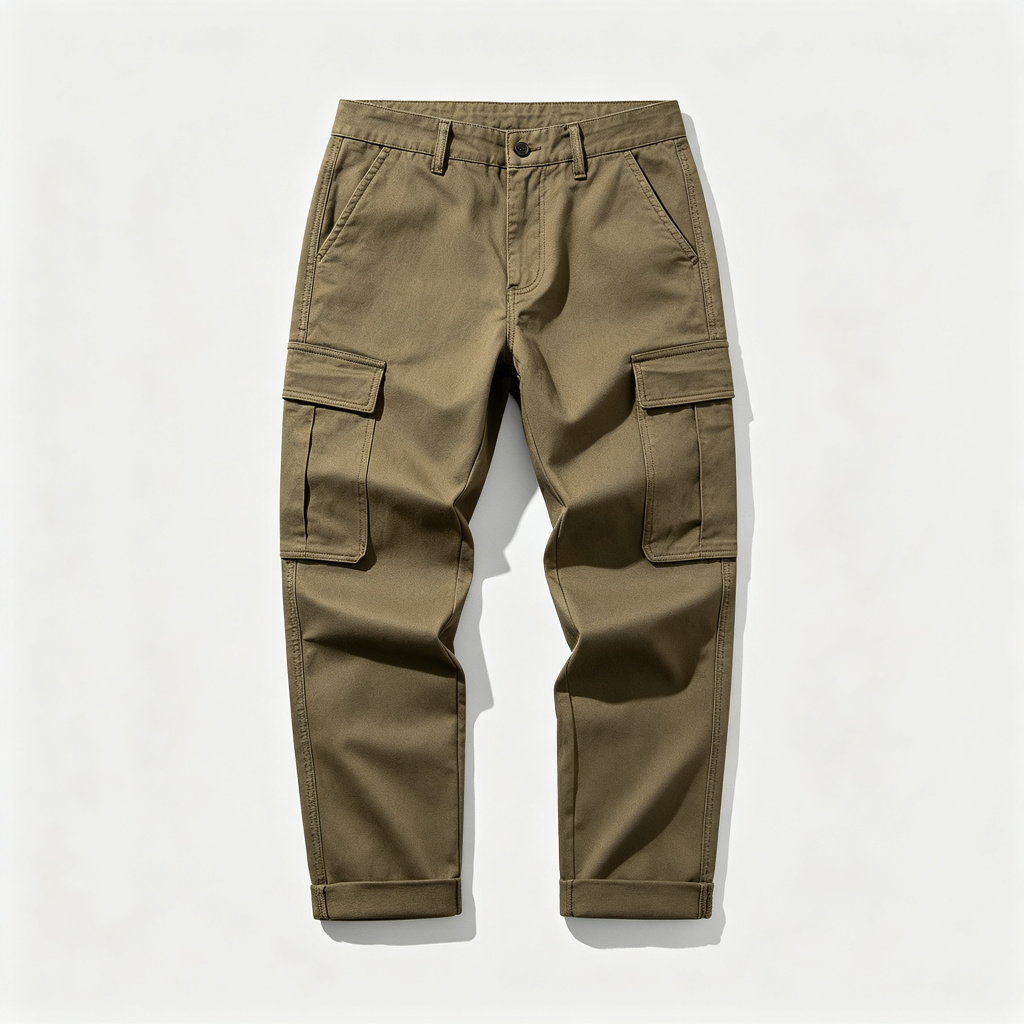
When a sample arrives, check the three things that are expensive to fix later. Stitch density on visible seams: quality workwear runs 10 to 12 stitches per inch. Bar tacks at pocket corners and crotch points: press one with your thumb and see if the stitching lifts. And the wash: run your hand inside the garment. A heavy stone wash leaves a faint mineral grit that a quick rinse will not remove, which means the factory skipped the cleaning pass. Our multi-pocket ripstop cargo pants go through two rinse cycles after wash for exactly this reason, and we tell buyers to hold any supplier to that same standard.
Talk MOQ in units of time, not just units
MOQ numbers are mostly about fabric. A factory quotes 500 pieces because that is the dye lot on one fabric roll. The useful question is not “can you do 200” but “what happens to my lead time if I do 200”. In our workshop, a smaller run usually means we slot it between bigger orders, so 200 pieces of stretch slim trousers might take 5 weeks while 800 take 3. That trade is fine if you know it going in. It is a problem when a factory promises both small quantity and full-speed delivery just to close the deal.

Put the inspection standard in the contract
The last step costs nothing. Write your AQL level into the purchase contract, something like AQL 2.5 for major defects, and name the standard: ANSI/ASQ Z1.4. Then say who pays for the third-party inspection if the first one fails. Factories that know their quality will agree quickly. If a supplier pushes back on a written inspection clause after talking happily about quality for three weeks, that is the clearest signal in this whole article. You can also see our finished goods listed in the shop catalog to get a feel for what we ship at scale.
Summary
Check the license against the bank account, take a live video walk of the floor, test samples on stitch density and bar tacks, trade MOQ against lead time openly, and write your inspection standard into the contract. Each step takes an hour. Together they cost less than one bad container.