
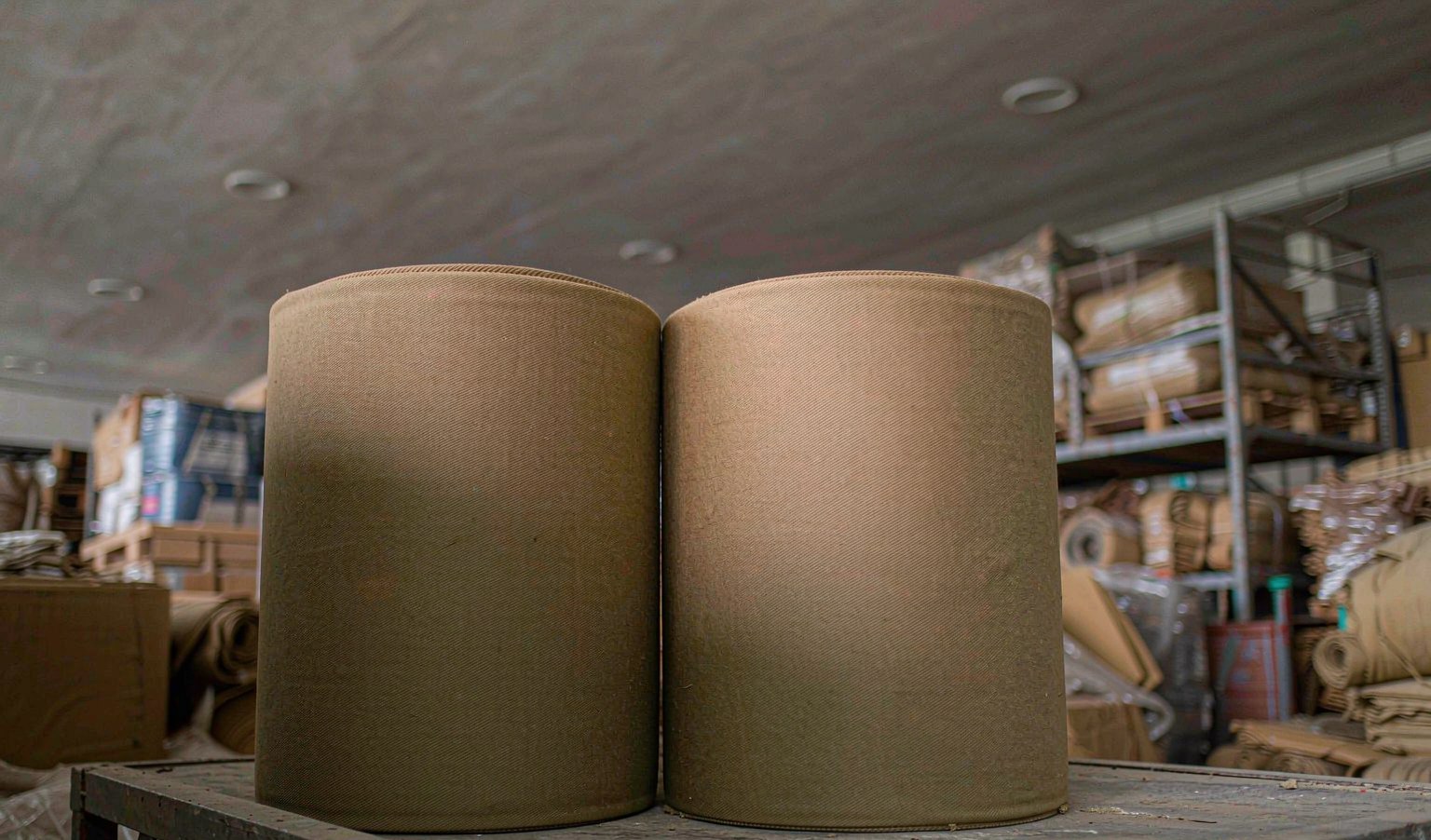
The Sample Was Perfect. The Bulk Was Not. It Was the Fabric Lot.
You are not imagining it. When bulk goods feel or look different from the approved sample, the cause is usually the fabric lot, not the sewing line. Mills dye and finish fabric in batches, and two batches of the same fabric code can differ in shade, hand and weight. This article traces the mismatch to its source and lists four contract clauses that stop it repeating.
Start with the shipment, not the sewing line
Find the cause by working backwards. The pattern, the machines and the sewing settings were the same as on the sample. What changed is the roll. Cut a swatch from a bulk roll and hold it against the approved sample under the same light. If it matches, the problem is downstream; if not, it arrived with the fabric, and the investigation starts at the mill.
One fabric code is not one fabric
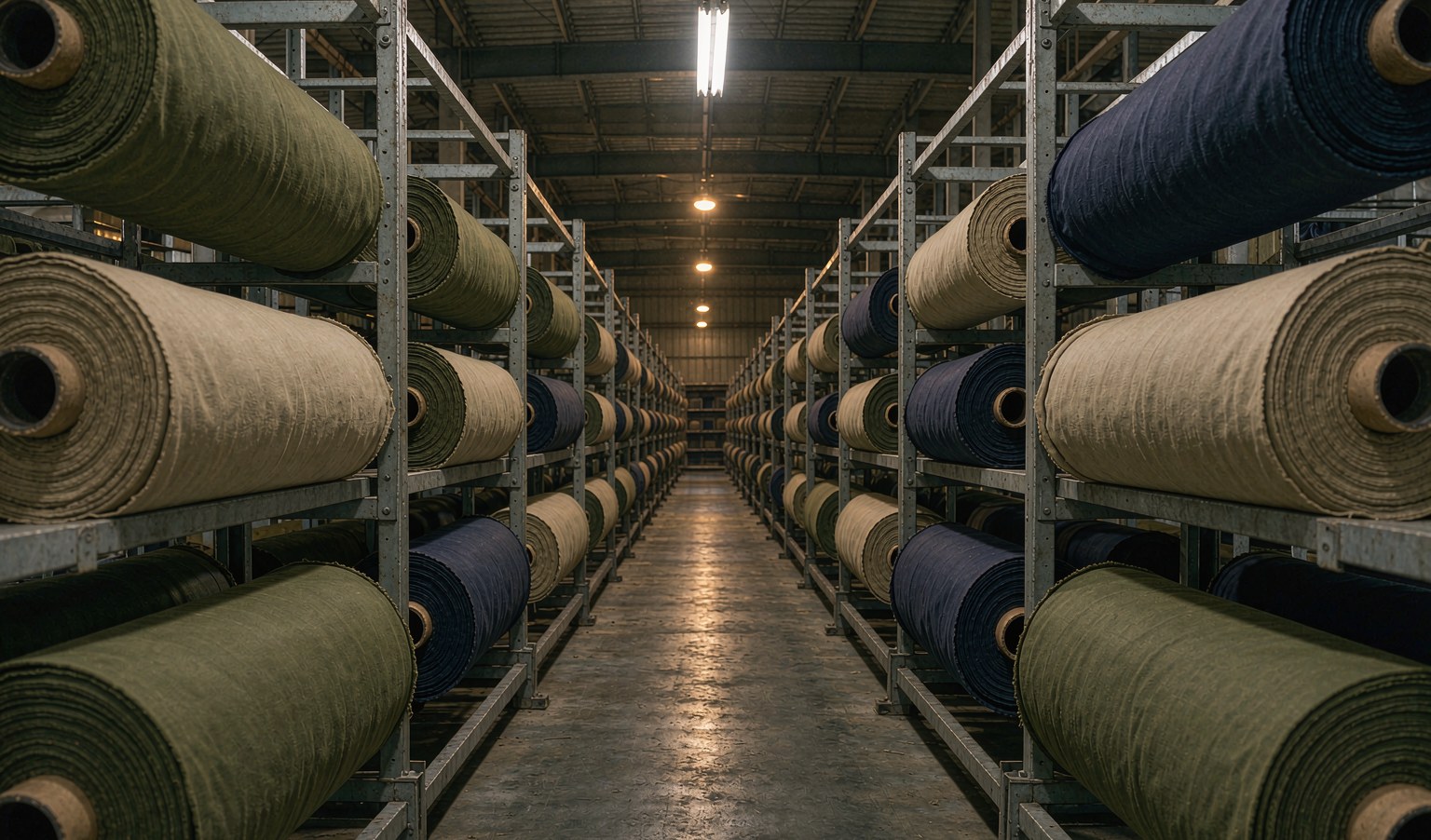
Mills do not produce a fabric code in one continuous run. They produce it in dye lots of a few hundred meters to a couple of thousand. Between one dye cylinder and the next, shade drifts slightly, and a lab dip approved from lot one says nothing about lot four. Your sample came from one roll; your bulk order may span several. A work pant can pass every measurement check and still look wrong next to the first production run.
Finishing and moisture move the goalposts
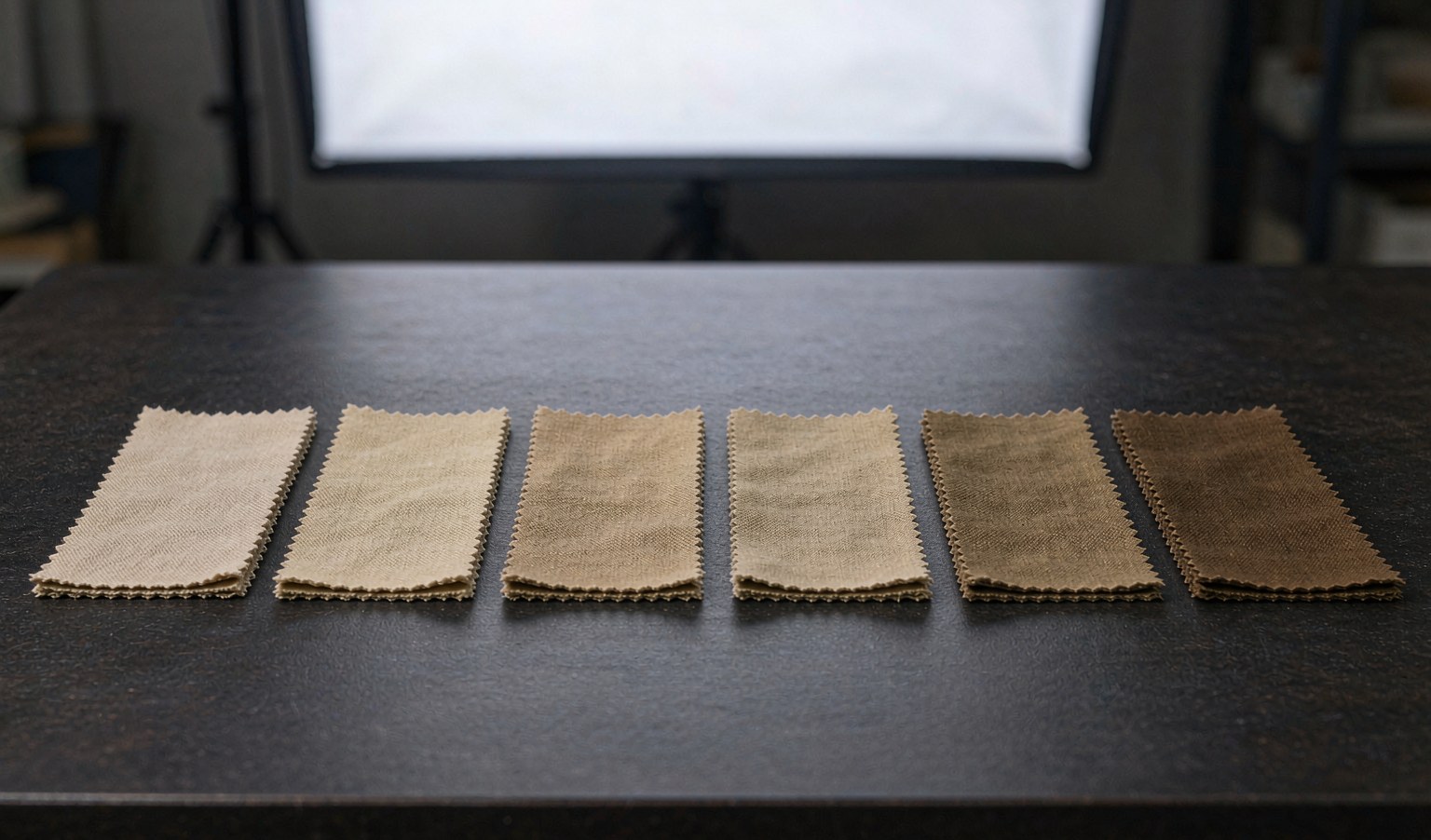
Two more variables sit between the loom and your warehouse. First, finishing: the same greige fabric sanforized or resin finished on a different setting comes off with a different hand, at the same weight on paper. Second, moisture. Cotton has an official regain of about 8.5 percent, so textile labs weigh fabric in a standard atmosphere of 20 °C and 65 percent relative humidity. A roll weighed in a humid week reads heavier and feels softer than the same roll weighed in a dry one.
The clauses that end the argument
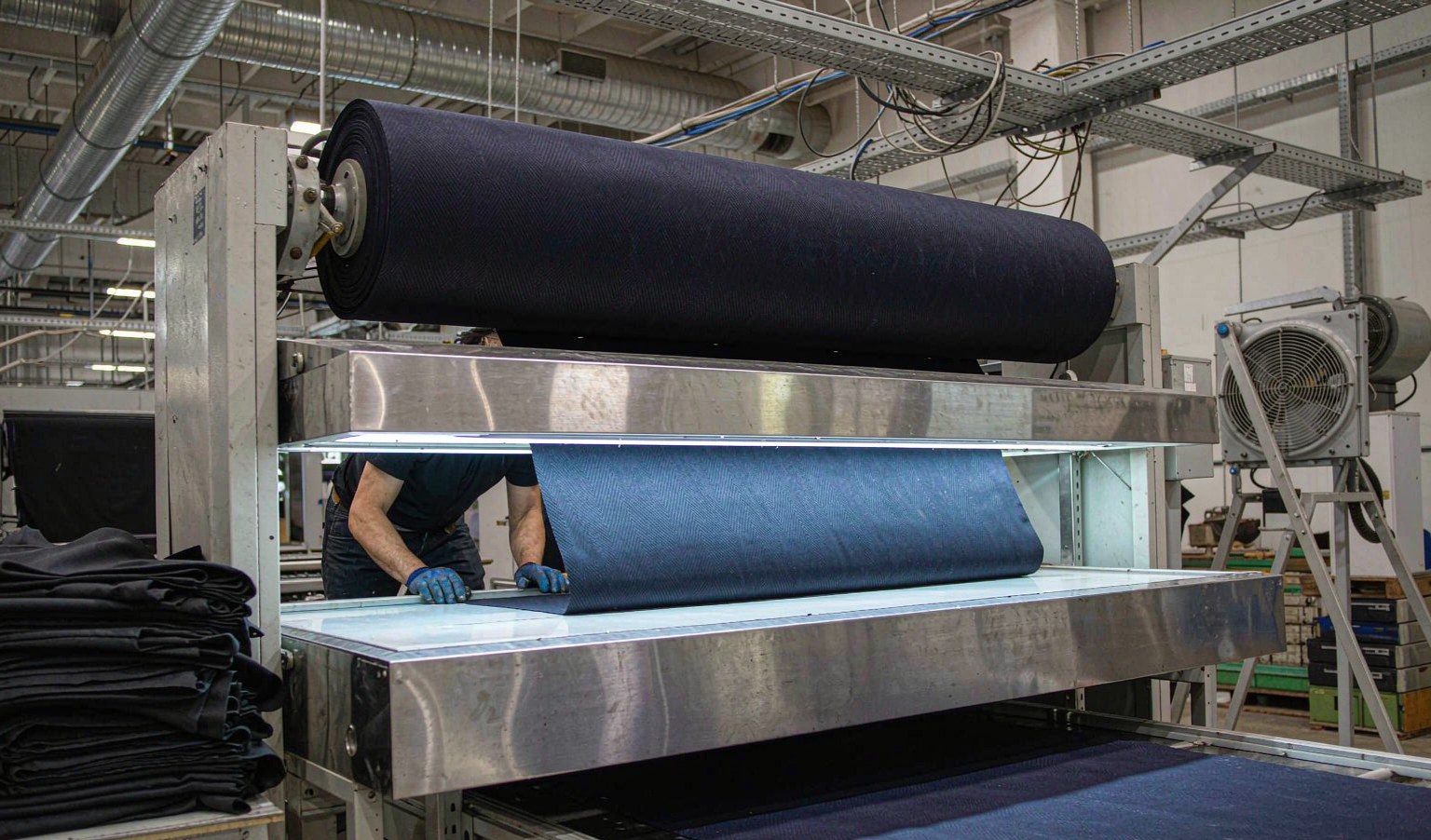
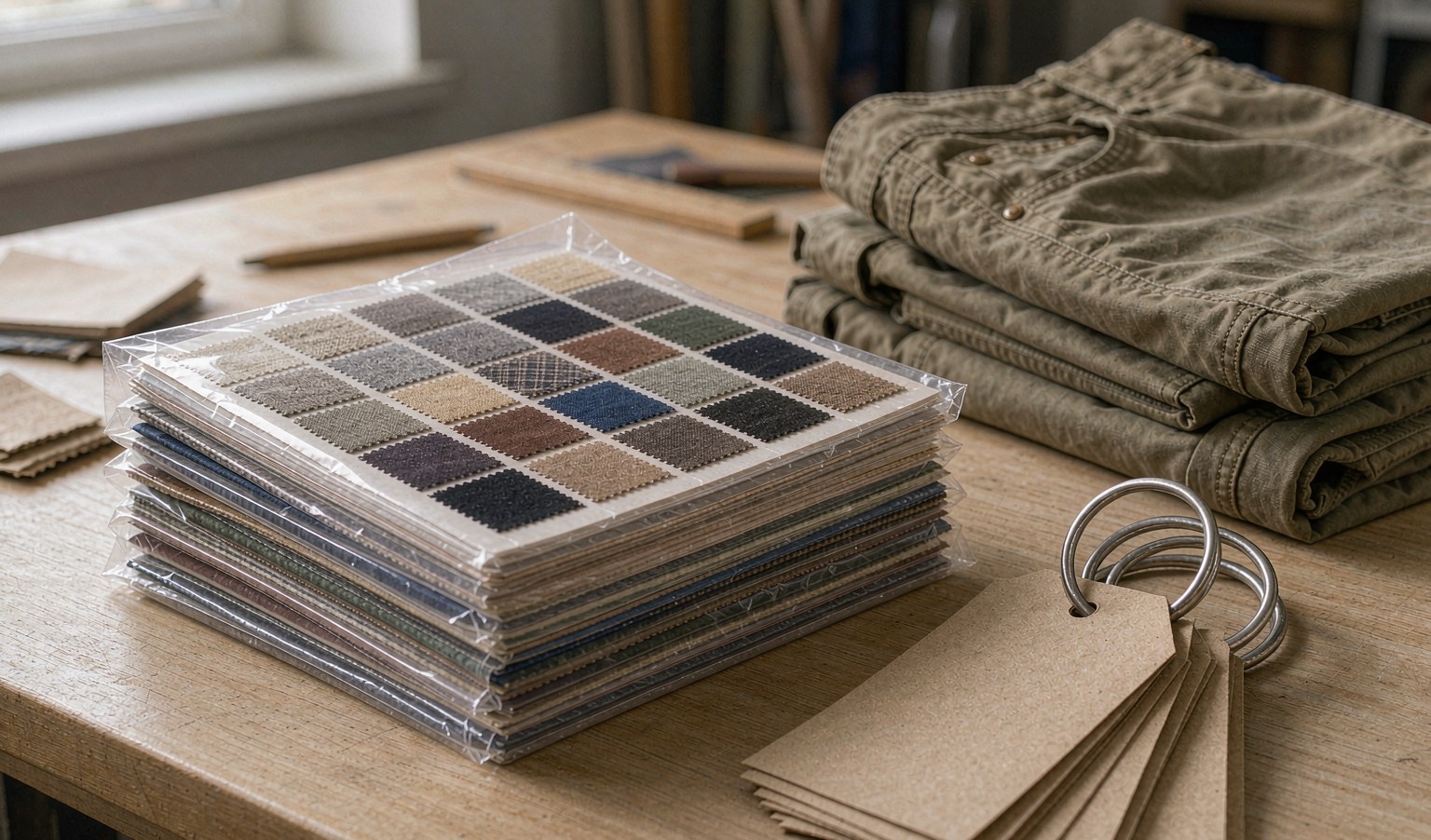
Four clauses settle this before it starts. One, seal samples: three identical swatch sets, buyer, factory floor, and one stored away from both, so the reference never disappears. Two, a shade band: a strip of consecutive dye lots approved before cutting. Three, a weight tolerance written into the contract; around 5 percent is common practice in the trade. Four, incoming 4-point inspection before a single meter is cut, every bulk roll checked against the sealed swatch. Final inspection under AQL 2.5 is the last net, and reading that report matters, but no final check repairs fabric that was wrong on the roll.
These clauses only work when the plan is written down. Start with how many sample rounds an order really needs, and put the checks into the tech pack lines buyers most often leave blank.
Key takeaways
- Most bulk-vs-sample mismatches start at the fabric lot, not the sewing line; cut a swatch from a bulk roll and compare it under the same light before blaming the factory.
- Mills dye in lots of a few hundred to a couple of thousand meters; shade drifts between lots, so one approved lab dip does not cover later lots.
- Cotton regain is about 8.5 percent, so labs weigh fabric at 20 °C and 65 percent relative humidity; a humid roll reads heavier.
- Four clauses prevent the argument: sealed samples, a shade band, a written weight tolerance near 5 percent, and 4-point incoming inspection before cutting.
FAQ
Why does bulk fabric look different from the sample with the same fabric code?
Because the code names the construction, not the batch. Each dye lot shades slightly differently, and finishing changes hand feel. Compare every bulk roll against a sealed swatch, not against memory.
What weight difference between sample and bulk is acceptable?
Trade practice sits near 5 percent either way, but only when both sides measure in the same standard atmosphere against a written tolerance. Decide it before production, not on arrival.
Sample and bulk were never the same product until the contract made them so. Seal the swatch, band the shades, write the tolerance, inspect the rolls. We at BenClothing run this on every order leaving our workshop in Shishi.
Contact us for wholesale pricing and put these clauses to work on your next order.