
No logos. No markup.  ·  Free worldwide shipping on Pants, Jackets & Hoodies · free shipping over $149  ·  code WELCOME10
RetailWholesale (login)
BenClothing

Loading

BenClothing
7 September
How to audit a clothing factory before you place your first orderSeptember 7th, 2026

Most buyers who contact us have been burned before. They paid a deposit to a factory they never visited, the samples looked fine, and the bulk order arrived late or worse. The problem is rarely bad luck. It is skipping the audit step because a video call and a price list felt like enough. We run a workwear factory in Shishi, and we also sit on the other side of this when we buy zippers and fabric, so here is the exact checklist we would use if we were placing a first order anywhere. Ask for the business license and check the scope Any factory can send you a logo and a website. Few send a business license with the business scope line readable. Ours covers garment manufacturing, and you should be able to match that line to what you are buying. Two details matter. First, the registered name on the license should match the name on the bank account you are asked to pay. Second, check how long the company has existed. A license issued three months ago is not automatically a scam, but it changes how big a deposit you should…

Read more
6 September
How heavy should your denim be? 10 oz, 12 oz, and 14 oz comparedSeptember 6th, 2026

Every week a buyer asks us the same question: which denim weight should I order? The catalogs all quote numbers like 10 oz or 14 oz, but few people explain what those numbers change in real production, or what they do to the final garment on a hanger in a store. Pick too light and the jeans feel cheap after two washes. Pick too heavy and your customers in a warm market never wear them. We cut denim every day in our Shishi workshop, so in this post we will walk you through the three weight ranges we run most often and where each one makes money. What the ounce number actually measures Denim weight is the fabric weight per square yard. A 12 oz denim weighs 12 ounces for one square yard of cloth, before any washing. On our cutting tables the difference is easy to feel: a 10 oz roll bends and folds on itself, while a 14 oz roll almost stands up on the table when we open it. One thing buyers often miss is that the weight on the invoice is the raw fabric weight, not the garment weight…

Read more
5 September
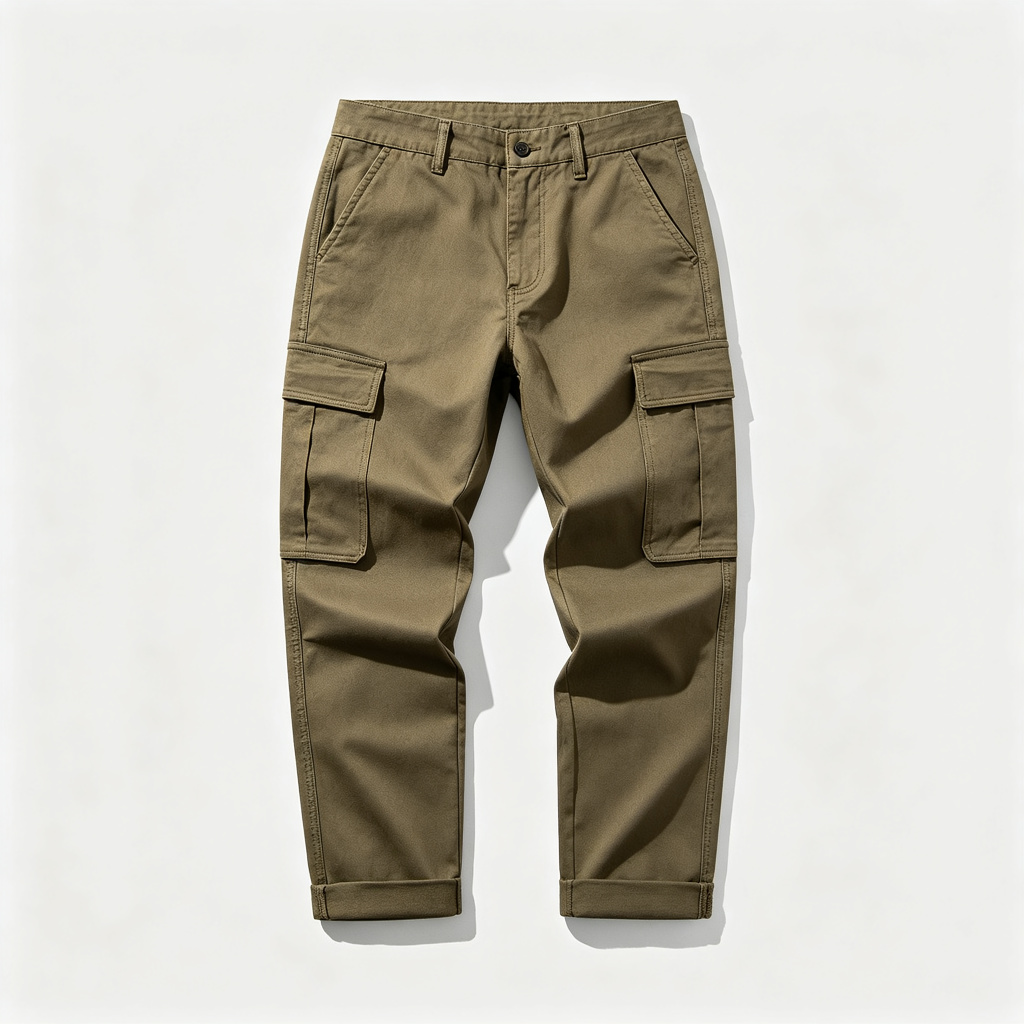
Multi-Pocket Ripstop Cargo Pants – cotton twill, 6 colors, S–3XL
Relaxed, tapered, or straight: picking the cargo fit your customers will keepSeptember 5th, 2026

A fit that looks great on a flat lay can turn into a returns headache six weeks later. We get calls about this every month: a buyer picked a cargo silhouette from a catalog photo, the sample looked fine, and then the retail batch came back because the leg opened too wide or the knee bagged out. The truth is that relaxed, tapered, and straight are three different products, not three names for the same pants. Here is how each one behaves, and what we measure before we cut a single roll of ripstop. \n\n Relaxed fit is the workwear baseline, and it lives or dies at the knee \n Relaxed means roughly 4 to 6 cm of extra room through the thigh compared with a regular cut, and it stays wide all the way down. On our multi-pocket ripstop cargo pants the relaxed block carries a 24 cm leg opening in size 32, which leaves space for the side pockets to hold a phone, a multi-tool, or a water bottle without pulling the hem up. The failure point is the knee. If the pattern does not add drape behind the knee, a…

Read more
4 September
Enzyme wash, stone wash, or garment dye: what you are actually paying forSeptember 4th, 2026

Two pants can sit side by side on a shelf, both labeled “washed”, and one costs twice as much as the other. Most buyers cannot see why. The price gap comes from the wash recipe, how long the garment sits in the drum, and how much fabric weight is lost along the way. If you stock workwear or denim, knowing the three main finishes helps you price your line right and answer customer questions without guessing. Here is how we run each one in our Shishi workshop. Enzyme wash is the quiet workhorse Enzyme wash uses cellulase to eat away the tiny surface fibers that make new cotton feel stiff. We run our cargo pants at around 45°C for 35 to 40 minutes with a mid-range enzyme dose. The fabric comes out soft, the color stays close to the original, and the stitching does not lose strength. It is the finish we put on our multi-pocket ripstop cargo pants because it makes them wearable on day one without turning them into a fashion relic. The downside is small. You lose about two to three percent fabric weight, so we adjust the cut slightly…

Read more
2 September
Why washed cargo pants sell out: notes from our Shishi workwear lineSeptember 2nd, 2026

If you have ever opened a box of cargo pants and felt the fabric was too stiff, the knees too baggy, or the wash looked like it had been painted on, you are not alone. Most buyers run into the same problem. They want a pant that looks broken-in from day one but still holds its shape after twenty washes. That is the gap we built our Shishi workwear line around. In this post, I will walk you through what actually makes a washed cargo pant worth stocking. Washing is where the personality lands There is no single “washed” finish. We run ours through enzyme washes first to take the raw stiffness out of the cotton. After that, a garment wash softens the seams and gives the surface a slight fade without making the color look tired. The temperature matters more than people think. Too hot and the fabric loses strength; too cold and the hand-feel stays rough. We landed on a mid-range cycle, then test every lot by laundering samples three times before the rest of the run ships. The result is a multi-pocket ripstop cargo pant that feels like it has…

Read more
2 September
Welcome to BenClothing — Direct from Our Shishi FactorySeptember 2nd, 2026

Welcome to BenClothing — the online home of a men’s casual apparel manufacturer from Shishi, Fujian. For more than two decades we have produced hoodies, t-shirts, shirts, jackets, pants and shorts for markets in Europe, North America and South Africa. Why Buy Direct? Because we are the factory. No trading companies, no middlemen. You get retail prices and tiered wholesale rates that work for boutiques, e-commerce sellers and importers alike. Wholesale or Retail — You Choose Use the mode switch at the top of the site: Retail for online shopping, Wholesale to see tiered pricing, MOQ and request a quote. Questions? Contact us — we reply within 24 hours.

Read more